
























Jesse Jackson, civil rights leader, dies aged 84

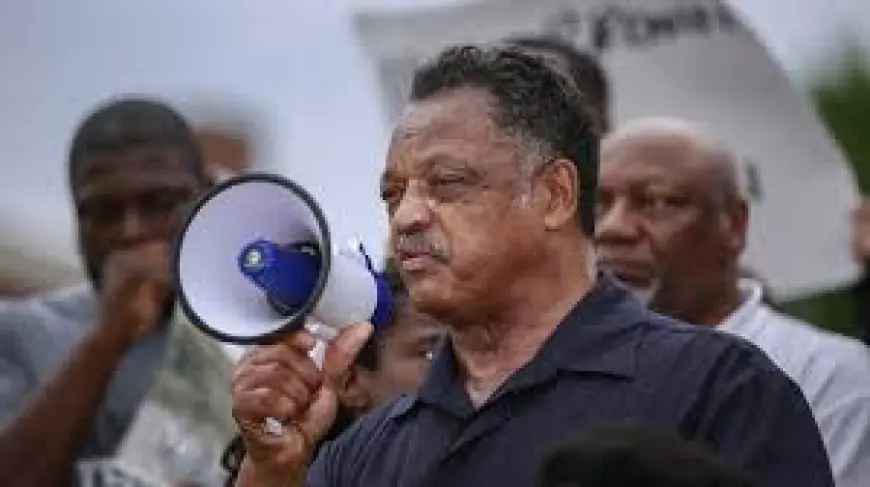
The Rev. Jesse Jackson, a fixture of the civil rights movement and Democratic politics for more than half a century, has died at the age of 84. The Jackson family said that he was "a servant leader" to family and to those who were oppressed and overlooked, and asked that his memory be honored through continued activism for justice, equality and love.
From segregated South to national stage
Born on Oct. 8, 1941, in Greenville, South Carolina, Jackson’s activism began in the Jim Crow South and matured into a national leadership role. As a young man he confronted racial segregation directly: during a college winter break in 1960 he and seven other Black students entered a whites-only Greenville public library in a peaceful protest that led to arrests and later contributed to the library’s integration. The episode marked an early and formative moment in a life devoted to challenging institutional discrimination.
Jackson rose to prominence as an organizer and minister at a time when the civil rights movement was reshaping American politics. He was closely associated with Dr. Martin Luther King Jr. in the 1960s and moved into national public life by combining moral rhetoric with grassroots organizing. He built a broad coalition that reached into urban communities, churches and labor unions, and he used electoral politics as a tool to advance civil rights and economic opportunity.
He twice sought the Democratic presidential nomination, mounting particularly strong campaigns in 1984 and 1988 that broke new ground for Black candidates in national politics. Jackson later reflected that his campaigns had been met with skepticism and resistance from many quarters — including within the Black community — but he insisted his efforts opened paths that others would follow.
Health struggles and continued activism
In later years Jackson’s public-facing role was limited by illness. He lived with progressive supranuclear palsy for more than a decade after an initial diagnosis of Parkinson’s disease and was hospitalized with Covid on two separate occasions. Despite these challenges, he remained an outspoken advocate on matters of racial and public health equity during the pandemic, asking why communities of color continued to suffer disproportionate harm after centuries of systemic inequality. "After 400 years of slavery, segregation and discrimination, why would anybody be shocked that African Americans are dying disproportionately from the coronavirus?" he said as he highlighted disparities in care and outcomes.
Jackson’s family framed his life as one of service. "Our father was a servant leader – not only to our family, but to the oppressed, the voiceless, and the overlooked around the world, " they said, urging that his legacy be carried forward by those committed to the same causes.
Legacy and political imprint
Jackson’s influence is visible across several arenas: he helped broaden the scope of civil rights advocacy beyond desegregation to include economic justice, voting access and international human rights; he played a role in nurturing new generations of political leaders; and he demonstrated how sustained grassroots organizing could translate into national political power. Two decades after his second presidential bid, the first Black president of the United States acknowledged that Jackson’s campaigns had helped make broader political breakthroughs possible, a development Jackson called "a big moment in history. "
Throughout his career, Jackson drew both admiration and criticism for his direct style, high-profile negotiations and willingness to engage with a wide range of political actors. For many supporters, he was a pathfinder whose work created openings for greater representation in American life and governance.
The Rev. Jesse Jackson leaves a complex and far-reaching legacy: a minister and organizer who moved from local protest to national policymaking, a political pioneer whose campaigns expanded the horizons of who might seek the nation’s highest offices, and a relentless advocate for those without power. His family’s request to honor him by continuing the fight for justice underscores the enduring aims that shaped his public life.