

























US Escalates Military Pressure Amid High-Stakes Iran Negotiations

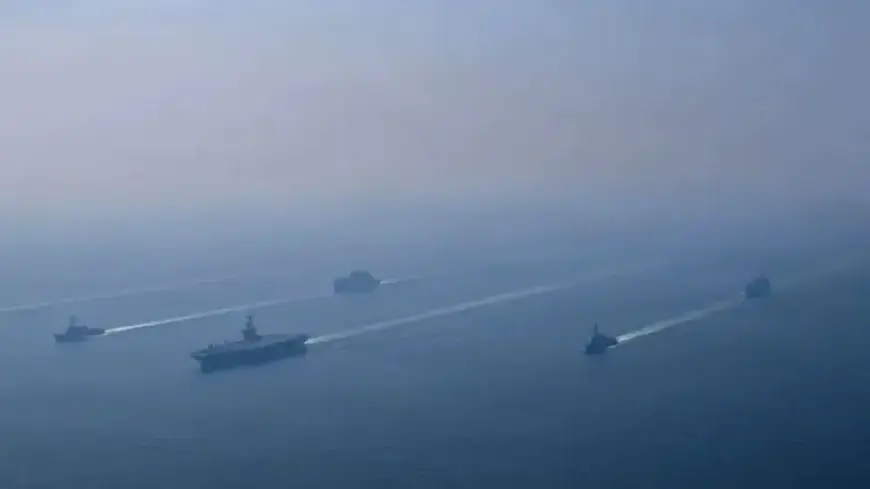
The United States is ramping up military pressure in the Middle East as high-stakes negotiations with Iran approach. Scheduled for Tuesday, these talks in Geneva come amid heightened tensions due to Iran’s nuclear program and ongoing protests within the country. U.S. military assets are being strategically positioned to either intimidate Tehran or enable possible strikes if talks fail.
U.S. Military Buildup in the Region
Reports indicate that U.S. Air Force units based in the United Kingdom are being relocated closer to the Middle East. This repositioning includes fighter jets and refueling tankers. Additionally, air defense systems are also being transported to the region.
Recent flight-tracking data reveals that over 250 U.S. cargo planes have delivered military equipment to Jordan, Bahrain, and Saudi Arabia. On Friday, multiple fighter jets received diplomatic clearance to enter Jordanian airspace, indicating significant military engagement.
- 12 F-15 attack planes have been stationed at Jordan’s Muwaffaq Salti Air Base since January 25.
- U.S. military cargo flights have surged, indicating ongoing logistical support in the region.
Political Context and Negotiation Details
President Donald Trump has expressed willingness to consider military action against Iran, particularly if negotiations do not yield results. He believes that regime change could benefit the country and has emphasized the importance of upcoming discussions.
These negotiations will be led by Trump’s envoy Steve Witkoff and Jared Kushner for the U.S., while Iran will be represented by Foreign Minister Abbas Araghchi. Analysts express concerns about the U.S.’s lack of clarity on what would follow a potential regime change in Iran.
Secretary of State Marco Rubio has reiterated uncertainty over who could lead Iran post-regime change. The Islamic Revolutionary Guard Corps (IRGC) is expected to play a prominent role in any leadership vacuum, although U.S. intelligence is currently unable to assess the IRGC’s full hierarchy.
Military Options and U.S. Strategy
Trump has outlined extensive military options should the need for a strike arise. The deployment of carrier strike groups—such as the USS Abraham Lincoln and USS Gerald Ford—provides the U.S. with significant strike capabilities. Guided-missile destroyers and submarines equipped with Tomahawk missiles enhance these options further.
- Potential targets include IRGC headquarters and various military installations throughout Iran.
- A joint operation with Israel is also under consideration, resembling previous military actions conducted against Iran.
Regional Concerns and Iran’s Response
The prospect of U.S. military action has raised alarms among regional allies, particularly Arab states in the Persian Gulf. Many advocate for prioritizing diplomacy over military options, fearing that strikes could destabilize the region.
Iran continues to conduct military exercises in anticipation of the negotiations. Reports suggest that the IRGC is on high alert, ready to defend sensitive territorial claims. On the eve of the Geneva talks, Iranian officials warned that any aggression would be met with strong retaliatory measures.
As the U.S. prepares for negotiations, insights on Iran’s willingness to compromise remain unclear. However, discussions have previously included potential economic arrangements in conjunction with a nuclear agreement, suggesting that diplomatic avenues are still being explored.
While the U.S. aims for a peaceful resolution, the complexities surrounding Iran’s leadership and nuclear ambitions underline the delicate balance of diplomacy and military readiness.