
























Carolyn Bessette Kennedy’s Signature Minimalism Looms Over New Ryan Murphy Series and Calvin Klein’s Runway Pivot

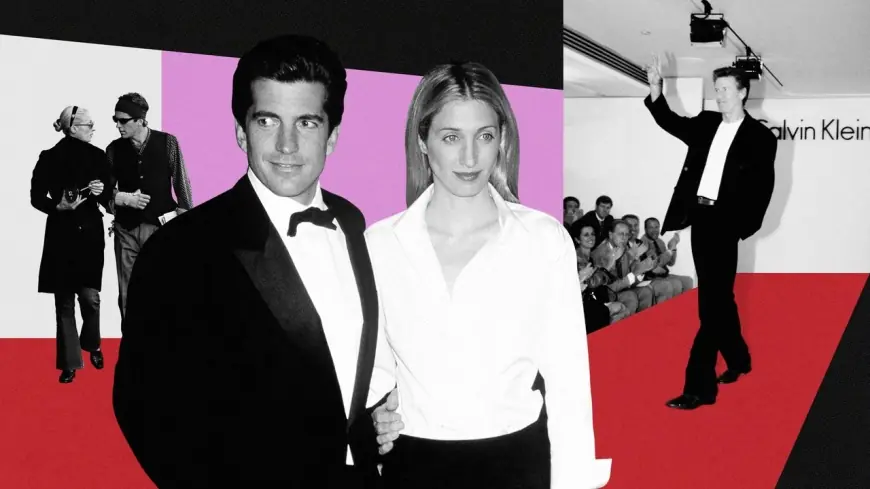
When Love Story premiered on Feb. 12, 2026 (ET), Carolyn Bessette Kennedy’s tidy, minimalist wardrobe—so closely tied to 1990s Calvin Klein—instantaneously reentered the cultural conversation. The series’ meticulous recreation of the era’s capsule wardrobes arrived just as the fashion house unveiled a collection that surveyed earlier, less minimalist moments in its history, prompting fresh debate about what the Bessette look means for today’s runways.
Bessette Kennedy’s aesthetic, reanimated on screen
On screen, the series leans into the spare, tailored elements that defined Bessette Kennedy’s public image: pencil skirts, crisp white shirts, slip dresses and understated accessories. Production and costume teams built sets and wardrobes that emphasize a controlled palette and clean lines, even removing modern conveniences from frames to sell the period—no smartphones, fewer props to hold, and an attention to how hands and pockets were used in daily life. The result is a cinematic distillation of the 1990s minimalism that made the designer workplace and New York’s offices feel both aspirational and intimate.
The visual accuracy has not been immune to scrutiny. Early set photos drew criticism for mismatched footwear and styling choices, but subsequent episodes align more consistently with the era’s quiet glamour. The series’ focus on the office interiors, glass-brick accents and industrial-modern furniture foregrounds how the Calvin Klein environment itself helped shape Bessette Kennedy’s unfussy polish—turning workplace aesthetics into personal style cues.
Runway divergence: looking before minimalism
The fashion house’s latest runway collection did not simply revisit the brand’s 1990s peak. Instead, the creative direction reached backward toward late 1970s and early 1980s references—an era when the label’s identity was still forming and the brand’s visual language was less rigidly defined. The collection offered experiments that juxtaposed restraint with theatrical gestures: tailored suits with deliberately altered proportions, sleeve-less suiting that foregrounded upper arms, backless tailoring layered over slips and unexpected beading trims.
That choice unsettles the tidy narrative that the Bessette look would naturally be reimagined at the house that helped standardize it. Opting to mine an earlier, more confused chapter of the brand’s past simultaneously resists nostalgia and opens the minimalism territory to reinterpretation by other designers. The result is a conversation rather than a direct lineage—one in which a resonant personal style can be evoked on screen while the original brand elects to reframe its archive.
Why timing matters—and what it signals for fashion
The coincidence of the series debut and the runway show has amplified interest in the late-20th-century American aesthetic. When a high-profile drama foregrounds a particular set of clothes and interiors, it creates downstream demand: designers, retailers and audiences begin to parse which elements to revive and which to remix. That dynamic can sharpen debates about ownership of style and the ethics of storytelling—especially when the characters depicted are real people whose family members and heirs respond to dramatizations.
Beyond questions of taste and provenance, the renewed focus on Bessette Kennedy underscores a larger appetite for restraint in an era of maximalism. Whether fashion houses embrace the canonical version of her look or chart different archival paths, the cultural moment is clear: the Bessette silhouette is once again a point of reference—less as a straight template and more as a prompt for reinvention.
As the season unfolds, expect both the small, quiet pieces of Bessette Kennedy’s wardrobe and the house’s broader experiments to appear in shop windows and editorial spreads. The interplay between screen-accurate nostalgia and runway reinterpretation will test how much of a style is tied to a person, and how much can be repurposed by designers shaping the next chapter of a storied brand.