

























Ramadan 2026 dates: when it starts, why it may differ, and key nights to know

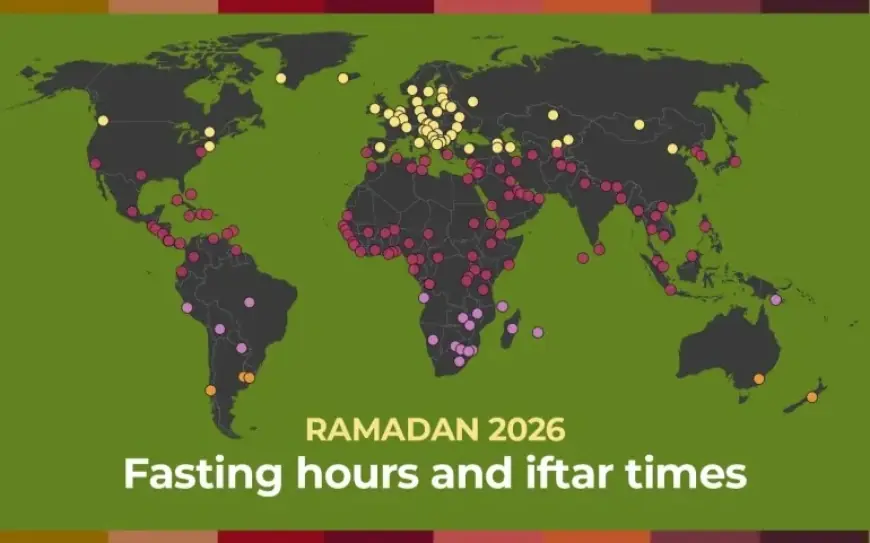
Ramadan 2026 is expected to begin in mid-February, with the first fast most likely falling on Wednesday, Feb. 18, 2026 (ET) for many communities. Because the Islamic calendar depends on the new crescent moon, some countries and local authorities may start one day later, making Thursday, Feb. 19, 2026 (ET) the first day of fasting in those places.
That one-day difference matters for everything from school and work schedules to travel plans, prayer calendars, and the projected dates for Eid al-Fitr.
When does Ramadan start in 2026?
For most Muslims, Ramadan begins at sunset on the evening before the first fast. The most common expectation this year is:
-
First night of Ramadan (Taraweeh begins): Tuesday evening, Feb. 17, 2026 (ET)
-
First day of fasting (1 Ramadan 1447): Wednesday, Feb. 18, 2026 (ET)
However, Ramadan can start one day later in places where the crescent is not sighted or where authorities adopt a different method for determining the month. In that case:
-
First night: Wednesday evening, Feb. 18, 2026 (ET)
-
First fast: Thursday, Feb. 19, 2026 (ET)
Why dates can differ by country
Ramadan is set by the start of a lunar month, and lunar months begin when the new crescent is confirmed. Differences usually come down to:
-
Local moon sighting vs. global sighting (whether a sighting in one region is accepted elsewhere)
-
Astronomical criteria vs. eyewitness confirmation (some authorities rely more heavily on calculations, others on confirmed sighting)
-
Geography and visibility conditions (weather and horizon visibility can shift outcomes)
So if you see two “start dates” listed, that’s not a mistake—it reflects a real-world range that gets resolved close to the start.
When is Ramadan 2026 in Egypt?
In Egypt, the start is typically announced by the country’s official moon-sighting authority close to the date. Astronomical expectations circulating ahead of the announcement point to Thursday, Feb. 19, 2026 (ET) as a likely first day of fasting in Egypt, though a Wednesday, Feb. 18 start remains possible depending on the crescent confirmation.
If you’re planning time off or travel in Egypt, treat Feb. 18–19 as the realistic window until the formal announcement is made.
Eid al-Fitr 2026: expected end of Ramadan
Ramadan lasts 29 or 30 days, so Eid al-Fitr also carries a one-day range. Based on the most common expectations:
-
If the first fast is Feb. 18, Eid is likely to begin Thursday evening, Mar. 19, 2026 (ET) and be celebrated on Friday, Mar. 20, 2026 (ET).
-
If the first fast is Feb. 19, Eid is more likely to begin Friday evening, Mar. 20, 2026 (ET) and be celebrated on Saturday, Mar. 21, 2026 (ET).
Many countries treat Eid as a multi-day holiday, so public closures can extend beyond the first day.
Key nights: Laylat al-Qadr window in 2026
Laylat al-Qadr (the Night of Power) is widely observed during the last ten nights of Ramadan, with special focus often placed on the odd-numbered nights. The commonly emphasized 27th night shifts with the start date:
-
If Ramadan begins with the first fast on Feb. 18, the 27th night is expected around Monday evening, Mar. 16, 2026 (ET).
-
If Ramadan begins with the first fast on Feb. 19, the comparable night would fall around Tuesday evening, Mar. 17, 2026 (ET).
Many communities increase worship throughout the last ten nights regardless of which specific night is highlighted.
Key takeaways for planning
-
Most likely start: first fast on Wed, Feb. 18, 2026 (ET)
-
Possible alternate start: first fast on Thu, Feb. 19, 2026 (ET)
-
Most likely Eid day: Fri, Mar. 20, 2026 (ET), with Sat, Mar. 21 as the main alternative
-
Best planning approach: keep a one-day buffer for flights, time off, and major events tied to Ramadan’s first day or Eid
If you tell me your country or city, I can map these dates to the most likely local start/end pattern and the practical implications (workweek, school timing, and holiday closures).