





















‘Love Story’ Recreates a Tragic Romance Between JFK Jr. and Carolyn Bessette

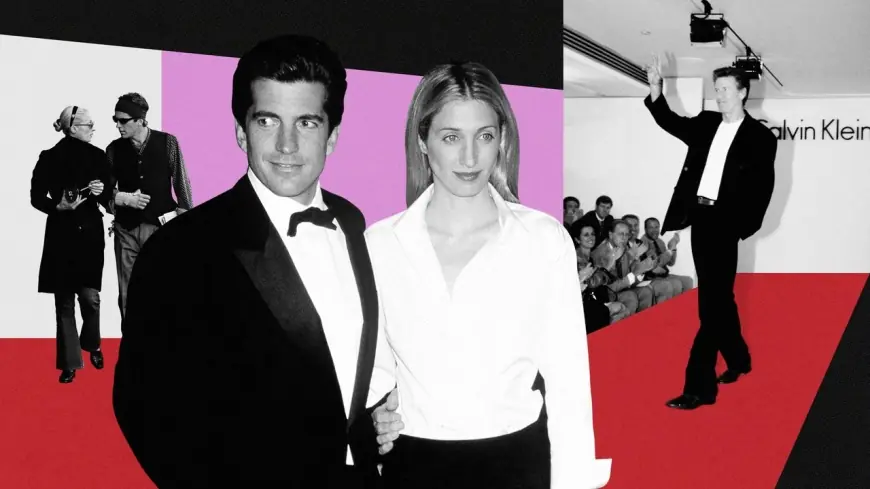
Ryan Murphy’s new anthology series launches with a reconstruction of the high-profile relationship between John F. Kennedy Jr. and Carolyn Bessette, a pairing that combined celebrity, fashion and tragedy. The first installment, which premieres Thursday at 9: 00 p. m. ET, intercuts the public spectacle of the 1990s with a personal portrait that opens on the day the couple died and then flashes back to trace their meeting, marriage and the pressures that shadowed them.
How the series frames the Kennedy–Bessette story
The drama begins in medias res: a prologue set at a small New England airfield, where a lingering shot of a departing aircraft signals the crash that would later claim the couple’s lives. From there the narrative moves back to 1992, the year John and Carolyn met, and follows key moments of a relationship crystallized by both private tenderness and relentless public attention.
Creators compress backstory to focus on the central romance and its pressures. The show presents John as an American scion who never escaped the shadow of his family’s history—he was a media fixture from childhood and a cultural figure into adulthood—and Carolyn as a fashion industry professional whose minimalist elegance sparked comparisons to the Kennedy family’s famed style. Casting choices underline the intimate approach: Sarah Pidgeon plays Carolyn, Sydney Lemmon portrays her sister Lauren, and Paul Anthony Kelly appears as John.
Episodes trace threads familiar to many viewers: a small, understated wedding that reinforced the couple’s mystique; a professional tension between private inclinations and public expectations; and the ways 1990s media—tabloids, glossy magazines and celebrity culture—amplified every move. The series draws on a biographical source that explores Carolyn’s life and role in the relationship, and it foregrounds fashion and image as central elements of the couple’s public identity.
Criticism, family backlash and the debate over ownership
The dramatization has not been free of controversy. Family members and descendants have expressed unease about dramatizing intimate moments tied to a real-life tragedy. One family member publicly described the series as an exploitative use of private grief, and the showrunner’s public response to that objection intensified debate about who has the right to tell family stories and how those stories should be handled.
That debate echoes broader tensions surrounding portrayals of famous families: the impulse to mythologize, the economics of storytelling, and the ethical calculus of dramatizing recent sorrow. Critics and observers have pointed out that the show presumes a baseline familiarity with the Kennedys and the social world of 1990s Manhattan, which can leave viewers who lack that context with an impression of a story told primarily for those who already feel its cultural weight.
Why the couple still captivates
Part of the enduring fascination stems from contrast. John was born into a political dynasty and spent much of his life under public scrutiny; his charm and missteps were chronicled in the press. Carolyn arrived from a less public background but carved a role for herself within the fashion world and became the figure who, in many eyes, stabilized America’s most eligible bachelor. Their chemistry—accentuated by wardrobe, poise and a shared preference for privacy—created a potent image that continues to resonate.
By opening on the pair’s death and then reconstructing the arc of their relationship, the new series asks viewers to reconcile two impulses: the desire to peer behind the curtain of celebrity, and the discomfort of watching grief and loss turn into entertainment. Whether that balance will satisfy audiences remains to be seen, but the program has already reignited conversations about memory, representation and who gets to shape the narrative of modern American tragedy.