





















Jacob Elordi’s Heathcliff, Box Office Heat and a Rewritten Ending: The Controversy Around Wuthering Heights

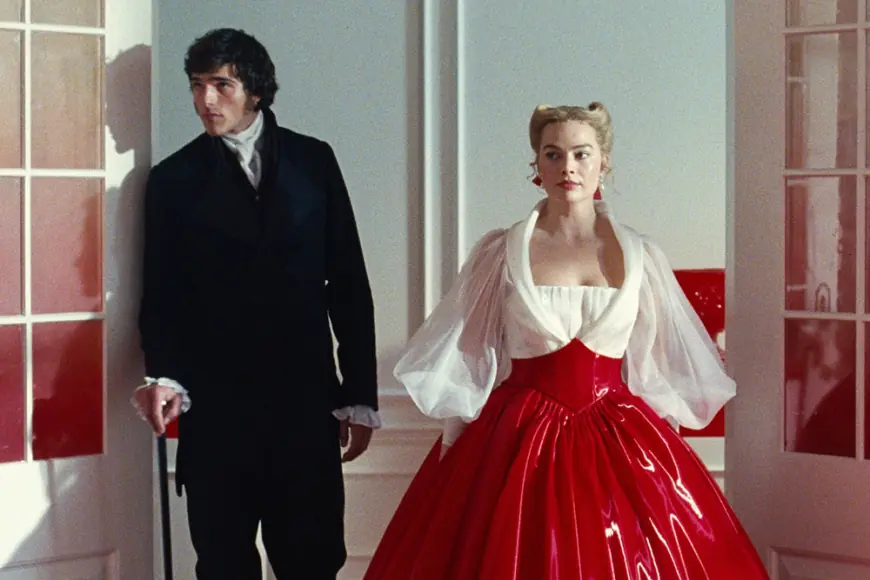
Emerald Fennell’s new film adaptation of Emily Brontë’s Wuthering Heights has landed in theaters amid intense discussion — from the casting of Jacob Elordi as Heathcliff to box office momentum over the Valentine’s weekend and a disputed decision to truncate the novel’s multi-generational arc. The film’s creative choices have reignited debates about race, fidelity to source material and commercial strategy.
Casting controversy centers on Heathcliff’s racial identity
The announcement that Jacob Elordi, a white Australian actor, would play Heathcliff provoked sharp reactions online, where debates over authentic representation are particularly visible. Much of the debate turns on Brontë’s original text, in which Heathcliff is described in ways that suggest otherness — passages label him a “dark-skinned gipsy” and invoke terms like “Lascar, ” a historical word used for South Asian sailors and laborers.
Brontë’s prose also records the character’s own frustrations: at one point Heathcliff longs for “light hair and fair skin. ” Commentators and scholars have long argued that these details leave room for multiple readings. Some interpret Heathcliff as mixed or nonwhite, possibly connected to Liverpool’s maritime trade and the historical entanglements with slavery. Others point out that nineteenth-century prejudice in Britain included anti-Irish caricatures, and Heathcliff’s arrival from Liverpool and his speech patterns could align with that line of interpretation.
Museums and Brontë experts acknowledge ambiguity in the text: there is consensus that Brontë intended Heathcliff to be marked as “other, ” but exactly how that otherness maps onto modern racial categories is debated. That uncertainty has not calmed viewers who see the casting as a missed opportunity to fully acknowledge the character’s likely nonwhite heritage on screen.
Strong opening weekend, overseas receipts key to profitability
Box office returns suggest the film connected with audiences over the Valentine’s Day frame. The release opened to $33 million domestically from roughly 3, 682 theaters and was on track for a four-day total near $40 million through President’s Day Monday, Feb. 16, 2026 (ET). International markets provided another lift, with an initial overseas haul of about $42 million from 76 territories, producing a global launch near $82 million.
With a production budget around $80 million — not counting a sizable global marketing campaign — the film’s worldwide receipts will be closely watched. Early audience splits skewed heavily female, and exit polling delivered a midrange “B” grade. That mix of strong opening interest and cautious word-of-mouth suggests the title may rely on international momentum and sustained interest among core viewers to maintain legs at the box office.
Fennell’s adaptation trims the novel; ending diverges sharply
Beyond controversy over casting and commercial performance, creative choices in the screenplay have drawn attention. Fennell’s adaptation stops roughly midway through Brontë’s novel: Catherine dies in the film, and the narrative omits the next generation that the book follows. In the movie Catherine succumbs after suffering sepsis and an apparent miscarriage; a montage closes the story with Heathcliff cradling her body, removing the novel’s later arc that follows Cathy, Linton and Hareton.
The director framed the decision as an effort to focus tightly on the central, destructive romance. Fennell described the original book as dense and said substantial cuts were necessary to shape a two-hour film. That choice leaves open questions about whether future installments could revisit the omitted material, but creators have characterized this version as a single, self-contained interpretation.
Between casting disputes, box office performance and a deliberately pruned storyline, this Wuthering Heights has become as discussed for its off-screen conversations as for what plays on screen — a modern reminder that classic texts are often reinvented to reflect present-day battlegrounds over identity and adaptation.