
























Elias Lajunen crash shakes men's big air qualifier at Winter Games

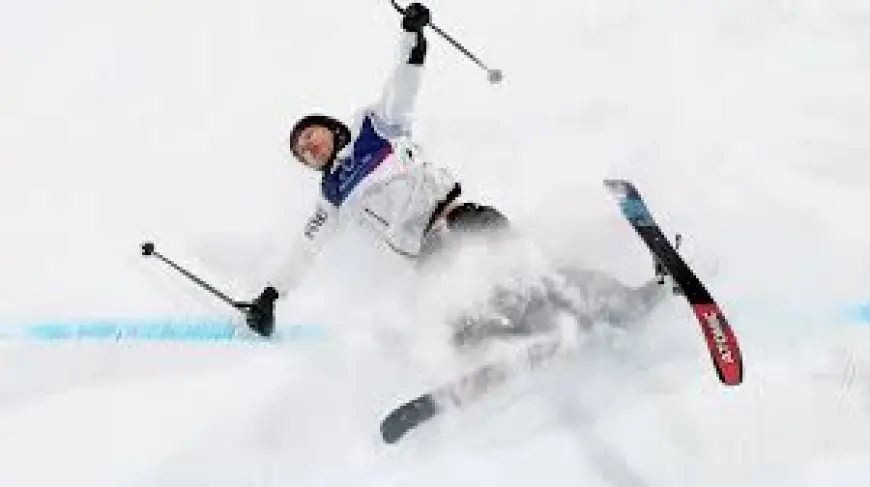
Finnish teenager Elias Lajunen was involved in a frightening fall during the men's big air qualifying round on Sunday evening ET in Milan, leaving fellow competitors and spectators stunned as medical teams rushed to his aid. The 18-year-old, taking part in his first Olympic Games, was conscious after the incident and gave medics a thumbs-up while being helped off the slope.
What happened on the jump
Launching from the big air kicker under night lights, Lajunen executed a multi-rotation aerial that went wrong on the final revolution. He failed to fully complete his final spin and came down hard, striking his side and tumbling onto the packed snow. The fall looked violent enough to halt the run, and event staff immediately trailed the athlete as they descended the landing zone.
Medical personnel reached Lajunen within moments and attended to him on the snow. Despite the brutal nature of the impact, he was conscious and responsive, giving rescuers a thumbs-up as they helped him upright. He walked off the landing area with assistance from medics and team staff and was escorted for further evaluation and monitoring.
Rising star's brief résumé and stakes at the Games
Lajunen entered the Olympic field as one of the competition's youngest competitors and among the sport's newest professionals. He broke through internationally in 2025, posting solid showings at major global events. At the 2025 World Championships he placed 31st in freeski slopestyle and 32nd in the big air discipline, results that helped secure his place on the Olympic start list this season.
Sunday's qualifier was a high-pressure environment for a debutant. Big air demands perfection in both amplitude and rotation; any shortfall on a final twist can translate into a severe landing. Teammates and coaches had flagged Lajunen as a promising talent, and many in the packed venue had been watching closely as he attempted a technically ambitious run.
Condition, response and what comes next
After being evaluated on site, Lajunen was transported to a medical area for more thorough checks. He remained conscious throughout and gave staff positive signals, but medical staff emphasized that further monitoring and scans are standard following a high-impact fall of this kind. The team's medical unit will complete neurological checks and imaging as necessary to rule out head, spinal, or internal injuries.
Event organizers paused briefly to clear the landing zone and to allow Lajunen to be treated with privacy and care. The night's qualifying session resumed once officials confirmed it was safe to continue. Teammates expressed concern but also relief that he was responsive immediately after the fall.
Major aerial skiing events carry inherent risk; athletes push the limits of rotation and height in pursuit of podium finishes, and even small miscalculations can have outsized consequences. Lajunen's fall is a reminder of the thin margin for error in big air competition, especially for younger athletes still gaining experience on the sport's biggest stage.
Organizers and the athlete's support team will provide condition updates as medical evaluations continue. For now, the focus is on Lajunen's recovery and the medical protocols designed to protect his short- and long-term health.