





















Wuthering Heights movie stirs box office heat and critical ire with bold, divisive reworking

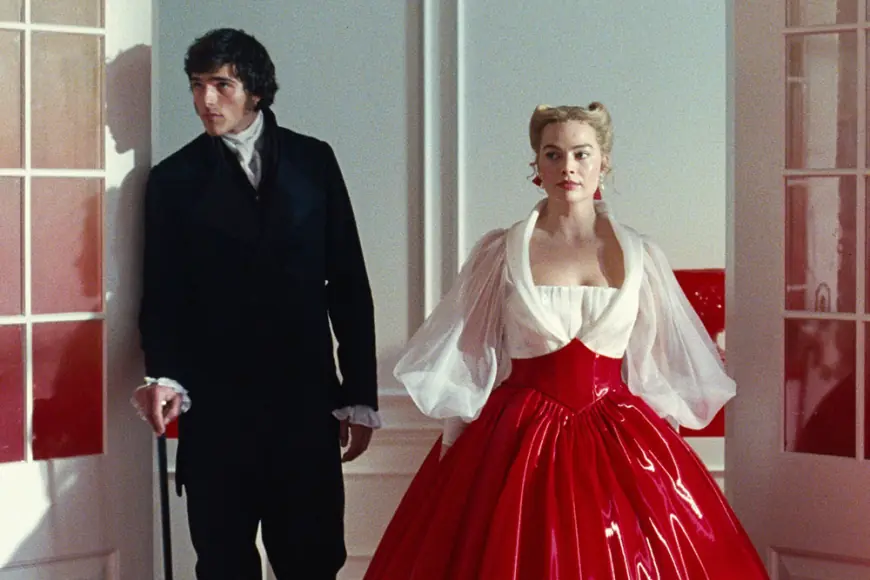
Emerald Fennell’s new screen take on Emily Brontë’s Wuthering Heights has ignited a two-way reaction: a strong commercial launch across North American and international markets, and sharply divided critical responses to its tone, sexual frankness and major narrative cuts. The film’s theatrical debut has been buoyed by star power and a heavy marketing push even as reviewers question key creative decisions.
Box office: a hot start over the President’s Day weekend
The film opened to roughly $34. 8 million from 3, 682 North American theaters, with estimates projecting up to $40 million through the four-day President’s Day weekend ending Monday, Feb. 16 ET. Internationally the picture performed even better out of the gate, launching with about $42 million from 76 territories for a global opening near $82 million. That early haul puts the picture in position to recoup against an estimated production budget in the neighborhood of $80 million, though full profitability will depend on sustained domestic legs and continued overseas demand.
Audience contours were sharply gendered for opening weekend: the film drew a predominantly female audience, many of whom were drawn by the film’s romantic and erotic framing around Valentine’s Day. Exit polling and CinemaScore-style audience feedback signaled mixed enthusiasm, suggesting solid initial interest but uncertain word-of-mouth momentum in the weeks ahead.
Critical reaction: camp, sex and a missing second act
Reviews have been a study in contrast. Several critics praised the film’s production values and the visceral chemistry between the leads, but many took issue with the director’s heightened camp and sexual stylings. One prominent critique called the adaptation an emotionally hollow, bodice-ripping misfire that leans heavily into visual excess and comic-camp touches, at times sidelining the novel’s darker emotional core.
Critics have singled out choices that reshape character dynamics: the film amplifies flirtatious, erotic set pieces and embraces a playful, occasionally cartoonish sensibility while excising or softening elements that sit at the novel’s center. The director reallocates plotlines and trims the book’s sprawling timeline, which critics argue robs some characters of depth and removes sources of social and racial complexity present in the original text.
Ending and adaptation choices leave story incomplete — intentionally
One of the most consequential departures is the film’s abrupt close. Rather than following the novel’s multi-generational arc, the movie ends roughly midway through the source material with Catherine’s death. The adaptation replaces the book’s subsequent second act — which tracks the next generation and the lingering consequences of the central relationship — with a final, emotionally charged sequence in which Catherine succumbs to sepsis after an apparent miscarriage. That choice eliminates the possibility of a direct cinematic continuation and concentrates the narrative entirely on the doomed romance.
The director framed the change as a practical and creative decision to condense a complex, sprawling novel into a film-length story focused tightly on the central pair. The approach has provoked debate: supporters argue the compression intensifies the lovers’ drama and delivers a more immediate cinematic experience, while detractors say it discards the restorative, generational resolution that gives the original work balance and closure.
As the film settles into theaters, its commercial trajectory will be watched closely. A strong international performance and star-led draw helped secure the initial weekend, but mixed critical reception and divided audience reaction leave open questions about longevity. For now, the film has guaranteed one outcome: it won’t leave viewers unbothered.