
























Wind advisory issued for Southern California; strong gusts, travel impacts expected

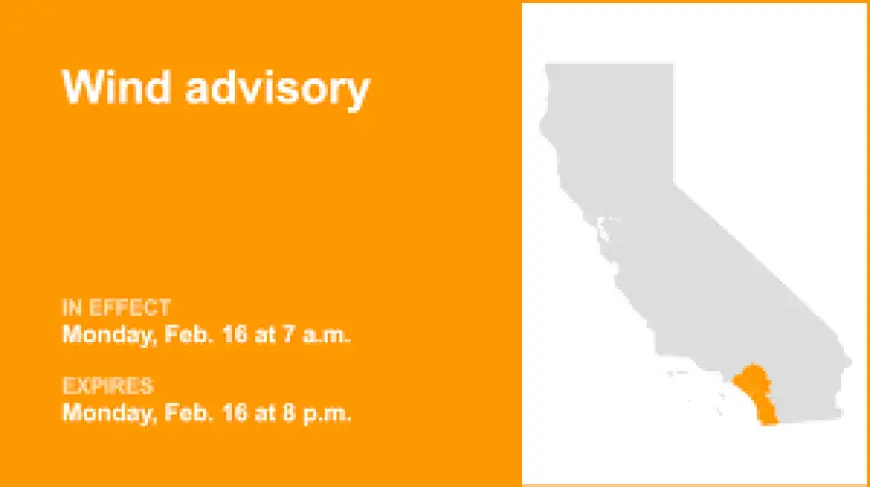
The National Weather Service office in Los Angeles/Oxnard has issued a wind advisory for portions of Southern California that will bring periods of sustained winds and dangerous gusts. The advisory warns of potential property damage, downed trees and power outages that could affect travel and routine activities.
When and where the advisory takes effect
The advisory takes effect early Monday, Feb. 16, 2026, beginning at 3: 00 a. m. ET and is expected to continue through 9: 00 p. m. ET that evening. The greatest impacts are forecast for coastal areas, valley corridors, mountain passes and ridges where downslope and funneling effects can amplify wind speeds.
Forecast guidance indicates sustained winds of 25–40 mph in exposed locations, with gusts reaching 60–75 mph in mountain passes, along coastal bluffs and through gaps in the Transverse Ranges. Urban and suburban neighborhoods with mature trees should be prepared for localized stronger gusts due to wind channeling between buildings and through streets.
Expected impacts and safety steps
Strong winds at the levels now forecast can lead to a range of hazards: downed power lines, scattered to widespread power outages, falling limbs or trees, and damage to unsecured structures and outdoor furniture. High-profile vehicles such as trucks, RVs and trailers will be especially vulnerable on exposed highways and overpasses.
Residents and businesses are advised to secure loose outdoor items, bring lightweight furniture and trash cans indoors, and trim weak tree limbs if it can be done safely before conditions deteriorate. Motorists should reduce speed, keep both hands on the wheel, and avoid sudden lane changes when encountering crosswinds. When driving through mountain passes or on exposed coastal roads, allow extra distance from other vehicles and be prepared for brief loss of control from gusts.
In the event of power outages, have flashlights and battery-powered devices ready, keep cell phones charged, and limit travel if possible until utility crews can assess and repair damage. If you rely on powered medical equipment, ensure you have backup power or an alternative plan.
Public services and travel advisories
Commuters should expect delays on highways and at airports where crosswinds or sudden gusts may force temporary speed restrictions or ground holds. Road crews and utility crews will likely be deployed to respond to debris removal and downed lines; these operations can cause temporary lane closures and detours. Travelers are encouraged to allow extra time and check current conditions before departing.
Emergency management officials emphasize situational awareness: avoid walking or parking under trees, do not touch downed power lines, and report hazards to local emergency dispatch. If you encounter a vehicle struck by fallen debris or a downed line, keep a safe distance and call emergency services.
The advisory is subject to updates as conditions evolve. Residents in affected areas should monitor official weather communications for any changes to timing, strength or geographic coverage and follow instructions from local public safety officials if conditions worsen.