

























Study Finds Non‑biologic Sources Can’t Fully Account for Organics Curiosity Detected on Mars

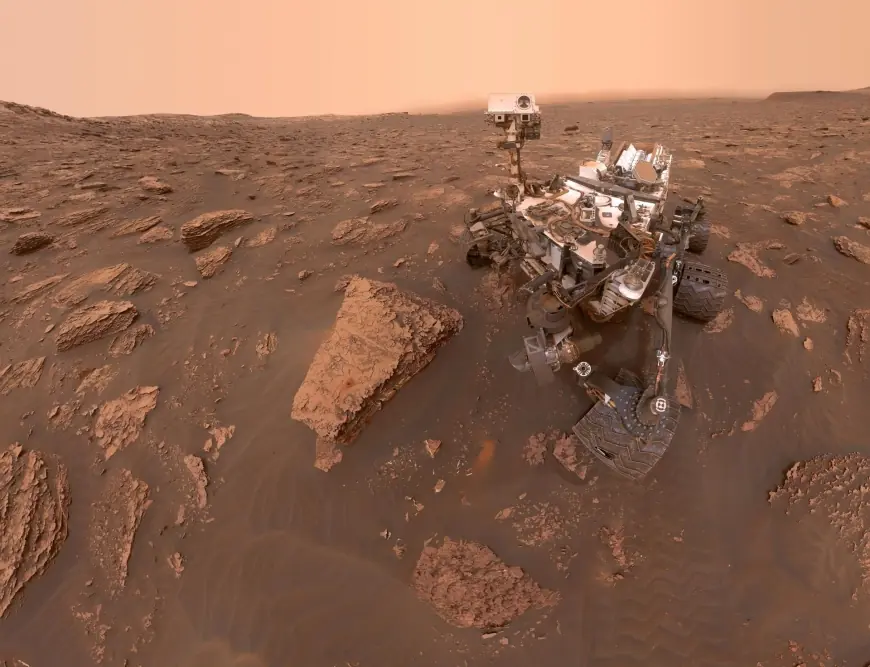
Researchers have concluded that the abundance of long‑chain organic molecules identified in a rock sample by the Curiosity rover is higher than known non‑biological pathways can plausibly produce. The finding, published on Feb. 4, 2026 (ET), strengthens the case that the molecules may have an origin tied to biological processes — though the study’s authors emphasize more work is required before life on Mars can be claimed.
What Curiosity found in Gale Crater
In March 2025 Curiosity’s chemistry lab analyzed drill material from an ancient mudstone in Gale Crater and detected decane, undecane and dodecane — the largest organic compounds yet identified on Mars. These straight‑chain hydrocarbons can be fragments of fatty acids, which on Earth are commonly produced by living organisms but can also form through abiotic routes. The rover’s Sample Analysis at Mars laboratory could not by itself determine whether the molecules were biological in origin, prompting researchers to test whether known non‑biological mechanisms could create the amounts observed.
Rewinding 80 million years: experiments and modeling
To assess whether abiotic sources could explain the measurement, the team combined laboratory radiation experiments with mathematical modeling and the Curiosity data to effectively “rewind the clock. ” The rock sampled by Curiosity would have been exposed on the Martian surface for roughly 80 million years. Cosmic rays and other forms of radiation degrade organics slowly but relentlessly; the researchers replicated Mars‑like radiation conditions to estimate how much organic material must originally have been present before exposure damaged or destroyed it.
Potential non‑biological contributors examined included interplanetary dust and meteorite delivery, atmospheric hazes, hydrothermal synthesis, serpentinization‑type reactions and other geochemical pathways. Even when stacked together, these processes fell far short of producing the inferred original abundance of long‑chain organics required to match the Curiosity measurements after accounting for 80 million years of radiation‑driven decay. The authors conclude that known abiotic sources cannot fully account for the detected molecules.
Implications and next steps
The study does not claim definitive evidence of past life on Mars; rather, it frames the Curiosity finding as growing evidence that biological formation of these compounds is a reasonable hypothesis. A central caveat is uncertainty about degradation rates of specific organic molecules inside Mars‑like rock under Mars‑like conditions. Small changes in those rates could alter the inferred original inventory significantly.
Authors call for further laboratory experiments that more precisely replicate Martian rock matrices and radiation histories, and for expanded in‑situ measurements that can better characterize molecular distributions and context. The results also underscore the scientific value of returned samples: laboratory analyses on Earth with more sensitive instruments would help resolve whether preserved fatty‑acid fragments or other complex organics are relics of ancient biology or products of obscure abiotic chemistry.
For now, the analysis tightens constraints on non‑biological explanations and places the long‑chain organics in Gale Crater among the most intriguing astrobiological signals yet seen on Mars — a cautious but notable step forward in the search for the planet’s past chemistry and potential habitability.