






















Brady Tkachuk drags Team USA into the fight with brute force and clutch scoring

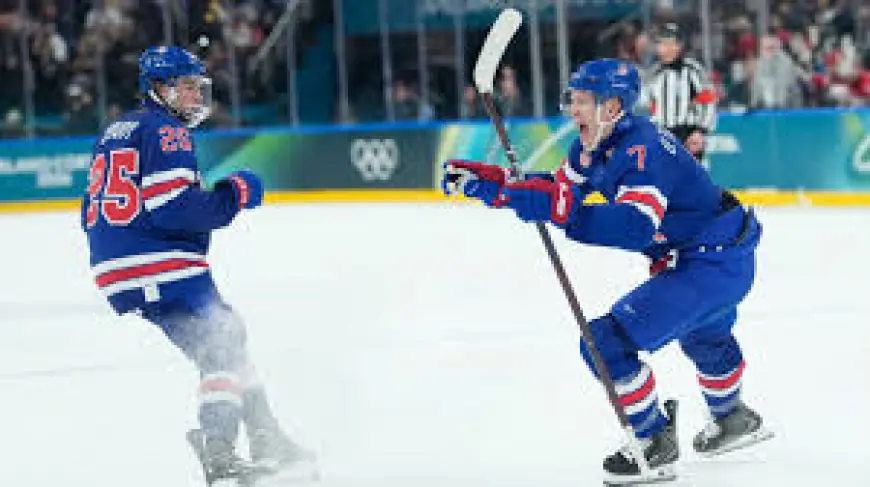
Brady Tkachuk waded into the corners, threw his body around in front of the net and punctuated a tense game with a celebration that made clear how much this means to him. In a group-stage contest in Milan, the winger’s mix of physicality, leadership and a timely goal helped pivot a shaky start into a 6-3 victory for the United States.
Physical edge sets the tone
Less than three minutes into the game Tkachuk engaged in a prolonged battle in the corner, repeatedly dislodging an opponent and finishing the exchange by driving him into the boards. He spent the evening playing on the edge: aggressive along the walls, willing to tangle in front of the crease and ready to absorb penalties as the price of making life miserable for the opposition.
That style is hardly new for Tkachuk—he’s known for combining size and nastiness with scoring touch—but it remains a defining attribute for this U. S. squad. His willingness to initiate physical confrontations and protect teammates communicates a message that resonates across the roster: this team will not be outworked. That mentality proved especially useful early, when the Americans dug themselves into a deficit and needed their most visible agitator to wrest momentum back.
Clutch moments and contagious leadership
Beyond the scrums and the penalty minutes, Tkachuk delivered when it mattered. Midway through the contest he converted on a vital goal, celebrating with a visible outpouring of joy and emotion. The strike halted a troubling stretch for the Americans and catalyzed a comeback that ultimately opened up the game.
His coach praised both the energy he brings and the impact it has on teammates. Tkachuk is vocal on the bench and between periods, a presence who pulls others into the game both physically and emotionally. Teammates feed off that intensity: what starts as one player’s battle in a corner often ripples into full-team resolve on the next shift. That intangible—leadership by example—has arguably been as important as the goals and hits.
What this means for Team USA’s tournament hopes
The game in Milan served as a microcosm of this roster’s identity: skilled players with a heavy emphasis on grit, willing to mix finesse with force. Tkachuk’s gene pool—one that prizes tenacity and an old-school edge—helps shape expectations for how the Americans will approach each opponent. If the team leans into that model consistently, it can weather early setbacks and grind out results against higher-skilled foes.
There are trade-offs. Playing on the edge can lead to costly penalties and occasional lapses in discipline. But in a short tournament, moments of sustained momentum and clear leadership can tilt tight games. Tkachuk’s ability to both irritate opponents and put pucks in the net gives the coaching staff a reliable ignition source when the lineup needs urgency.
Friday’s performance—equal parts intimidation and offense—was a reminder that elite players can change games in more ways than one. For a Team USA group still shaping its rhythm in the tournament, having a player willing to take the hits, start the scraps and score the big goals may be the difference between an early exit and a deep run.