























Small Prophets review: Mackenzie Crook’s magical new comedy is pure, pure pleasure

Small Prophets, Mackenzie Crook’s much-anticipated follow-up to Detectorists, has landed as a quietly beguiling sitcom that marries working-class melancholy with a sly, folkloric imagination. The series, centred on a man haunted by loss who begins creating tiny prophetic creatures, has been met with enthusiastic critical reaction for its tone, performances and uncanny balance of humour and heart.
What the show is — and how it surprises
At surface level, Small Prophets looks like a modest suburban sadcom: Michael Sleep, played by Pearce Quigley, is a shaggy, solitary figure in an overgrown semi on a south Manchester cul-de-sac. His days are filled with long shifts on the shop floor of a DIY superstore, visits to his dad in a nursing home and a routine that has not changed since his partner Clea vanished seven years earlier. That setup could easily have tilted into dour melodrama, yet Crook’s writing quickly reveals a softer, stranger ambition.
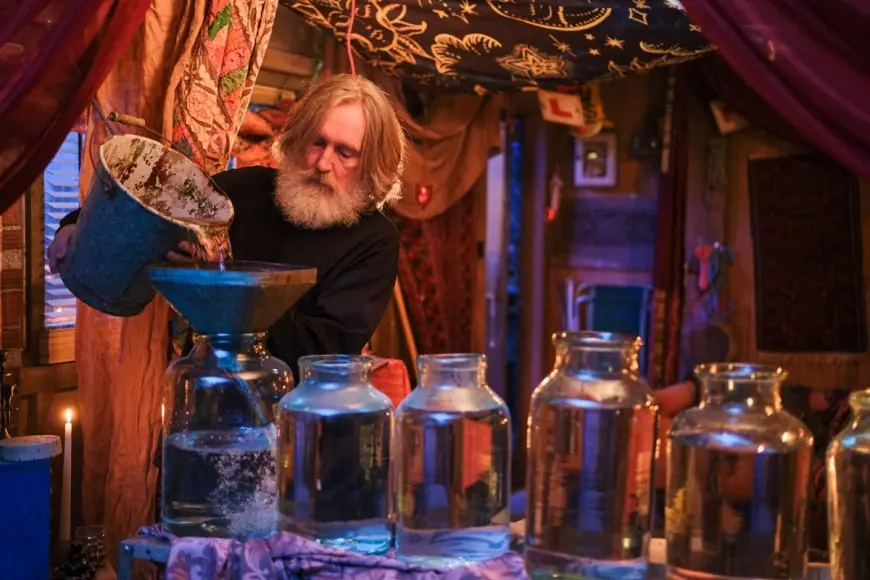
Instead of dwelling solely on absence, the series unspools a piece of inventive magical realism. Prompted by an idea from Michael’s father, Brian, the pair set out to create homunculi — tiny jarred creatures that can foretell the future or answer questions — using an old recipe that blends rainwater, horse manure and a little alchemy. From there the series opens up: the ordinariness of retail parks and neglected front gardens becomes a stage for mystery and wonder, and everyday exchanges gain a subtle, otherworldly charge.
Performance, tone and the Crook touch
The casting is central to the show’s success. Quigley, promoted from a supporting player in Crook’s earlier work to a fully rounded lead, carries Michael with an artful mix of meekness and mischief. His partnership with Lauren Patel’s Kacey — a younger colleague whose friendship with Michael is tender without being sentimental — becomes one of the series’ most satisfying threads.
Michael Palin’s turn as Brian, a charmingly eccentric figure whose grip on reality sometimes slips, adds both warmth and poignancy; it also marks his first television acting role in several years. Palin’s belief in the project and the material’s humanity is evident in moments that are comic, moving and quietly subversive. The supporting players, from the officious manager to the prickly neighbour, are drawn with the same affectionate but unsparing eye that made Crook’s earlier work resonate.
Critically, the show has been praised for creating a new vein of what might be called magical social realism: a style that finds the extraordinary in the most prosaic places without ever feeling fanciful for its own sake. Music and visual choices contribute to an atmosphere that is at once melancholic and mischievous, and Crook’s direction keeps the pace gentle but purposeful, allowing small moments to accumulate emotional weight.
Why Small Prophets matters
Small Prophets is notable not just as a follow-up from a singular comic voice but as an example of how television can excavate tenderness from routine lives. The show resists spectacle; instead it trades in tiny revelations — a prank in a DIY aisle, a marble run that feels like a life's philosophy, a jar that hums with possibility. Those moments conspire to transform what might have been a bleak conceit into something quietly celebratory.
For viewers who loved the humane absurdity and slow-burning emotional intelligence of Crook’s earlier work, this new series delivers a related pleasure while expanding the writer-director’s palette. It’s a show that rewards patience and attention, offering surprises that feel earned rather than engineered. In short, Small Prophets is a rare television pleasure: gentle, odd, and deeply humane.