























Shaidorov stuns as 'Quad God' Malinin collapses to eighth in Milan-Cortina men's figure skating

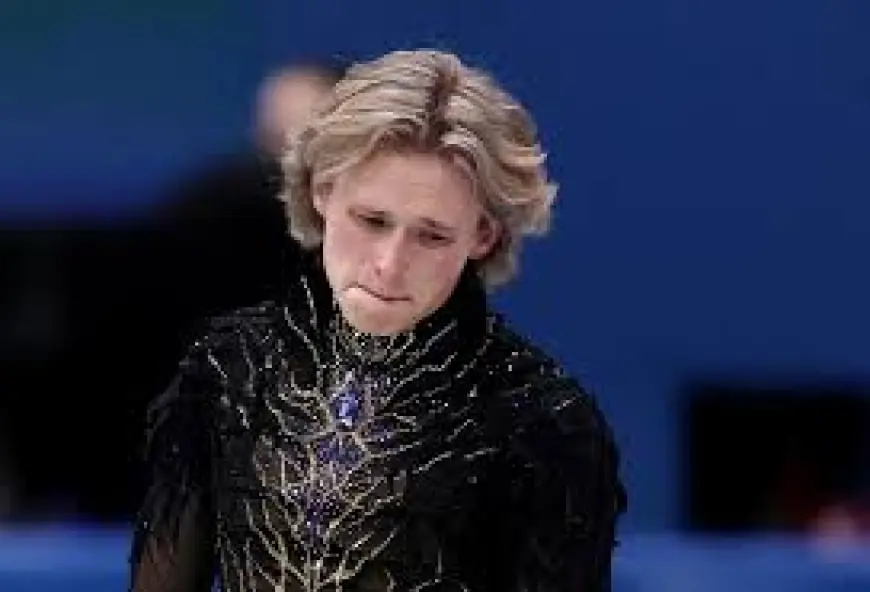
Mikhail Shaidorov produced the clean, composed performance the field could not match to win the men's Olympic figure skating title, leaving Ilia Malinin — the overwhelming favourite known as the 'Quad God' — to suffer a dramatic collapse and finish eighth. Yuma Kagiyama claimed silver and Shun Sato took bronze in an evening where five of the final six skaters fell in a chaotic free skate.
Flawless free skate secures historic gold for Kazakhstan
Shaidorov skated with remarkable control in an event defined by errors. He was the only competitor among the final group to skate cleanly, producing a routine that maximised both technical content and performance quality. That combination delivered a commanding winning total, and with it Kazakhstan's first Winter Olympic gold in 32 years.
The final block of the competition was riddled with mistakes: five of the last six skaters suffered falls, allowing Shaidorov's composed night to stand out even more. Kagiyama of Japan — widely viewed as one of the few skaters capable of challenging the top favourite — fell on a quad flip and had to settle for silver, while compatriot Shun Sato took bronze after a gritty performance.
Malinin's meltdown: how a dominant favourite unraveled
Ilia Malinin entered the free skate carrying the sport's highest technical expectations. He had arrived at the Olympic final with a lead from the short program and a reputation for pushing men's skating to new heights, but what followed when he stepped onto the ice at 4: 48 p. m. ET was a seismic reverse.
Malinin did not attempt the quadruple axel in competition at these Games, despite the element being listed in his planned content. He performed only a single axel in the free skate, a choice that drew audible reaction from the crowd. The program then collapsed under a cascade of errors: a failed quad lutz that sent him to the ice and, two elements later, a second fall that effectively ended his medal hopes. At the end of the routine he clutched his hair and left the ice visibly distraught.
The technical damage was severe. Elements that had been designed to deliver double-digit values were reduced to much lower-scoring passes after downgrades and falls. A quad lutz intended as the opening leg of a high-scoring combination became an element with minimal reward; a planned quad salchow-triple axel sequence deteriorated into a fall and lost points. Those failures eroded the program's base value and left Malinin chasing points rather than skating from a position of control. His technical score landed at 76. 61 points compared with the winner's much higher technical tally, a margin that illustrates the unforgiving arithmetic of modern scoring.
Aftermath and wider implications
Malinin had been under scrutiny earlier in the Games for inconsistent moments in the team event, where he was outscored in the short program and made errors in the free that nearly cost his country the team title. In the days before the men's event his coaching team relocated preparations 35 miles away to Bergamo in an attempt to reset his mindset, but the plan failed to yield the composure needed on the Olympic stage.
The result is a stark reminder that technical prowess alone does not guarantee Olympic gold when execution crumbles. Shaidorov's victory underscores how a clean performance can trump higher difficulty when rivals falter. For Malinin, this defeat will be examined as a case study in how pressure, small technical misses and the strict scoring regime can combine to produce a stunning upset on the sport's biggest night.
For the medalists, the podium represents both personal triumph and national significance: Shaidorov's gold is a breakthrough moment for his country, while Kagiyama and Sato reaffirm Japan's depth in men's skating even amidst the evening's chaos.