

























Matt Weston powers to historic Olympic skeleton gold, delivers Team GB’s first medal

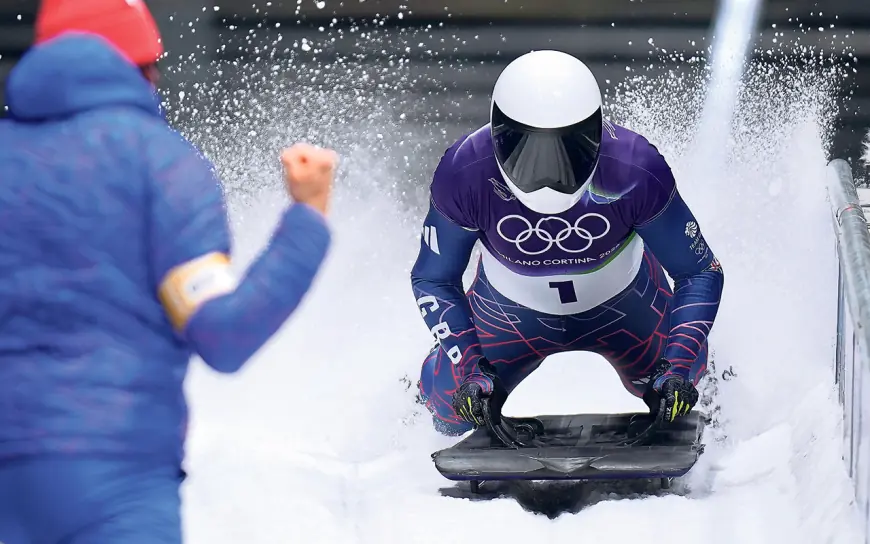
Matt Weston produced a commanding display on Cortina’s winding sliding track to claim Olympic skeleton gold on Friday evening ET, setting the track record on all four runs and delivering Team GB’s first medal of the Games. The 28-year-old’s composure and speed left rivals trailing as he cemented his place at the top of the sport.
Masterclass on Cortina’s ice
Weston opened his campaign with a measured first run and cleaned up the errors on subsequent descents, each time pushing the benchmark lower. He capped the performance with a final-run victory lap of 55. 61 seconds, finishing with a sensational combined time of 3: 43. 33.
The margin was decisive. Germany’s Axel Jungk finished 0. 88 seconds back to take silver, with defending Olympic champion Christopher Grotheer a further 0. 19 seconds behind for bronze. Weston’s four track records underlined a week of dominance: where others hunted lines and margins, he repeatedly found extra speed and consistency.
"It means everything. It means a hell of a lot to me personally, I've worked so hard for this, " Weston said after his victory. He spoke of the sacrifices behind the achievement—missed family events and personal commitments—and dedicated the win to his fiancee, family and friends. "I've sacrificed everything for this moment and it feels amazing!" he added.
The win adds an Olympic crown to Weston’s resumé that already includes two World Championship titles and three overall World Cup trophies, a run of form that made him heavy favourite in Cortina. Four years on from a painful 15th-place finish that nearly ended his career, Weston has flipped the script with the kind of focus coaches covet.
Next up: mixed team gold and the wider British story
Weston’s attention now turns to the new mixed-team skeleton event, where he has the opportunity to become a double Olympic champion at these Games. The format pairs one male and one female slider; each will take a single run and the combined time decides the medals. The event also features a reaction-start system, where sledders may only go when the start lights change and a false start attracts a half-second penalty—an extra layer of jeopardy Weston says he relishes.
He will be paired with the fastest of Britain’s women in the event, with several strong candidates vying for that spot. "We’re going to be one of the strongest sets of teams out there, " Weston said, predicting Britain can challenge China, Austria and Germany for further hardware. His roommate at the Games will also be in the line-up, offering extra depth to the squad.
The gold in Cortina also illustrates the wider arc of British skeleton success. The sport’s modern rise in the UK traces back decades to engineering-driven sled design and a talent identification system that funnels athletes from varied sporting backgrounds—rugby, weightlifting, athletics—into winter sledding. That structure, combined with focused investment in coaching and facilities, has kept Britain competitive despite lacking a home ice track.
Program changes prompted by the disappointment of the previous Winter Games have been followed by tangible returns. Within half an hour of Weston standing on the top step, the national federation’s talent drive saw a surge in registrations, evidence that Olympic success still fuels grassroots interest.
Weston’s victory is more than a single headline result: it’s a narrative of recovery, persistence and national depth in a sport Britain has made its own. With another shot at gold in the mixed event, Weston and his teammates have the chance to extend that story further before the Games conclude.