
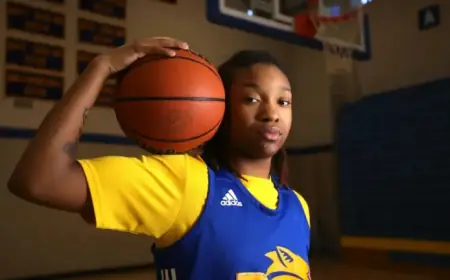






















Laila Edwards Is Team USA — On the Ice and In the Locker Room

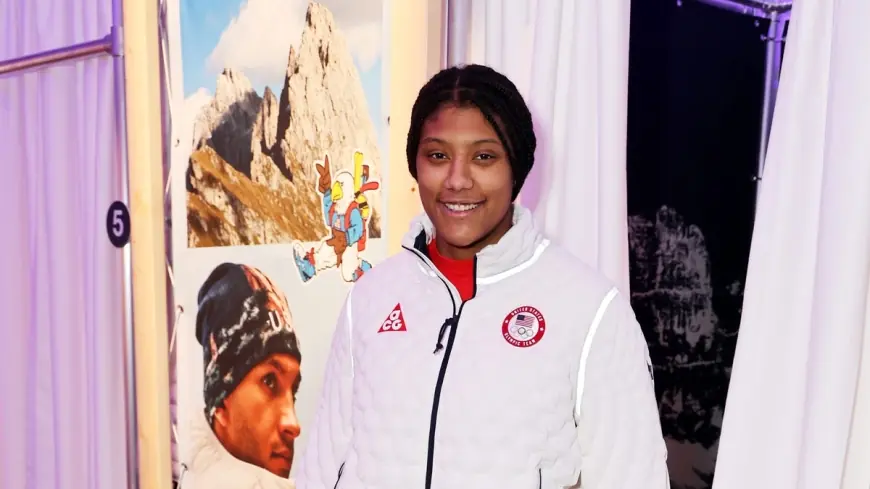
Milano Cortina has found a figurehead in Laila Edwards. The 22-year-old defender — a former forward and the 2024 world championships MVP — has combined elite play with an unmistakable cultural impact, becoming the first Black woman to represent the United States in Olympic women's hockey and inspiring a new generation of players.
On-ice impact: elite play, seamless switch
Edwards’ transition from forward to defenseman has been one of the tournament’s standout stories. She has produced strong offensive numbers and has logged some of the heaviest minutes on the U. S. roster. Through the team’s opening games, she collected a goal and three assists, and at another point in the tournament she was tied for second among defenders with seven points — a sign of how quickly she’s become a two-way force.
Her pedigree is unmistakable. A former MVP on the world stage, Edwards brings speed, puck skill and a willingness to join the attack while handling the responsibilities of top-pairing defense. Teammates and coaches have leaned on her in big moments, and her ability to read play and drive offense from the blue line has helped the Americans dominate many of their opponents in group play.
Off the ice: representation sparking real growth
Edwards’ presence at the Olympics has had immediate ripple effects across youth programs and nonprofits. Administrators at a scholarship and outreach organization focused on Black girls in hockey say applications have shifted markedly: many applicants now cite Edwards as a direct inspiration, pointing to her as proof that reaching Division I programs and national teams is possible.
Taylor Green, director of digital marketing and a board member for the nonprofit, described application essays filled with personal notes of encouragement. “They say, ‘Oh, I want to make it to Division I and I see people like Laila have and that inspires me, ’ or ‘I’m the only girl or girl of color on my team but I see Laila and that helps me keep going, ’ ” Green said. “Things that let you know her impact is really being felt, on and off the ice. ”
At community watch events and fundraising gatherings, Edwards’ visibility has also amplified the work of inner-city programs that provide free hockey and academic support. Leaders of those programs say broadcast moments that highlighted young players cheering and coaches celebrating created an emotional lift for families and volunteers who have long advocated for broader access to the sport.
Breaking barriers — and changing expectations
Hockey remains relatively exclusive in many parts of the country, with geography, equipment costs and rink access forming real obstacles. Edwards has confronted those barriers both by excelling at the highest levels and by embracing the responsibility that comes with being a visible role model.
“I definitely see it as an opportunity to be that representation for others that I didn't necessarily have growing up, ” Edwards said, reflecting on what it means to carry that mantle. “It can be overwhelming, but to me, it's a blessing that I can be that for someone else. ”
Her firsts are now part of the record: the first Black woman on the senior U. S. national team, the first to represent the country at the world championships, and now the first to skate for the United States at the Olympic Winter Games. For many young players who rarely saw a person of color on the ice when they were growing up, Edwards’ ceiling is a new baseline.
Coaches, nonprofit leaders and youth players say the immediate effects are visible — more scholarship applications referencing Edwards, more interest from communities that had felt excluded, and a renewed belief among kids who now see a clear pathway to elite hockey. If the Milano Cortina spotlight accelerates those trends, Edwards’ legacy will be measured as much by participation numbers and program funding as by goals and assists.
The U. S. team may be the immediate beneficiary of Edwards’ on-ice talents, but the broader winner could be the sport itself, widening who plays hockey and who believes they belong on the ice.