












Wuthering Heights Adaptation Provokes Split Over Faithfulness and Fury of the Novel

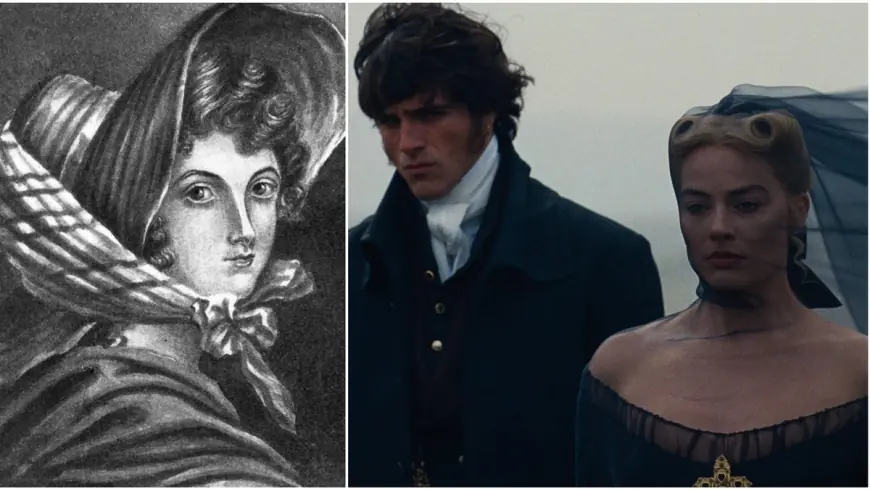
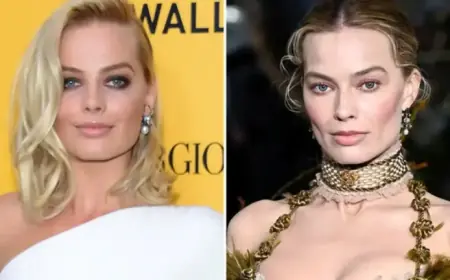
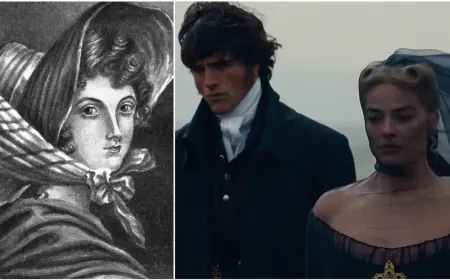
Emerald Fennell’s new screen version of Wuthering Heights opened this weekend (Feb. 13–15, 2026 ET), and early critical reaction is sharply divided. The film — led by Margot Robbie as Catherine and Jacob Elordi as Heathcliff — discards large swaths of Emily Brontë’s sprawling novel, intensifies sexualized imagery and leans into camp. For some viewers those choices feel like a daring reinvention; for others they blunt the novel’s singular, destructive romance.
How the film reshapes Brontë’s narrative
Fennell’s adaptation stops roughly where the novel’s first half ends, closing the story with Catherine’s death. In the film the character appears to suffer sepsis and an apparent miscarriage; the infant daughter who anchors the book’s second generation never arrives. That omission removes the decades-spanning arc in which children inherit and, eventually, heal the damage wrought by Catherine and Heathcliff.
The director has said the source material is dense and complicated and that cutting material was necessary to fit the story into a feature-length film. Beyond the truncated timeline, the adaptation simplifies or eliminates several characters and plotlines: the role that in the novel is played by a disgraced older brother is reassigned to the family patriarch, and the adaptation pares back the nested narration that gives the book its layered unreliability. Elements that in the book function as social and racial subtext are also downplayed in the film’s casting and characterization choices.
Critical response: divided on tone, romance and ‘strangeness’
Reviewers are divided over whether the changes are a legitimate reimagining or a betrayal. One prominent take argues that the novel’s power rests in its essential strangeness — a fevered mix of obsession, brutality and uncanny longing — and that the film never quite achieves that rarefied intensity. From this point of view, the adaptation’s stylized visuals and tightened focus make it less strange and less romantic than the source material needs to be.
Other critics have described the film as a high-camp, bodice-ripping reinvention that trades gothic dread for a glossy, eroticized sensibility. That reading finds the movie entertaining and provocative but emotionally hollow: showy set pieces and flamboyant touches replace the novel’s complex moral chaos. Praise for specific performances is mixed. Some reviewers single out a veteran supporting actor’s wry turn for lifting scenes that otherwise feel overstylized, while the housekeeper’s role — the unreliable moral center in the novel — is treated as trickier to translate and is reworked on screen.
On practical terms for the film industry, the decision to end with Catherine’s death closes the door on a direct sequel that would follow Brontë’s next-generation narrative. The director has framed this as a one-off adaptation choice; critics note that previous film versions likewise often stop at the midway point, though longer miniseries treatments have attempted the full sweep of the novel.
What this means for viewers and the novel’s legacy
For viewers approaching the film with an expectation of a faithful, multi-generational epic, the adaptation will feel incomplete. For those open to a reinvention that foregrounds desire, camp and visual audacity, it delivers a distinct cinematic mood. Either way, the debate highlights why Brontë’s book remains difficult to pin down: it is by turns brutal, romantic, strange and generational — qualities that resist tidy translation to a two-hour format.
Whatever one’s stance on fidelity, this adaptation ensures the conversation around Wuthering Heights will continue. The novel’s ability to unsettle readers persists even when its pages are trimmed, and filmmakers who try to stage its intensity still confront the same dilemma: how to preserve a story that has always been both ruinous and strangely redeeming.