























Brady Tkachuk Drags USA Hockey Back Into the Fight in Milan

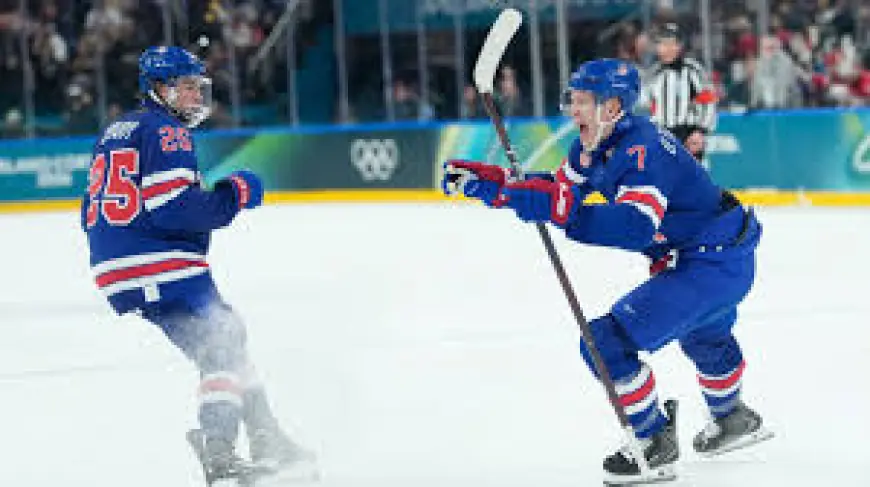
Brady Tkachuk turned a tense group-stage night into a statement performance, spearheading a comeback that left Team USA breathing easier after an early deficit. The forward's bruising play, timely goal-scoring and locker-room energy were on full display during a 6-3 victory on Saturday night (ET) in Milan, a game that underscored his role as the team's emotional and physical engine.
Physical edge and timely scoring
Tkachuk set the tone less than three minutes into the contest by hammering into battles along the boards, repeatedly knocking opponents off pucks and refusing to cede space in the corners. His proximity to the crease and willingness to mix it up produced a momentum shift midway through the game, when he finished a crucial sequence with a goal that ignited both the bench and the crowd.
That score was more than a single highlight; it was the kind of play that shifted the narrative of the match. The Americans had trailed early, and Tkachuk’s finish — celebrated with emphatic fist pumps and visceral emotion — helped catalyze a response that turned a worrying first half into a convincing final result.
Leadership by example, on and off the scoresheet
Coaches and teammates point to more than raw physicality when explaining Tkachuk’s impact. He is vocal between shifts and unafraid to set the bar in intensity, a presence that others feed off. That combination of effort and attitude has become central to how this U. S. team views itself: hard-nosed, competitive and willing to punish opponents in the dirty areas of the ice.
At times Tkachuk flirts with the edge of the rulebook — penalty minutes have long been a part of his game — but his teammates appear to accept that trade-off. His high-energy style has a multiplier effect, dragging lines into contested puck battles and forcing opponents to expend extra resources defending the areas around the net.
What the performance means for Team USA moving forward
The win highlighted both strengths and lingering questions for the Americans. When Tkachuk channels his physical prowess into smart plays around the net, the team reaps immediate benefits. When the rest of the lineup mirrors that engagement, the U. S. looks dangerous and resilient.
But the opening half of the game served as a reminder that relying on one player to ignite the group is not a sustainable strategy. Special-teams discipline and consistent execution across all three periods will be required if this roster hopes to contend deep into the tournament. Still, the ability to claw back from an early deficit and finish with scoring depth is an encouraging indicator.
For now, Tkachuk remains the heartbeat of this squad — a player whose mix of skill, grit and vocal leadership can change the tenor of a game in an instant. His performance on Saturday night will be remembered as one of those spurts of energy that define a team’s identity and can carry them through the toughest stretches of international play.