
























West Indies v Nepal: Hope opts to bowl as tactical changes set up Wankhede showdown

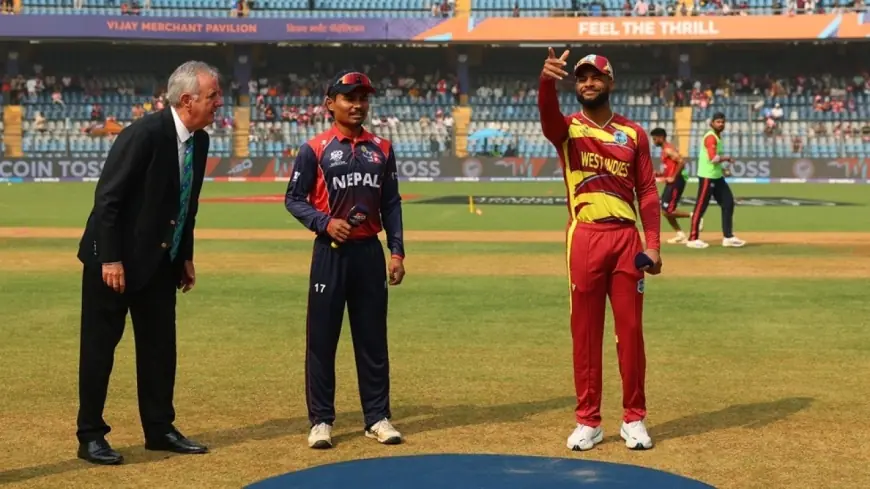
Shai Hope elected to field after winning the toss at the Wankhede Stadium, opening an intriguing strategic chapter for this ICC Men's T20 World Cup 2026 group clash. Both sides have made a single change to their XIs, with the hosts making a seam-conscious selection and Nepal tweaking their attack to suit the surface. The decision to bowl, and the personnel choices that followed, set the tone for what promises to be a contest of conditions and match-up planning.
Toss, team changes and the thinking behind them
Hope explained the choice to bowl by pointing to the state of the pitch, calling it "a little bit more damp than expected" and signalling a desire to exploit early movement. In response to a minor injury concern, a like-for-like alteration was made in the West Indies seam department: Matthew Forde has been handed a spot in place of Romario Shepherd, who was omitted with a slight niggle.
Nepal have also made a tactical swap, bringing in fast-bowling allrounder Sompal Kami for left-arm spinner Lalit Rajbanshi. Skipper Rohit Paudel expressed confidence that Kami’s pace and bounce will be more effective on the Wankhede surface, suggesting Nepal are prioritising seam penetration and control in the powerplay and early overs.
Playing XIs and what they reveal
The selections underline contrasting approaches: West Indies have opted to bolster their pace options, while Nepal have adjusted to lean on seamers who can hold up under pressure on a pitch offering early assistance.
West Indies XI:
- Brandon King
- Shai Hope (capt)
- Shimron Hetmyer
- Roston Chase
- Matthew Forde
- Rovman Powell
- Jason Holder
- Akeal Hosein
- Gudakesh Motie
- Shamar Joseph
- Romario Shepherd (withdrawn; replaced by Forde)
Nepal XI:
- Kushal Bhurtel
- Aasif Sheikh (wk)
- Rohit Paudel (capt)
- Dipendra Singh Airee
- Aarif Sheikh
- Lokesh Bam
- Gulshan Jha
- Karan KC
- Nandan Yadav
- Sandeep Lamichhane
- Sompal Kami
Key match-ups and what to watch
The dampness Hope highlighted should give the new ball an extra edge, making movement and disciplined lines crucial for both sides. West Indies’ pace battery, led by Shamar Joseph and supported by the allround skills of Jason Holder and Rovman Powell, will look to exploit any early seam. Gudakesh Motie and Akeal Hosein provide spin options for the middle overs, but the early phase looks decisive if the surface is offering seam and swing.
Nepal’s alterations indicate a bet on steady seam and the threat of late-order hitting. Sompal Kami’s inclusion introduces a different tempo and bounce; paired with Karan KC, he can test top-order techniques. Sandeep Lamichhane remains the bowling attack’s X-factor with leg-spin expected to be used to control scoring through the middle overs and pick up crucial breakthroughs.
With both sides familiar with the Wankhede — Nepal having already played there during the tournament and the West Indies enjoying a previous win at the venue — local knowledge will play into captaincies and bowling plans. The time of the match and how the pitch plays under specific conditions (more moisture early on, possibly easing later) will influence whether the winning side is the one that adapts fastest to subtle changes in bounce and grip.
Beyond the immediate tactical battle, the match provides a platform for several players to stake claims for later stages of the tournament. For Nepal, consistent top-order runs and tight opening overs will be essential against a power-laden lineup. For West Indies, executing a clear bowling plan in the powerplay and ensuring their finishers see enough of the ball could be the path to victory.
Expect a tense contest where tactical nuance and match-up execution determine the outcome more than raw power. The toss decision to bowl has injected an extra layer of intrigue; now it’s down to the players to turn strategy into scoreboard success.