























Spider-Noir Trailer Drops With Nicolas Cage in a 1930s Spider-Man Noir Reboot, Setting Up a 2026 Release and a Dark Marvel Detour

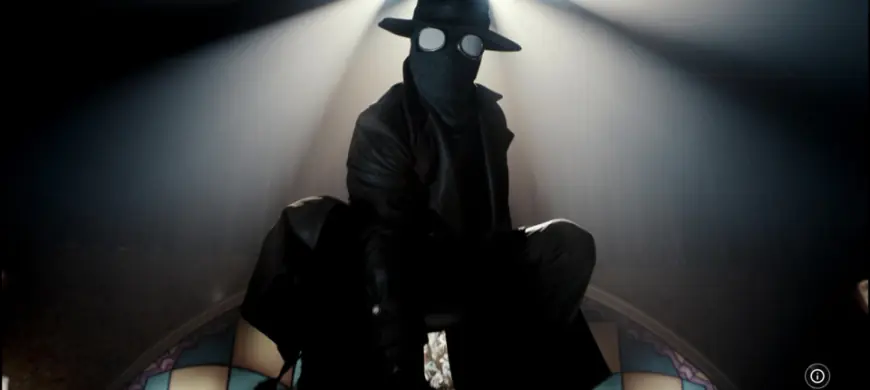
The first public trailer for Spider-Noir has officially pushed the long-rumored Spider-Man Noir project into the mainstream, giving viewers their clearest look yet at Nicolas Cage as a hard-boiled, world-weary vigilante in a stylized 1930s New York. The teaser arrived in recent days and confirms the show’s defining hook: a noir detective story that also happens to be superhero television, presented in both black-and-white and full color versions.
For fans searching “spider noir,” “spiderman noir,” or “spider man noir,” the takeaway is simple: this is not a standard modern-day spandex series. It’s a period-set crime saga designed to feel like a classic pulp thriller, with Cage leaning into the character’s grit, fatigue, and menace.
Spider-Noir and Spider-Man Noir: What This Is, and What It Isn’t
“Spider-Man Noir” is the popular shorthand for the character concept, but the series branding is Spider-Noir, and the story centers on Ben Reilly, a down-on-his-luck private investigator who is forced to confront a past life as a masked hero known as “the Spider.” It’s a reimagining that borrows noir DNA rather than following a familiar Peter Parker origin template.
That naming confusion is already fueling search spikes, including the frequent typo “withering heights” style drift of pop culture queries, where the intent is obvious even when the spelling isn’t. In this case, “Spider-Noir” is the official label, and “Spider-Man Noir” remains the concept fans recognize.
Nicolas Cage Spider-Noir Trailer: The Aesthetic Pitch Is the Message
The trailer’s biggest reveal is tone. Everything is built around shadow, smoke, trench-coat melancholy, and a city that looks like it runs on secrets. The production is explicitly offering two experiences: a black-and-white presentation aimed at old-school noir purists and a color version that leans into heightened stylization rather than realism.
That dual-format idea is more than a gimmick. It’s a statement about audience segmentation in 2026: make it visually “event” enough to cut through social feeds, while giving cinephiles a reason to argue about the “correct” way to watch it.
Marvel Context Without the Usual Formula
This project lands at a moment when Marvel-adjacent storytelling is under pressure to feel distinct. Viewers have become quicker at spotting the same comedic rhythm, the same third-act destruction pattern, and the same “wink at the camera” tone across franchises. Spider-Noir’s pitch is separation: it’s aiming for mood, consequence, and character damage first, spectacle second.
That matters because the noir genre has built-in narrative rules that don’t always play nicely with superhero comfort. Noir protagonists are compromised. Justice is partial. The city is bigger than the hero. If the series commits to that, it could feel like a genuine palate cleanser for audiences who want something less glossy and more morally murky.
Spider-Noir 2026 Release Plan and What to Expect Next
The series is now set for late spring 2026, with a U.S. premiere scheduled for Sunday, May 25, 2026 ET on a premium television outlet, followed by a global streaming rollout on Tuesday, May 27, 2026 ET. The season is eight episodes, and the streaming plan is positioned as a full drop rather than a slow weekly burn.
That release strategy tells you how the producers want this consumed: binge it like a crime novel, not like a traditional network mystery. It also signals confidence that the hook can hold for eight hours, not just eight minutes of trailer mood.
Behind the Headline: Why This Show Exists Now
Spider-Noir is a bet on three overlapping incentives:
-
Differentiation: Noir is a brand of its own. It offers instant texture without needing a complicated new mythos.
-
Star leverage: Nicolas Cage brings a built-in audience that spans genre fans, meme culture, and prestige-watchers.
-
Algorithmic packaging: A black-and-white option plus a color option creates debate, clips, side-by-side comparisons, and watch-mode discourse that can keep the show trending longer than a standard release.
The stakeholders are clear: rights-holders want a spider-branded hit that expands the screen universe; streaming distributors want a must-click premiere; and creators want enough stylistic freedom to justify revisiting a character audiences already think they know.
What We Still Don’t Know
Even with the trailer out, several key questions are still open:
-
How tightly the story ties into other spider-themed screen universes versus standing alone
-
Whether the villain arc is noir-psychological or big set-piece oriented
-
How far the show leans into the genre’s pessimism, especially in its ending
-
Whether the black-and-white and color versions are truly distinct grades or mostly cosmetic filters
Those answers will shape whether early reviews call it a bold reinvention or simply a stylish coat of paint.
What Happens Next: Realistic Scenarios and Triggers
-
A second trailer clarifies plot stakes
Trigger: a longer preview that shows the central case and the emotional core. -
Debate over “best version” becomes the marketing engine
Trigger: critics and fans split into black-and-white versus color camps. -
The show pulls in non-superhero noir fans
Trigger: word-of-mouth frames it as crime television first, superhero second. -
It becomes a casting and performance showcase
Trigger: Cage’s interpretation dominates the conversation more than the action. -
A second season discussion starts immediately
Trigger: strong completion rates during opening week after May 27, 2026 ET.
Spider-Noir is selling a promise: a Spider-Man Noir story that treats the mask like a burden, the city like a trap, and heroism like a debt that never stays paid. The trailer’s job was to prove the mood is real. Now the show has to prove it can sustain it.