






















Josh Hawley Confronts Minnesota AG in Fraud Scandal: ‘You Should Be Jailed’

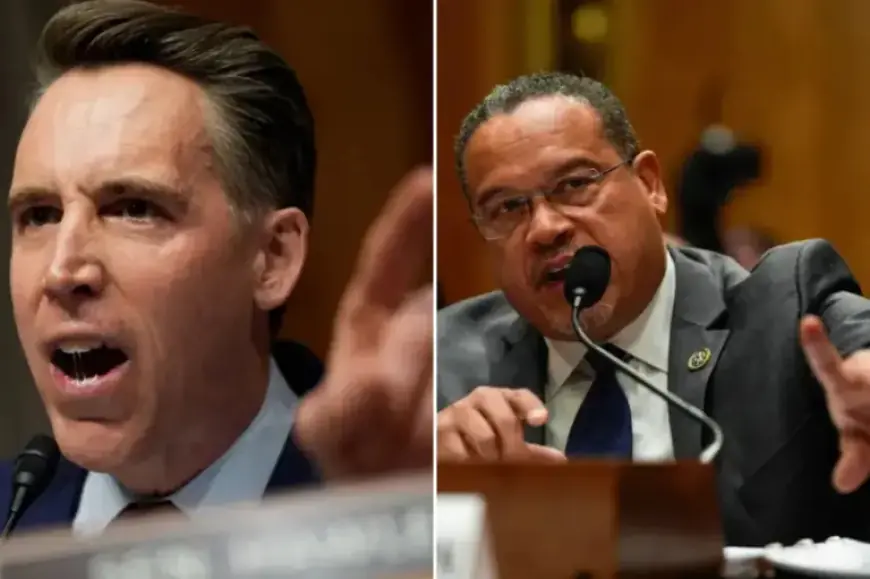
During a recent Senate Homeland Security and Government Affairs Committee hearing, Senator Josh Hawley (R-Mo.) confronted Minnesota Attorney General Keith Ellison over his campaign contributions linked to a significant fraud scandal. Hawley accused Ellison of accepting $10,000 from individuals associated with the Feeding Our Future scheme, which resulted in the theft of approximately $250 million in taxpayer funds.
Fraud Allegations Against Ellison
Hawley characterized Ellison’s acceptance of these funds as egregious, stating, “You helped fraudsters defraud your state and this government.” He indicated that the money was allegedly funneled into various illegal activities, including terrorism and drug trafficking. This accusation follows allegations that Ellison ignored whistleblower reports regarding the fraud as early as 2018.
Confrontational Exchange
The exchange between the senator and the attorney general was tense. Hawley asserted that there had been numerous complaints brought to Ellison’s office concerning the Feeding Our Future program, yet he claimed that no actions were taken. Ellison denied the accusations, insisting, “That’s a lie.” This prompted Hawley to further challenge Ellison, suggesting that he should be facing legal consequences for his inaction.
- Key Facts:
- Senator Josh Hawley challenges Attorney General Keith Ellison.
- Ellison accepted $10,000 linked to Feeding Our Future fraud.
- The scandal involved the misappropriation of $250 million in taxpayer funds.
- Key Quotes:
- “You ought to be indicted.” – Senator Josh Hawley
- “That’s a lie.” – Attorney General Keith Ellison
Hawley also mentioned that the entire hearing had been recorded, suggesting that any dispute about its content could be verified by the public. The senator concluded his remarks by stating that Ellison should resign, to which Ellison responded defensively, indicating similar sentiments about Hawley.
This high-profile confrontation highlights ongoing tensions regarding accountability and transparency within government institutions in relation to fraud investigations. As details continue to emerge, the implications for both figures and the broader political landscape are yet to be fully realized.