

























NASA Successfully Tests Revolutionary Laminar Flow Wing Design in First Flight

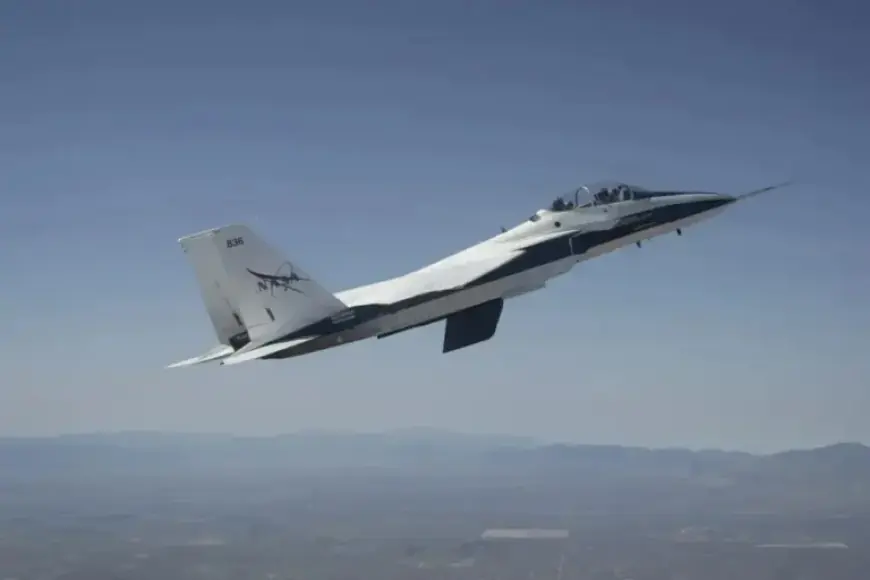
NASA has successfully conducted its first flight test of an innovative wing design aimed at enhancing laminar flow. This breakthrough is expected to reduce drag and lower fuel costs for future commercial aircraft.
Details of the Flight Test
The flight took place on January 29 at NASA’s Armstrong Flight Research Center in Edwards, California. An F-15B research jet was utilized for the test. A scale-model of the 40-inch Crossflow Attenuated Natural Laminar Flow (CATNLF) wing was attached vertically to the jet’s underside, similar to a fin.
During the approximately 75-minute flight, the team verified that the aircraft could maneuver safely with the added wing model.
Statements from NASA
Michelle Banchy, the research principal investigator for CATNLF, expressed her excitement: “It was incredible to see CATNLF fly after all of the hard work the team has put into preparing.” She emphasized that the successful flight made all their efforts worthwhile.
Significance of Laminar Flow Technology
The CATNLF design aims to enhance the smooth airflow over swept-back wings, which are commonly used in airliners and fighter jets. By minimizing disruptions that create drag, this technology potentially offers considerable reductions in fuel consumption and operating costs.
Future Testing Plans
This initial flight is one of up to 15 planned tests to evaluate the CATNLF technology across varying speeds, altitudes, and flight conditions. Banchy noted, “First flight was primarily focused on envelope expansion.” This step was crucial to ensure the safe dynamic behavior of the wing model before progressing to more complex maneuvers.
Flight Characteristics and Measurements
- Flight Altitudes: Approximately 20,000 to nearly 34,000 feet.
- Maneuvers Performed: Turns, steady holds, and gentle pitch changes.
The team employed multiple tools to measure laminar flow, including an infrared camera mounted on the aircraft to collect thermal data during the tests. This data will play a vital role in validating the wing model’s aerodynamic performance.
Implications for Future Aircraft
Banchy highlighted the potential of CATNLF technology: “It opens the door to a practical approach to getting laminar flow on large components.” Such advancements could significantly improve fuel efficiency in future aircraft designs.
Early findings indicate that the actual airflow during the flight closely aligns with predictions from computer models. This first successful flight builds on extensive prior work involving computer modeling, wind tunnel experiments, ground testing, and high-speed taxi tests.
NASA will continue its research flights to gather additional data, further validating the capabilities of the CATNLF wing design. This research is part of NASA’s broader Flight Demonstrations and Capabilities project, as well as the Subsonic Vehicle Technologies and Tools initiative.