




















Grace Tame, “Globalise the Intifada,” and the 2026 Sydney Protest: What the Chant Means and Why It Sparked a Political Firestorm

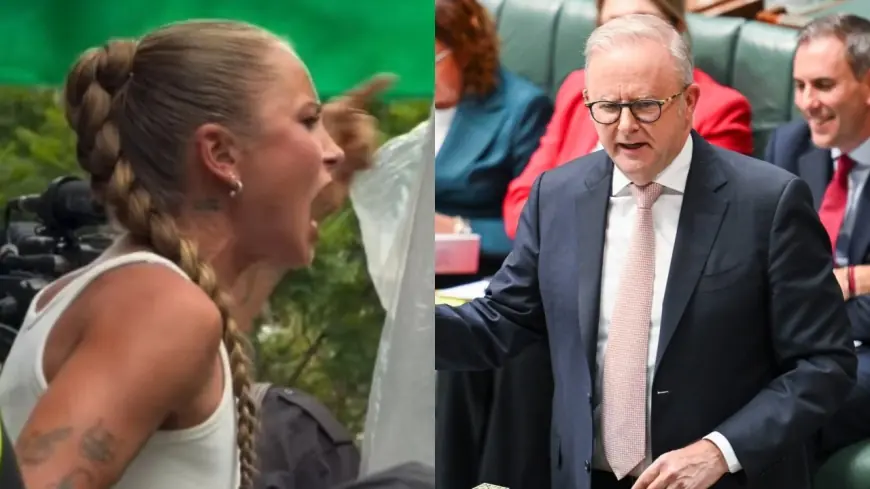
A Sydney protest tied to the visit of Israeli President Isaac Herzog has thrust former Australian of the Year Grace Tame into a fast-moving national argument over language, protest policing, and where political slogans cross into hate speech. In recent days, video from the rally shows Tame leading or joining chants that included “globalise the intifada,” a phrase that immediately drew condemnation from multiple elected officials and reignited debate about whether the slogan should be restricted under proposed laws.
The clash matters because it sits at the intersection of three sensitive issues at once: the Israel Gaza war’s spillover into diaspora politics, the limits of protest speech, and the reputational weight carried by a high-profile advocate whose public identity was forged in a very different national cause.
Who is Grace Tame and why she is a lightning rod
Grace Tame rose to national prominence as a survivor advocate who pushed to change laws that limited some sexual assault survivors from publicly discussing their experiences. She was named Australian of the Year for 2021, becoming one of the most visible voices in the country on institutional abuse, survivor rights, and cultural accountability.
That profile cuts both ways. Supporters see a proven activist willing to confront power and absorb backlash. Critics argue her platform carries added responsibility, and that her participation in a charged foreign policy protest brings her into a different arena with different risks.
What is intifada
Intifada is an Arabic word commonly translated as uprising, rebellion, or shaking off. In everyday Arabic usage, it can refer broadly to a popular uprising. In English-language political discourse, it is most often associated with two major Palestinian uprisings against Israeli control: the first, beginning in 1987 and ending in the early 1990s, and the second, beginning in 2000 and tapering off in the mid-2000s.
Those two historical episodes are central to why the term is so contested. Many supporters of Palestinian rights use it to mean mass resistance to occupation, sometimes emphasizing civil protest and collective refusal. Many Jewish organizations and pro-Israel advocates point to the period of violence during the second uprising and argue the word cannot be separated from attacks on civilians. The same word, in other words, arrives in public debate carrying radically different moral baggage depending on who is hearing it.
“Globalise the intifada”: what people mean, and why others hear a threat
“Globalise the intifada” is used by some activists as a call to broaden protest, boycotts, or political pressure in solidarity with Palestinians beyond the region. In that framing, it is about internationalizing a struggle and intensifying public action.
But opponents hear a different message: a call to export violent confrontation. That interpretation is fueling the political response now, because slogans are not just semantic objects in a vacuum. They are signals. In a polarized environment, they can be taken as permission slips by bad actors, or as intimidation by communities who feel directly targeted.
That tension is why this phrase repeatedly becomes a flashpoint: it is short, emotionally loaded, and interpreted through lived fear and recent events rather than dictionary definitions.
Grace Tame Sydney protest: what happened and why it escalated
The rally in Sydney was organized around opposition to Herzog’s visit and broader anger over the war. In the hours after the protest, multiple politicians publicly criticized the chant and questioned whether it should be treated as incitement or hate speech. The controversy quickly expanded beyond one protest into a wider political contest over how governments should respond to heated rhetoric at large demonstrations.
At the same time, some community leaders and protest organizers argue the focus on the chant diverts attention from policing at the event itself, including allegations of heavy-handed tactics and a broader pattern of tightening protest controls.
This is the core dynamic: one side argues public order and community safety require drawing hard lines around certain phrases, while the other side argues governments are using a single slogan to justify broader crackdowns on dissent.
Behind the headline: incentives and stakeholders shaping the fight
The incentives are blunt.
Politicians face pressure to demonstrate they can protect social cohesion and prevent intimidation, especially when community tensions are high. Police and state governments are incentivized to deter disorder and show that public gatherings will be managed tightly. Activists are incentivized to keep attention on the war and maximize turnout, often using chants that are designed to be memorable and viral.
Stakeholders are equally clear. Jewish communities are watching for signals that authorities will treat threatening rhetoric seriously. Palestinian and Muslim communities are watching for signals that protest speech will not be selectively policed. High-profile advocates like Tame face reputational exposure: their words are amplified, clipped, and replayed in ways that can crowd out nuance.
The missing piece is intent. Public debate tends to flatten everything into one of two claims: either the phrase is clearly a call for violence, or it is clearly a call for protest. Real life often contains both interpretations at once, and that ambiguity is exactly what turns a slogan into a political weapon.
What happens next: 5 realistic scenarios to watch
-
Legal clarification moves forward
Trigger: state lawmakers accelerate amendments that define when a slogan becomes a hate speech offense. -
Police guidance tightens for future rallies
Trigger: authorities issue operational rules about chants, signage, or dispersal orders at large protests. -
Tame responds directly and reframes her intent
Trigger: a public statement that either doubles down, clarifies meaning, or shifts focus to protest policing. -
Community mediation efforts expand
Trigger: interfaith and civic groups push public forums to reduce fear and prevent harassment on streets and campuses. -
The story becomes a precedent case for protest speech
Trigger: an investigation, charge, or court test that forces a formal definition of what counts as incitement in this context.
Why it matters
This controversy is not only about Grace Tame or one protest. It is about whether Australia is entering an era where governments police political slogans more aggressively, and whether that policing is seen as protecting vulnerable communities or suppressing unpopular speech. The answer will shape how people protest, how communities feel protected, and how quickly the country’s politics import distant conflicts into local civic life.