





















Nancy Guthrie update: Newly released surveillance images race across social media as viewers amplify the FBI’s request to identify the masked figure

Newly released surveillance images tied to the disappearance of 84-year-old Nancy Guthrie spread rapidly online Tuesday, magnifying investigators’ call for help identifying a masked figure seen at her home during the early-morning window linked to the case. The viral push has turned a local canvass into a nationwide recognition effort, as authorities stress there is still no confirmed suspect or person of interest and the central need remains the same: credible, time-stamped tips that can narrow where the investigation goes next.
Officials continue to describe the case as a likely abduction, citing forensic evidence at the residence and the circumstances surrounding the overnight surveillance activity.
What the newly released images show
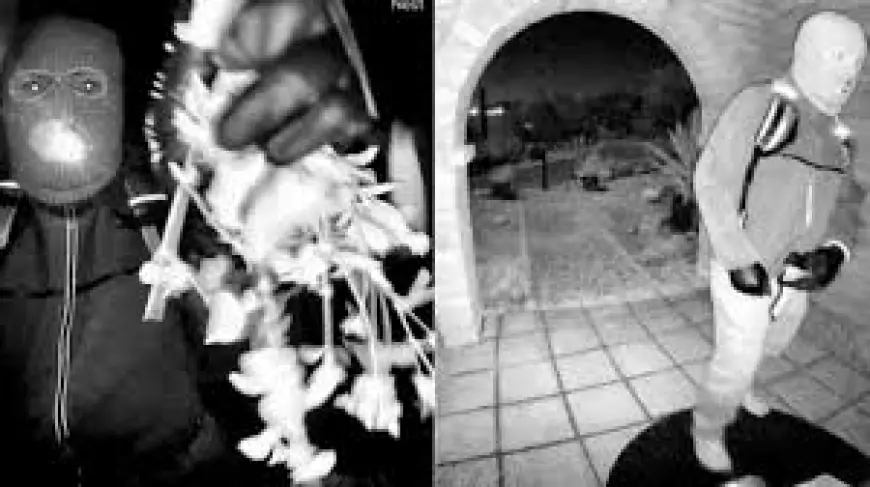
The new material includes still images and short video clips depicting a person in dark clothing wearing a mask and a backpack on or near Guthrie’s porch. In one clip, the figure approaches the front door and raises a gloved hand toward the security camera. In another, the person appears to hold a flashlight in their mouth and then covers the camera lens using vegetation.
Investigators have described the individual as appearing armed, noting what looks like a firearm positioned at the front of the belt. Authorities have not publicly confirmed the person’s identity, and they have not said the images alone establish the figure’s role beyond being a key lead.
Why the online spread matters
High-profile missing-person cases often reach a tipping point when authorities can share a concrete visual clue. Once an image is circulating widely, recognition becomes possible far beyond the immediate neighborhood—by coworkers, former classmates, service workers, or anyone who may have seen the same clothing, backpack, or gait.
The upside is speed: a single recognition tip can generate a name, and a name can quickly be checked against timelines, vehicle data, and other surveillance. The downside is noise: viral attention can produce floods of low-quality tips, lookalike accusations, and altered images that distract from the original evidence.
That’s why investigators are emphasizing “identify the person” rather than “solve the case online.” They want original information: who the person could be, why the tipster believes that, and any supporting details (vehicles, addresses, or prior sightings).
The timeline investigators are working from
Authorities have said Nancy Guthrie was last known to be at home on Friday, Jan. 31, and she was reported missing on Saturday, Feb. 1, after she did not arrive for a routine morning commitment and could not be reached.
Investigators have also said:
-
Blood found on the front porch was forensically matched to Guthrie.
-
A doorbell camera system was disconnected at roughly 1:47 a.m. ET in the early hours tied to the disappearance.
-
A separate camera system registered what it classified as a person around 2:12 a.m. ET, but usable footage was not initially available.
The release of images now suggests investigators were later able to recover additional material from backend or residual data sources connected to the camera system.
What authorities are asking the public to do
Investigators are urging people to focus on the kind of help that moves a case forward, especially during a narrow overnight window. The most valuable submissions tend to be concrete and verifiable:
-
Unedited exterior security video from late Jan. 31 into early Feb. 1
-
A sighting with a precise time and location, plus any vehicle details
-
Recognition of distinctive items (mask type, backpack shape, gloves, footwear) that match the released images
-
Information about anyone who recently discussed disabling cameras, staking out a home, or using vegetation or props to obstruct a lens
Authorities have also warned that many security systems overwrite footage within days, so preserving video is critical—especially for people who live along likely routes away from the neighborhood.
What typically happens next
When surveillance images become the core public lead, investigations often move into a “funnel” phase: going from broad outreach to a narrowing set of high-priority leads. The usual next steps include:
-
Building a minute-by-minute movement map using nearby cameras and any available traffic or business systems
-
Cross-checking recognition tips against that movement map to rule people in or out quickly
-
Shifting from general public appeals to more specific requests—such as a vehicle description, a route, or a tighter time window—once patterns emerge
Authorities continue to emphasize that the case is active and evolving. The image release is a major step, but it does not automatically mean investigators have identified the person or established where Nancy Guthrie was taken.
The stakes as attention grows
Officials have repeatedly highlighted medical urgency, noting Guthrie requires daily medication and has serious health needs. That reality shapes how investigators balance speed with caution: they need actionable information quickly, but they also need it to be accurate.
For the public, the central message remains simple. Sharing the images widely can help—but the most meaningful help is a tip that includes a name, a reason for recognition, and details that can be checked.