
























Savannah Guthrie husband Michael Feldman: Sorting verified biography from viral claims as interest spikes around the TODAY anchor’s family

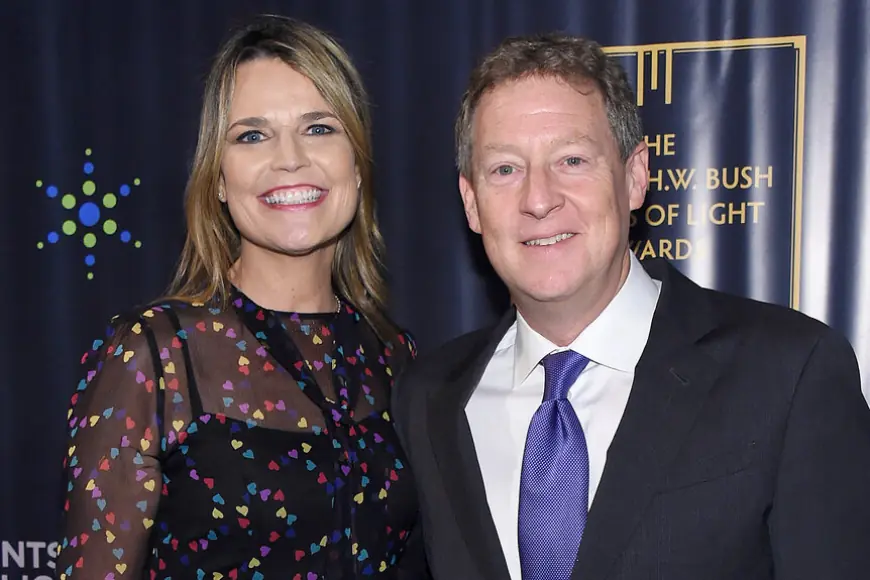
Interest in Michael Feldman, the husband of television journalist Savannah Guthrie, has surged in recent days as online posts recycle older political-era anecdotes, workplace details, and loosely sourced claims that blur fact and rumor. Publicly verifiable information about Feldman is relatively straightforward: he is a longtime communications and public-affairs strategist with a career that spans U.S. government work, Democratic politics, and corporate consulting. Much of what has circulated beyond that is either unsubstantiated or built from fragments presented without context.
Here’s what can be confirmed from public records and established biographical profiles—and how to separate that from the viral noise.
What’s verified about Feldman’s background
Feldman is a communications consultant who has held senior roles in strategic advisory work, including leadership positions at a major global communications and public-affairs firm. His public biographies describe a career centered on advising organizations and public figures on messaging, reputation, and stakeholder strategy.
His earlier résumé includes senior Democratic political work in Washington, including service connected to then–Vice President Al Gore, where he held roles that included senior adviser and traveling chief of staff during the 2000 campaign period. Those positions are widely documented across multiple biographical summaries that have been consistent for years.
On education and civic affiliations, Feldman is listed as a Tufts University alumnus and appears in institutional listings tied to university advisory or donor recognition materials.
Career moves: politics to consulting
The core “career move” that keeps resurfacing is not a sudden job hop, but a long arc:
-
Government and political roles (1990s–early 2000s): Work in Washington that culminated in senior positions around a vice-presidential operation and campaign period.
-
Private-sector consulting (2000s–present): A shift into communications consulting and public affairs, including co-founding work and later leadership at a consolidated global advisory firm.
Online chatter often treats this path as unusual; in Washington, it’s common. It also explains why Feldman’s name appears in many contexts that have nothing to do with celebrity: his day-to-day work has involved advising organizations that operate under public scrutiny.
Family, public profile, and what’s actually on the record
Feldman and Guthrie married in March 2014 in Tucson and have two children, Vale and Charley. Beyond that, Feldman has largely maintained a low personal profile relative to his spouse’s television presence.
That low profile is part of why “new” posts gain traction: basic biographical details can look like revelations when audiences encounter them for the first time. In reality, most of the widely shared facts—marriage date, children’s names, and his consulting background—have been publicly available for years.
Why viral claims spread during high-attention news cycles
When a family becomes part of a high-visibility news story, online narratives often expand beyond the core event into “background” content—some accurate, some distorted. Viral posts typically follow a few patterns:
-
Guilt-by-association leaps: A name appears in a long document set or in a secondary reference, then gets reframed as proof of wrongdoing.
-
Old material relabeled as new: Past job history or past social connections are presented as if they are fresh revelations.
-
Conspiracy packaging: Ordinary consulting work gets described using charged language that implies hidden power or secret influence.
A key reality: being mentioned in a document dump, email chain, or third-party contact list is not the same as being accused of a crime, charged, or found responsible for misconduct. Absent a specific allegation supported by filings or official statements, those leaps remain speculation.
How to vet claims before sharing
If you’re trying to separate verified biography from viral claims, these checks help:
-
Look for primary documentation: court filings, official bios, or institutional listings—not screenshots without provenance.
-
Watch for vague accusations: posts that never identify a specific act, date, or record usually can’t be verified.
-
Distinguish presence from culpability: a name appearing in someone else’s materials is not evidence of personal misconduct.
-
Confirm timelines: claims that don’t match known dates (jobs, marriage, locations) are often stitched together.
For now, the confirmed picture of Feldman is that of a long-tenured communications strategist with a well-documented Washington-to-consulting career and a generally private personal posture. The rest of the online swirl remains exactly that—swirl—unless and until it is tied to verifiable records.
Sources consulted: FGS Global; Tufts University; People; Wikipedia