























Tucson Arizona investigators release armed-suspect images in high-profile disappearance

Tucson, Arizona investigators on Tuesday, Feb. 10, 2026, released surveillance images showing a masked, armed person at the front door of 84-year-old Nancy Guthrie on the morning she vanished. The images mark a major escalation in a case that has drawn national attention and intensified pressure on authorities to identify a suspect and locate Guthrie.
Officials have said the disappearance is being treated as a suspected abduction. They have not publicly named any suspect, and they have urged the public to focus on verifiable tips rather than rumors.
Tucson Arizona case: what the new images show
The newly released stills come from a doorbell-style security camera and show a person wearing a mask and holding what appears to be a firearm while near the home’s entry area. Investigators said the individual appears to be tampering with the camera equipment.
Authorities have not publicly confirmed whether the person in the images is definitively tied to Guthrie’s disappearance, but the decision to release the visuals suggests investigators believe the public can help identify the individual or provide information about vehicles and movements in the area that morning.
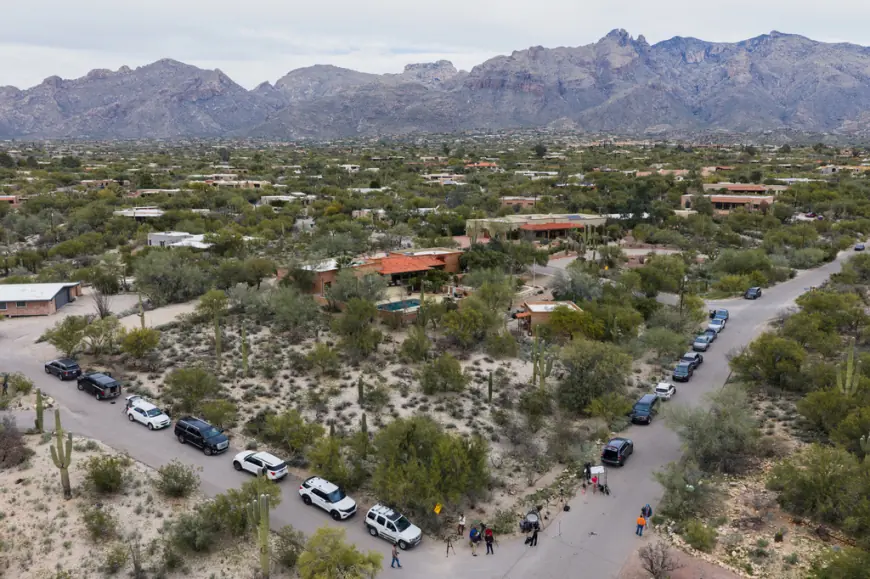
The home is in the Catalina Foothills area north of central Tucson, a suburban community where residents typically expect quiet streets and low crime. That contrast has made the case particularly unsettling for many locals.
The timeline investigators have outlined
Law enforcement has emphasized that the “known timeline” is still being refined. What has been described publicly is a narrowing window between the last confirmed family contact and the moment concerns rose.
Investigators have said Guthrie was last seen by family on Saturday night, Jan. 31, 2026, and that she was discovered missing the next day. Authorities have also said blood found at the home was confirmed to match Guthrie’s DNA, a development that pushed the case firmly into “high risk” territory.
Officials have not publicly confirmed a motive. Ransom-related messages have circulated in connection with the case, but investigators have cautioned that not every communication associated with a high-profile event like this is automatically authentic.
Why the search has expanded beyond the home
In major missing-person cases, investigators typically build outward from the residence: canvassing neighbors, requesting camera footage, tracking phone and financial activity, and re-interviewing anyone connected to the timeline. A search of a related residence in the Tucson area earlier in the week drew attention, but no arrest has been announced.
The newly released images may help broaden the search in a practical way: identifying clothing, gait, posture, or distinctive items that a friend, coworker, or neighbor might recognize. Even small details—such as where the person was walking from, how they held the weapon, or whether they seemed familiar with the entry setup—can become useful leads when combined with video from other nearby cameras.
What residents are being asked to do
Authorities have made clear that the public can help most by providing specific, time-stamped observations rather than general speculation. They have also warned against confronting anyone who resembles the images.
Key actions being urged include:
-
Reviewing home security footage from early Sunday, Feb. 1, 2026, especially activity near residential streets and driveways.
-
Reporting any unfamiliar vehicles that were parked unusually or moving slowly in the area around that time.
-
Sharing information about anyone who suddenly changed behavior, travel plans, or routine in the days immediately after the disappearance.
Investigators have also emphasized that tips should go directly to law enforcement channels rather than being posted publicly, where details can be distorted or prompt copycat claims.
What to watch next in Tucson
The next public milestones are likely to be incremental: clearer time windows, confirmation of whether a vehicle is involved, and potential release of additional images or video. If investigators can link the armed individual to other cameras, it may allow them to map a route—an important step for identifying where the person came from and where they went next.
In the meantime, Tucson’s broader civic agenda continues in the background. City leaders recently approved emergency steps aimed at streamlining approvals for shelter and housing projects, signaling that public safety and housing pressures remain intertwined issues for the region. That contrast—daily governance alongside a gripping criminal investigation—captures the reality for many residents: normal life continuing while a community waits for answers.
Sources consulted: Federal Bureau of Investigation, Reuters, KOLD-TV, AZPM News