
























Ilia Malinin and Yuma Kagiyama set up men’s showdown as Team USA strikes first

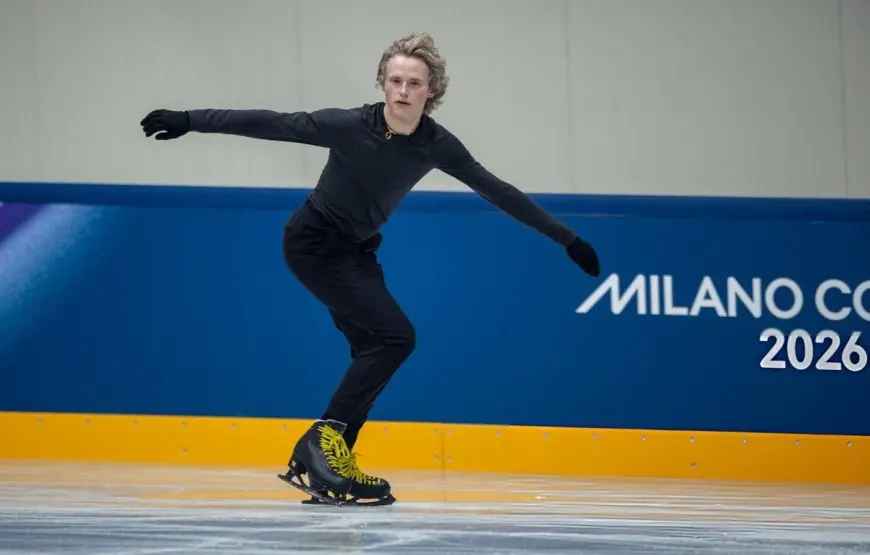
The Olympic figure skating week in Milan has already produced a major statement: Team USA defended its team-event title, powered by Ilia Malinin’s pressure-packed men’s free skate that sealed gold on Feb. 8. Now the spotlight shifts to the individual events, where Malinin—the “Quad God” nickname-holder—and Japan’s Yuma Kagiyama are on a collision course as the men’s medal race begins in earnest on Tuesday.
Team USA wins the team event
The team figure skating event ended with the United States on top, Japan second, and Italy third. The decisive moment came in the final segment, when Malinin delivered the men’s free skate with the standings tied late, turning the last skate into a winner-take-all situation.
Ellie Kam and Danny O’Shea played a key role for the Americans in pairs. After an earlier mistake in the short program, they rebounded with a clean free skate that kept the U.S. within striking distance before the closing segments. Madison Chock and Evan Bates contributed to the overall lead in ice dance, while Amber Glenn’s points in women’s singles helped keep the margin tight enough for Malinin to finish the job.
Malinin’s bio: age, height, and parents
If you’re searching “how old is Ilia Malinin” or “Ilia Malinin parents,” here are the basics that have become part of his Olympic storyline:
-
Age: 21 (born Dec. 2, 2004)
-
Where he’s from: born in Fairfax, Virginia; raised in the Washington-area skating corridor
-
Height: about 5 feet 9 inches (1.74 m)
-
Parents: Tatiana Malinina and Roman Skorniakov, both former Olympic figure skaters (they competed internationally before settling in the United States)
Malinin’s “Quad God” label is rooted in his risk profile: he builds programs around multiple quads and treats technical difficulty as his competitive advantage—especially in free skating, where base value can separate the podium from the pack.
Figure skating Olympics 2026 schedule: next key sessions (ET)
Here’s a quick look at the next major figure skating sessions on the Olympic schedule, listed in Eastern Time:
| Date (ET) | Time (ET) | Event |
|---|---|---|
| Tue, Feb. 10 | 12:15 PM | Men’s short program |
| Wed, Feb. 11 | 1:30 PM | Ice dance free dance |
| Fri, Feb. 13 | 1:00 PM | Men’s free skate (medals) |
| Sun, Feb. 15 | 1:45 PM | Pairs short program |
| Tue, Feb. 17 | 12:45 PM | Women’s short program |
| Thu, Feb. 19 | 1:00 PM | Women’s free skate (medals) |
(Team event is already complete; these are the next headline sessions most fans track day to day.)
Kagiyama, Shun Sato, and the men’s picture
Japan arrives with depth and momentum. Kagiyama has shown he can win key segments, and teammate Shun Sato has demonstrated the kind of steadiness that can climb the standings when others unravel. The central question is whether anyone can keep pace with Malinin’s technical ceiling over two programs—especially if he lands a full quad layout cleanly.
For Malinin, the men’s short program is the first pressure test of the individual tournament. A short program doesn’t allow as much room to “out-base-value” mistakes; one pop or fall can erase the cushion he often creates in free skating. For Kagiyama, the goal is simple: stay close enough after the short to force Malinin to skate clean again on Feb. 13.
Ice dance intrigue and the backflip debate
Ice dance is shaping up as a razor-thin fight at the top. Chock and Bates are among the favorites, but the rhythm dance standings have already shown how small the margins are—levels, twizzles, and step sequences can swing medals quickly.
Meanwhile, Malinin’s Olympic backflip moment has reopened a long-running debate about innovation and credit in the sport. Surya Bonaly’s famous one-foot backflip in 1998 is often cited as the iconic predecessor—performed when the move was penalized rather than rewarded. With backflips now permitted under modern rules, the sport is grappling with how to celebrate evolution without flattening the history of who took risks first.
Sources consulted: International Skating Union, Olympics, Reuters, Associated Press