

























Chloe Kim heads into Olympic halfpipe with a braced shoulder and a three-peat bid

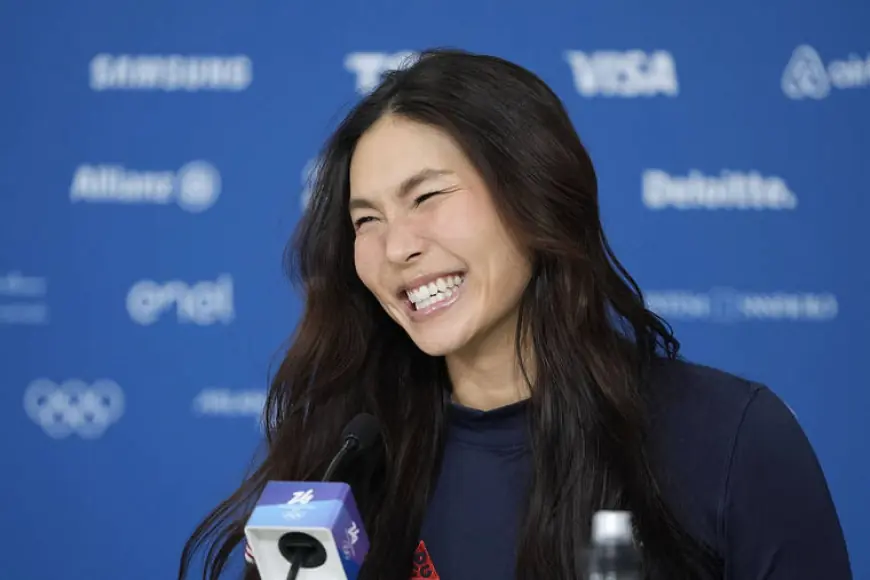
Chloe Kim is set to begin her Olympic halfpipe campaign this week in Livigno, Italy, competing with a shoulder brace after a January dislocation and torn labrum. The two-time defending Olympic champion is chasing a third straight gold at the 2026 Winter Games, a feat no woman has accomplished in snowboard halfpipe.
With qualifying and finals scheduled across Feb. 11–12, 2026, the focus is on whether Kim can keep her shoulder stable while still pushing the difficulty level that has defined her best runs.
Injury update: dislocation and torn labrum
Kim disclosed on Jan. 8, 2026 that she dislocated her shoulder in a training fall. Follow-up imaging later identified a torn labrum, an injury that often makes the joint more prone to slipping again under load. Rather than opting for immediate surgery, she has been preparing to compete with added stabilization, including a brace, and a training plan designed to limit re-injury risk.
A shoulder may look secondary in snowboarding compared with legs, but it matters for balance, rotation control in the air, and absorbing awkward landings. The practical question in the halfpipe is whether she can keep the arm protected through high-speed takeoffs and repeated impacts without dialing the run back too far.
The schedule: when Chloe Kim competes
Kim’s women’s halfpipe schedule is set for:
-
Qualification: Wednesday, Feb. 11, 2026, beginning 10:30 a.m. local time in Italy (4:30 a.m. ET).
-
Final: Thursday, Feb. 12, 2026, beginning 7:30 p.m. local time in Italy (1:30 p.m. ET).
Those are the headline start times; exact run order within each session can shift based on start lists and event flow. For viewers in the U.S., the early-morning qualifying window in ET is a key planning point, while the final lands in the early afternoon.
Why a three-peat is within reach
Kim enters these Games with the sport’s most complete Olympic résumé in women’s halfpipe, and her peak scoring ceiling remains among the highest in the field. She also has a long track record of delivering under Olympic pressure—often raising execution quality when it matters most.
The complication this time is timing: her first truly high-stakes halfpipe runs in months come at the Olympics rather than a typical ramp-up through multiple pre-Games contests. That compresses the margin for error. If she looks comfortable in qualifying—clean amplitude, controlled grabs, and confident landings—it will signal the shoulder is manageable at competition intensity.
A tougher field than four years ago
The women’s halfpipe field has advanced quickly since the last Olympics. Younger riders are arriving with more speed, higher airs, and increasingly complex rotations, and the medal picture is less forgiving if a favorite leaves points on the table.
That puts extra emphasis on Kim’s execution. In a deep field, a cautious run can keep an athlete in contention, but it may not win. The balance for Kim is clear: protect the shoulder without losing the amplitude and technical punch that separate gold from silver.
What judges and rivals will be watching
For Kim, the evaluation won’t hinge only on whether she lands; it will be the quality of the landings and how “free” her riding looks. A braced shoulder can subtly affect posture and arm positioning, which can ripple into rotation timing.
Key signals to watch in the first clean run:
-
Takeoff posture and arm set: any visible guarding can reduce pop.
-
Grab commitment: shorter, tentative grabs can lower impression and execution.
-
Landing absorption: stiff landings increase the chance of a mistake on the next hit.
If she strings together two smooth runs across qualifying and the final, the injury storyline fades fast. If she has to bail on a rotation or protect the shoulder mid-run, the door opens for challengers.
Key takeaways ahead of the final
-
Kim is competing with a shoulder brace after a January dislocation and torn labrum.
-
Women’s halfpipe qualification is Feb. 11 (4:30 a.m. ET) and the final is Feb. 12 (1:30 p.m. ET).
-
The field has progressed, meaning she likely needs both difficulty and clean execution to win a third straight gold.
Sources consulted: Reuters, Olympics.com, NBC Olympics, Los Angeles Times