























Super Bowl LX turns Levi’s Stadium into the center of the sports world again—what’s different this time, and why it matters for the Bay Area

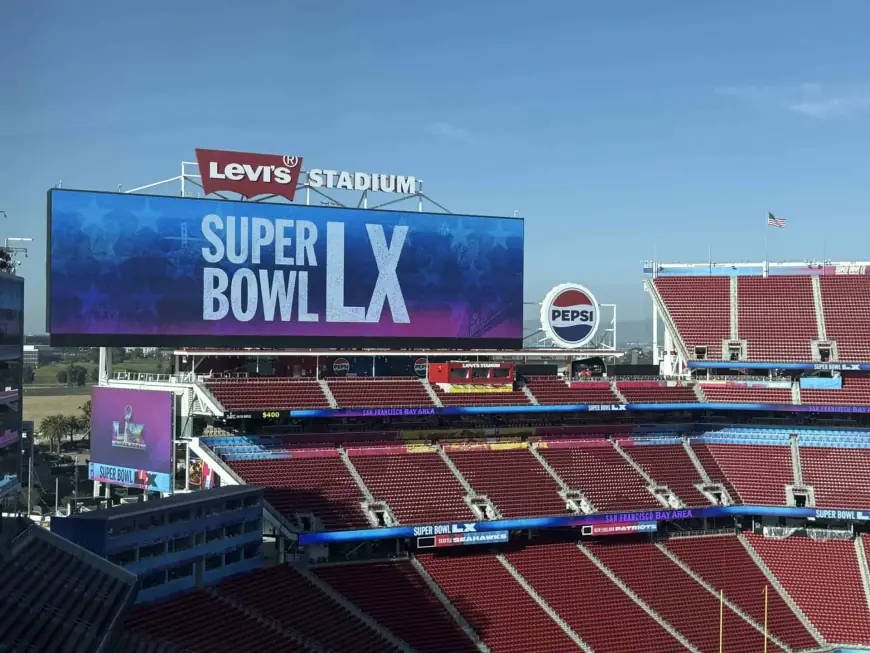
A decade after Levi’s Stadium last hosted the Super Bowl, Super Bowl LX has turned Santa Clara back into the center of the sports world on Sunday, Feb. 8, 2026 (ET). The game itself is the headline, but the bigger story for the region is how much has changed since 2016: a major stadium overhaul, a wider “regional host” footprint that pulls San Francisco and the South Bay into one event week, and a sharper focus on transportation, security, and legacy spending that’s designed to outlast one Sunday.
A second Super Bowl, but a different Bay Area moment
When the Super Bowl came to the stadium in 2016, the region was in a different place—less dependent on mega-events for civic branding and before the recent cycle of high-profile sports bids. This time, the Super Bowl is being treated as part of a larger run of global events, with organizers framing it as a test of whether the Bay Area can deliver a smooth, safe, high-capacity week across multiple cities and agencies.
That framing matters because hosting is no longer just about a stadium being ready. It’s about airport arrivals, transit performance, public safety staffing, and whether visitors actually move around the region—or stay bottled up in traffic.
The stadium itself has been rebuilt around the show
Levi’s Stadium is hosting again after a substantial renovation package in the run-up to Super Bowl LX. The upgrades have emphasized the fan experience and production capability: larger, higher-resolution video boards, expanded ribbon-board coverage, revamped premium areas, and improved connectivity throughout the building.
The practical impact is twofold. First, the venue is aiming to feel modern alongside newer NFL stadiums that have opened in the last decade. Second, better in-building connectivity and display tech change how fans consume the event in real time—replays, graphics, and in-stadium storytelling now play a bigger role in how the Super Bowl experience is judged.
Transportation is the real “home-field” challenge
If there’s one place the Bay Area’s differences are most visible, it’s mobility. A single-venue event can still strain the region because the stadium sits near major highways, limited local parking, and a transit network that requires coordination across systems.
For Super Bowl weekend, agencies have leaned hard on “don’t drive” messaging, with expanded rail staffing, extra-long trains, and modified light rail and bus operations aimed at moving crowds in predictable waves before and after the game. Even with those plans, early congestion around the stadium corridor has been a defining image of the day—fans stuck in ride-share gridlock, high offsite parking prices, and long walks from drop-off points when roads tighten for credentialed access.
Why it matters: if the Bay Area wants to stay in the rotation for future mega-events, reliable movement is the proof point. A great stadium doesn’t help if people can’t reach it.
Security is tighter, and the checklist is longer
The security posture around Super Bowl LX is notably more intensive than a typical NFL game day. That includes expanded screening protocols, tighter perimeter controls, and stricter rules on what fans can bring into the venue. The emphasis has been on faster throughput at gates while maintaining layered screening—an approach that reflects both the size of the event and the reality that major gatherings now operate under higher baseline risk assumptions than they did a decade ago.
For the Bay Area, the significance is operational: this is one of the biggest real-world stress tests of interagency coordination—police, fire, medical response, traffic control, and emergency communications—across multiple jurisdictions in a single weekend.
The economics are bigger—and more debated—than last time
Local projections for Super Bowl LX place the regional economic impact in the hundreds of millions of dollars, with estimates clustering around the mid-$500 million range and some higher projections reaching roughly $600 million-plus, driven by hotel demand, dining, transportation, and event-week spending. Visitor counts have also been projected in the hundreds of thousands, with a large share coming from outside the region.
But the argument underneath the headline numbers is sharper now: which cities benefit most, who pays for staffing and cleanup, and whether the gains are concentrated near the stadium and core tourist zones. This has pushed local leaders to talk less about “one weekend” and more about “legacy”—what stays behind when the banners come down.
Legacy projects and workforce programs are the long game
One of the clearest differences from 2016 is the explicit push to tie the Super Bowl to community infrastructure and jobs. This year’s build-out includes youth sports access initiatives, new or refurbished play spaces, and paid event staffing pathways aimed at connecting residents to short-term work and longer-term employment networks.
In other words, the Bay Area is trying to convert a single sports week into durable value: facilities that remain open after the cameras leave, and workforce experience that carries into the next big regional event cycle.
Sources consulted: NFL, Levi’s Stadium, City and County of San Francisco, City of Santa Clara