

























DOJ “Epstein Files” Update 2026: 3.5 Million Pages Released, Thousands Pulled Back, and Online Name-Hunting Collides With Victim Privacy

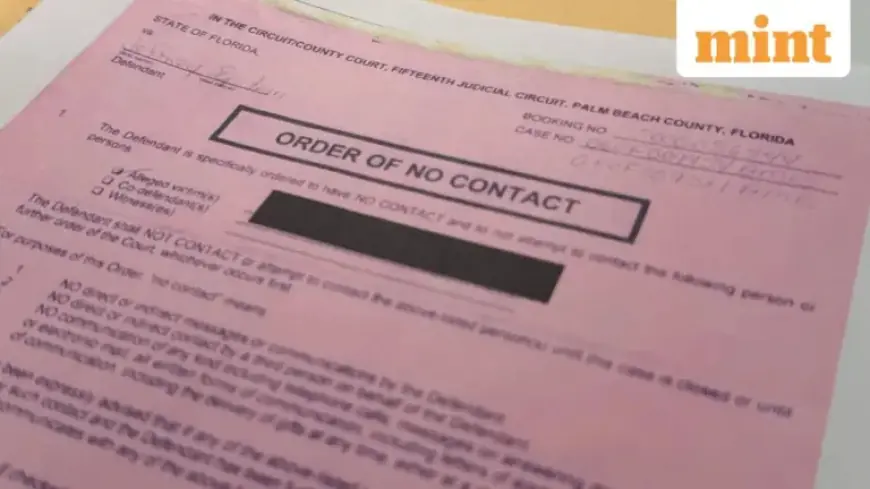
The US Department of Justice has expanded its public release of records related to Jeffrey Epstein and Ghislaine Maxwell, publishing what it says is nearly 3.5 million pages in response to a new federal transparency law. The latest major posting, dated January 30, 2026, added more than 3 million pages and included thousands of videos and a large image set, as officials framed the release as a rolling publication process designed to balance disclosure with survivor protections.
But the same rollout has triggered a second, destabilizing storyline: the department has acknowledged redaction problems and has taken down thousands of items after concerns that victim-identifying details may have been visible. The combination has supercharged public curiosity and fueled viral “name lists” that conflate mentions in records with proof of wrongdoing.
What the DOJ released, and why it’s arriving in waves
The release stems from a recently enacted transparency law directing the Justice Department to make unclassified Epstein-related materials publicly available, with carve-outs for victim privacy, child sexual abuse material, and other protected categories. Officials have said the archive is so large, and redaction work so time-intensive, that publication will occur in stages rather than as a single dump.
The January 30 update is one of the largest batches to date. It also underscores a key point that gets lost in social-media summaries: “more files” does not necessarily mean “new revelations.” Large portions can be administrative paperwork, duplicate copies, older court filings republished in a new location, or investigative leads that were never substantiated.
Redaction errors and takedowns: why thousands of items disappeared
In the past week, the Justice Department has said it removed thousands of records from the public portal after discovering possible redaction failures. That matters for two reasons at once:
First, it raises real safety and dignity risks for survivors. Even small fragments—addresses, school names, family references—can enable identification when crowdsourced online.
Second, it feeds distrust. When files vanish, audiences split into two camps: one assumes a cover-up, the other assumes basic compliance triage. In reality, both dynamics can coexist: an agency can be acting in good faith to correct privacy mistakes while still failing to communicate clearly enough to prevent speculation from filling the vacuum.
What are “the Epstein files,” really?
“The Epstein files” is shorthand for a broad set of materials connected to investigations and prosecutions. They can include:
-
Interview reports and investigative notes
-
Flight-related records and travel logistics
-
Contact lists and scheduling references
-
Legal filings, warrants, and evidence inventories
-
Photos, videos, and digital media logs
-
Administrative correspondence about processing and redactions
Crucially, investigative archives contain unverified allegations, tips, names provided by third parties, and context references. A name appearing in a document can mean anything from “witness,” to “contact,” to “someone mentioned,” to “person of interest,” to “never relevant again.” It is not proof of criminal conduct.
Why celebrity names are trending, and what the records can’t prove on their own
Search spikes around figures like Bill Gates, Jay-Z, Les Wexner, and others reflect a predictable cycle: each new batch reignites online efforts to “solve” the case by scanning for recognizable names. That approach is emotionally satisfying—and often misleading.
If a newly released document includes a public figure’s name, the only responsible question is: what is the document, what does it actually say, and does it include verifiable, specific allegations supported elsewhere? Most viral posts skip those steps and jump directly to insinuation.
This is also where unrelated scandals get pulled in. Harvey Weinstein’s criminal cases and reporting history are separate from the Epstein-Maxwell record set. Treating them as a single unified plotline is a classic internet pattern, not evidence.
Conspiracy gravity: “pizza gate,” foreign intelligence claims, and anonymous message boards
Terms like “pizza gate,” claims involving foreign intelligence services, and content seeded on anonymous message boards tend to surge whenever a large archive becomes searchable. The incentives are obvious: vague, sensational narratives travel faster than careful document reading.
The practical reality is that extraordinary claims require extraordinary, specific documentation—chain of custody, authentication, corroboration, and clear sourcing. In the current public releases, the most consequential verified story remains the same: systemic failure over years to stop a predator and protect vulnerable victims, followed by a massive institutional struggle to disclose records without causing more harm.
The politics around the release: Congress, DOJ leadership, and pressure points
The transparency law has created a political contest over completeness and timing. Members of Congress have argued over whether the department is meeting statutory obligations, while Justice Department leadership has emphasized privacy constraints and legal privileges that block full publication of everything in its possession.
This tension is likely to escalate as more people demand “the one definitive PDF” and learn that the archive is not a single document but a sprawling, messy record set.
Where is “Epstein Island”?
The location most commonly referred to as “Epstein Island” is Little Saint James, a private island in the US Virgin Islands, near St. Thomas. It is frequently cited in litigation and public discussion because multiple accusers have said abuse occurred there.
What happens next: realistic scenarios to watch
-
More removals and re-posts as redaction audits continue, especially for media files
-
Sharper lines between what can be public and what must remain withheld due to survivor protections
-
Court-driven unsealing battles over historically secret materials, with limits on how revealing they are in practice
-
More viral “name storms” followed by corrections, as people learn how often investigative files include false leads
-
Increased scrutiny of how the Justice Department balances transparency with victim privacy in the internet age
The most important takeaway is also the least viral: the value of these releases depends on careful interpretation, not speed. The public may get more documents, but accountability will come from verified facts, clear legal outcomes, and protecting survivors from becoming collateral damage in a new round of online spectacle.