

























Why Trump and Republicans Struggle to Dominate US Elections

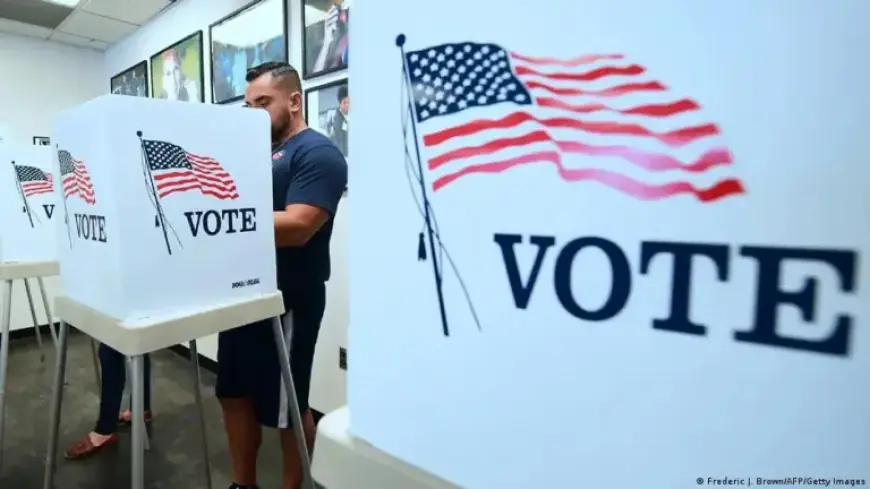
Donald Trump’s recent remarks regarding the nationalization of the U.S. election process have stirred significant debate. The former president believes that the federal government should take greater control over how elections are conducted. During an Oval Office press conference, he voiced concerns about electoral integrity and suggested changes to the existing system.
Trump’s Call for Federal Oversight
Trump’s assertions came in the wake of claims regarding widespread voter fraud. He emphasized the need for federal involvement in election administration, mentioning “at least 15 places” that would require intervention. This advocacy for federal oversight represents a departure from established practices.
Historical Context of Election Administration
The U.S. Constitution assigns states the primary responsibility for managing elections. Justin Levitt, an expert from Loyola Law School, notes that the framers intended to prevent a single federal official from controlling the election process. This system was designed to avert corruption and ensure that elections reflect the will of the people.
State Variations in Election Rules
As a result of this state control, election laws can differ significantly across the country. Key factors influenced by state rules include:
- Voting hours
- Voter registration processes
- Early voting and mail-in ballot regulations
- Counting methods for ballots
This decentralized approach contrasts sharply with other nations. For instance, Germany utilizes an independent federal electoral committee for its electoral oversight. Similarly, Canada and Australia operate elections through nonpartisan commissions, promoting uniformity and reducing political influence.
Challenges to Nationalizing Elections
While some argue for a more uniform election process in the U.S., experts suggest significant obstacles exist. David Kimball, a political science professor, highlights the deep-rooted nature of state-specific regulations. Any attempt to enforce uniform rules—like voter ID laws—would likely meet considerable opposition from various states.
Additionally, logistical challenges arise from the vast and diverse nature of the U.S., which spans multiple time zones and has numerous local election districts. Implementing a federal system could destabilize the existing framework, as it would necessitate the establishment of new authority structures.
Trump’s Position and Political Implications
Despite Trump’s assertions, he retains limited power in altering the election framework. Levitt emphasizes that the presidency does not extend authority over elections. Trump’s continual discourse on voter fraud and calls for changes may be seen as an attempt to assert control ahead of upcoming midterm elections.
As the political landscape shifts, these discussions not only reflect Trump’s ambitions but also impact election administration, potentially creating tension among election officials at various levels.
Conclusion
In summary, Trump’s push for federal control over elections faces substantial legal and practical hurdles. This discussion highlights the enduring debate over the balance between state and federal power in managing democratic processes within the U.S.