

























Carney Drives Canada’s E.V. Leadership, Distancing From U.S.

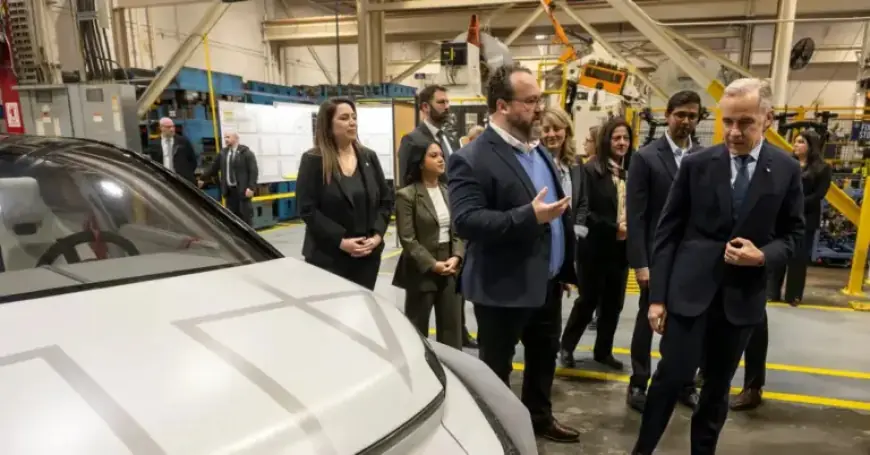
Canadian Prime Minister Mark Carney has unveiled a bold initiative aimed at positioning Canada as a leader in the electric vehicle (E.V.) sector. This plan includes substantial incentives and tax breaks for the automotive industry, signaling a strategic shift as Canada seeks to reduce its dependence on the United States.
Canada’s Electric Vehicle Strategy
During a recent announcement near Toronto, Carney emphasized the importance of Canada charting its own course in the face of challenges from the U.S. administration. He stated, “We must take care of ourselves,” highlighting the need for independence from external pressures.
Economic Impact and Job Security
The Canadian auto industry employs approximately 125,000 workers and plays a crucial role in the nation’s economy. With about 90% of Canadian vehicle exports going to the U.S., recent tensions have prompted a reevaluation of trade dependencies.
- Canada’s automotive industry is pivotal to its economy.
- 90% of cars manufactured are exported to the U.S.
Incentives for Growth
As part of the new plan, Carney announced a commitment of 3 billion Canadian dollars, approximately 2.2 billion USD, to bolster local automotive manufacturing. This investment aims to encourage the construction of electric vehicle and battery plants across Canada.
Additionally, the government will reinstate consumer rebates for electric vehicles, starting at 5,000 Canadian dollars (around 3,600 USD). However, this rebate will not extend to Chinese-made electric vehicles, aligning with Canada’s protective policies for domestic markets.
Carney’s efforts received nods of approval from both U.S. automakers and Japanese manufacturers, who welcome the incentives for electric vehicle production. The government is also expected to provide credits to automakers producing cars in Canada, facilitating the import of foreign vehicles without tariffs.
Shifting Trade Dynamics
These decisions come amid a backdrop of strained U.S.-Canada relations. Carney acknowledged that Canada’s strategy might diverge significantly from U.S. automotive policies, which are currently favoring traditional fossil fuel vehicles over electric alternatives.
| Key Aspects of Canada’s E.V. Initiative | Details |
|---|---|
| Incentives for manufacturers | 3 billion CAD investment for plant construction |
| Consumer rebates | 5,000 CAD for electric vehicle purchases |
| New emission standards | Tougher compliance norms for all manufacturers |
| Domestic production credits | Credits available for Canadian-built vehicles |
A Response to Global Trends
Carney’s initiatives align with the growing global emphasis on electric vehicles, especially as markets like Europe and China embrace the transition. Despite current U.S. policies discouraging electric vehicles, automotive executives anticipate a future shift towards E.V.s, reinforcing the need for Canada to innovate and adapt.
In reference to his strategic choices, Carney articulated that Canada is actively pursuing investment discussions beyond its traditional partnerships. This includes potential collaborations with South Korean and Chinese manufacturers for technological advancements in automotive production.
As Canada forges a new path, the emphasis on responsibility and independence in the automotive sector showcases the nation’s intent to lead in the electric vehicle space amidst changing global dynamics.