




















Kid Rock’s Turning Point USA Halftime Show Sparks Backlash as “All-American” Counterprogramming Collides With Old Lyrics and New Culture-War Incentives

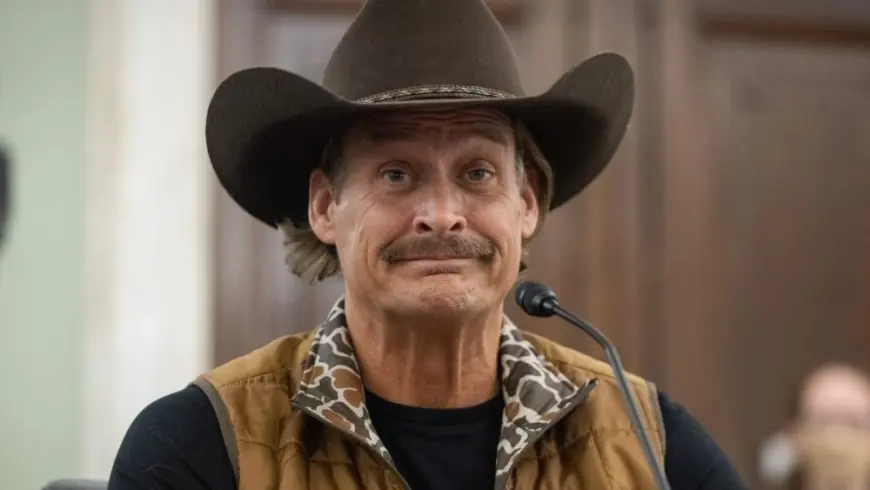
A new, politically branded “halftime show” built by Turning Point USA is drawing as much scrutiny as attention ahead of the big game on February 8, 2026 ET. The organization’s “All-American Halftime Show” is scheduled to run around the same window as the official halftime performance, and its headline act is Kid Rock, joined by country artists Gabby Barrett, Lee Brice, and Brantley Gilbert.
What turned it into a national argument this week is not the lineup alone. It is the collision between the show’s stated “faith and family” messaging and the resurfacing of old Kid Rock lyrics that critics say are sexually explicit and reference minors. The controversy has reignited familiar fault lines about “family-friendly” branding, selective outrage in entertainment, and how political movements use pop culture as both megaphone and fundraising engine.
What happened: Turning Point USA announces an alternate halftime show
Turning Point USA promoted the event as an alternative to the official halftime programming, framing it as a values-driven, patriotic production. The show is set to be broadcast and streamed separately during the same halftime window on February 8, 2026 ET, effectively asking viewers to choose between two cultural products: the official mainstream spectacle and a competing performance positioned as a statement.
The lineup leans into recognizable names for a specific audience segment: Kid Rock as the headline, with Barrett, Brice, and Gilbert providing additional star power and genre consistency.
Why the backlash hit now: the “Cool Daddy Cool” lyrics debate
As the show gained traction, social media users circulated excerpts and summaries of a past Kid Rock song, “Cool, Daddy Cool,” pointing to lines that critics interpret as glamorizing or joking about underage girls and sexual assault. The resulting pushback centers on a perceived contradiction: marketing an event as wholesome while elevating an artist whose older catalog includes material many people consider incompatible with “family values.”
It is important to separate two things that are getting bundled together online: the existence of provocative lyrics from decades ago, and whether the new show intends to feature that specific song. As of February 5, 2026 ET, the public dispute is largely about brand alignment and optics, not confirmed set-list details.
Behind the headline: why this is bigger than one performance
This is a culture-war story with a clear incentive structure.
Context
Turning Point USA has long operated at the intersection of activism, media, and youth-oriented political organizing. Creating a halftime alternative is not only entertainment; it is narrative competition during one of the year’s largest shared-viewing moments.
Incentives
For Turning Point USA, the incentive is attention, list-building, donations, and cultural positioning. An alternate halftime show can function like a billboard that says, “We are an identity, not just an organization.” For Kid Rock and the supporting artists, the incentive is visibility to a concentrated audience that is more likely to reward perceived defiance of mainstream tastes.
For critics, the incentive is accountability and consistency. The strongest attacks are not about taste; they are about hypocrisy: claiming moral high ground while overlooking an artist’s controversial past.
Stakeholders
Viewers get pulled into a binary choice that turns entertainment into affiliation. Advertisers and partners, if involved, face reputational risk on both sides. The artists’ teams are managing brand safety versus loyalty to a core fan base. And political figures orbiting the event can use it as a proxy battle over identity, immigration, language, and what “American” means in pop culture.
Second-order effects
If the alternate show attracts meaningful viewership, it could normalize more parallel programming during major events, turning mass culture into segmented culture. That makes the market for attention more polarized and can pressure performers and brands to “pick a side” more often.
What we still don’t know
Several practical questions remain unresolved heading into Sunday night:
-
How large will the audience actually be, and will it extend beyond a politically aligned core?
-
What will the show’s tone be: purely musical, or explicitly political?
-
Will Kid Rock and the organizers address the resurfaced lyrics directly, or attempt to ride out the controversy?
-
What guardrails, if any, are in place for song selection and on-stage messaging?
The answers matter because they determine whether this becomes a one-night stunt or a repeatable template.
What happens next: 5 realistic scenarios and the triggers to watch
-
Controlled rollout, minimal disruption
Trigger: the show stays tightly scripted, avoids inflammatory moments, and delivers a conventional concert. -
Controversy intensifies right up to airtime
Trigger: more clips and lyric excerpts circulate, sparking calls for sponsors or partners to distance themselves. -
A “values branding” pivot after the show
Trigger: organizers emphasize charity, veterans, or family themes to counteract criticism and broaden appeal. -
A ratings or reach narrative war
Trigger: both camps claim victory using selective metrics, turning the next news cycle into a debate over what “counted” as viewership. -
Copycats emerge in future tentpole broadcasts
Trigger: if the alternate show draws attention, other political or cultural groups attempt similar counterprogramming during major live events.
Why it matters
The Kid Rock Turning Point USA halftime show is a modern case study in how politics, entertainment, and outrage economics reinforce each other. The show itself may last only a few minutes. The aftereffects could last much longer: a deeper split in shared pop culture, more “parallel” media ecosystems, and a stronger expectation that even a halftime performance should serve as a political signal.
If you want, I can also break down what each artist is likely to contribute stylistically and how the lineup is designed to hold an audience through the full halftime window without relying on genre crossovers.