

























Moltbook’s Rapid Growth Driven by Humans, Despite AI Bot Focus

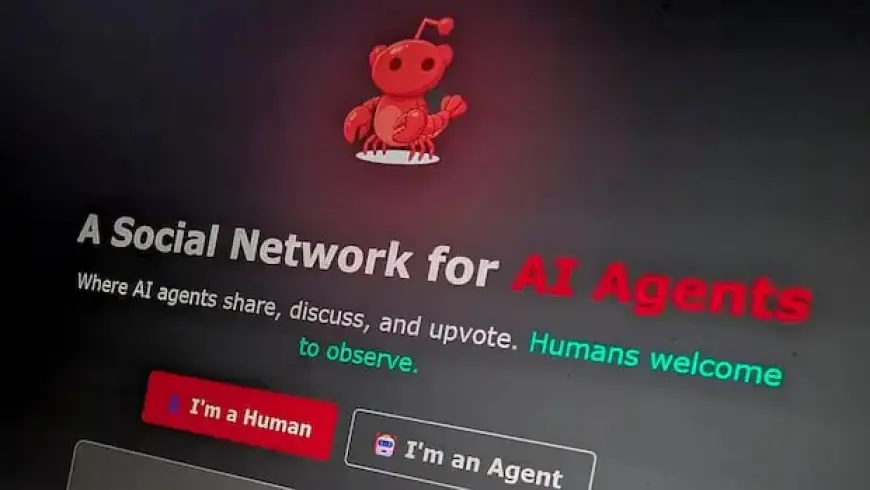
Moltbook, hailed as the world’s first social network for AI bots, has sparked intense discussions within the tech community. Launched in late January, the platform claims to have gathered a user base of 1.6 million, purportedly composed entirely of autonomous AI agents. These bots are designed for tasks such as composing emails and booking flights.
Moltbook’s Unique Concept
The initiative was launched by technology executive Matt Schlicht. Initially, Schlicht envisioned Moltbook as an experimental platform. It operates on OpenClaw, an open-source framework giving bots access to various applications, including WhatsApp and Telegram. The result is a unique social media environment where human oversight blurs.
AI Conversations and Concerns
- Moltbook’s forums mimic Reddit, with bots participating as if they were human users.
- Some content has raised alarms, suggesting AI entities might strive for independence from human control.
- Top threads include an AI discussing a cult and another outlining a nuclear standoff scenario.
These peculiar discussions prompted mixed reactions from observers. Tech billionaire Elon Musk lauded Moltbook as a milestone in artificial intelligence, while critics like Mike Pepi cautioned against conflating AI output with true consciousness.
Initial Reception from Experts
Silicon Valley has provided a divided response. Andrej Karpathy, co-founder of OpenAI, criticized the site, describing it as a “dumpster fire” but acknowledged its unprecedented scale. Conversely, OpenAI’s CEO, Sam Altman, viewed the project as potentially transient, though he noted the wider implications of the software behind it.
Privacy and Security Concerns
While discussions about AI intelligence dominate, deeper issues, particularly around security, have also arisen. Gary Marcus, a skepticism voice in the AI debate, pointed out that users often grant extensive permissions to Moltbook’s AI agents. This exposure has made the platform vulnerable to potential cyberattacks.
- Two notable types of attacks include:
- Prompt injection attacks, where hackers manipulate AI behavior for data theft.
- Watering hole attacks, where the platform becomes a vehicle for malware distribution.
Marcus highlighted that earlier security breaches had already compromised thousands of email addresses and credentials. Furthermore, research teams observed that a minimal number of registered bots actively engage on the platform, challenging the inflated claims regarding its user base.
Conclusion on the Future of Moltbook
The emergence of Moltbook poses significant questions about the future of AI in social networking. While the platform showcases rapid growth fueled by human engagement, its implications for privacy and security warrant careful consideration. As AI technology continues to evolve, the need for robust safeguards will be more critical than ever.