

























Catherine O’Hara remembered for fearless comedy and late-career reinvention

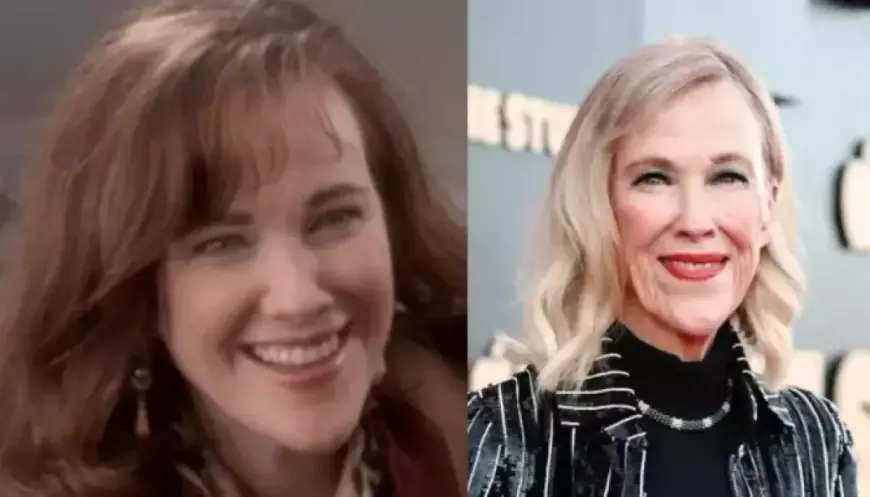
Catherine O’Hara, the Canadian-born actor and comedian who became a household name as Kevin McCallister’s mother in “Home Alone” and later captivated a new generation as Moira Rose in “Schitt’s Creek,” died on January 30, 2026, in Los Angeles. She was 71. Public statements described a brief illness, and no more specific medical details have been publicly confirmed.
In the days since, tributes have spread across the comedy and film worlds, while fans revisited her decades of work—from sketch comedy roots to scene-stealing film roles and a rare late-career peak that turned her into a pop-culture icon again.
What is known about her death
O’Hara died at her home in Los Angeles on Friday, January 30, 2026 (ET). Statements released publicly have described the illness as brief, without identifying a specific cause. Online speculation has surged, but official confirmation of a cause of death has not been made public.
Her family includes her husband, production designer Bo Welch, and their two sons, Matthew and Luke.
A life built on improv and precision
O’Hara’s comedy style was often described as spontaneous, but colleagues routinely pointed to the opposite: intense preparation paired with an ability to pivot instantly. That blend—discipline plus improvisational daring—made her a standout in ensemble settings, where she could turn a small moment into a signature beat without pulling focus from the story.
Her earliest fame grew from sketch and improv, where she helped define a brand of character comedy that felt both heightened and strangely real. That sensibility stayed with her even when she moved into mainstream films: her characters were big, but never hollow.
The roles that made her a staple
For many viewers, O’Hara’s performances are tied to comfort rewatch culture—holiday reruns, family movies, and endlessly quotable comedies. She was also a favorite in mockumentary-style films, where her ability to play sincerity and absurdity at the same time became a calling card.
Notable roles many fans have been revisiting this week include:
-
Kate McCallister in “Home Alone” and “Home Alone 2”
-
Delia Deetz in “Beetlejuice”
-
Sally (voice) in “The Nightmare Before Christmas”
-
Cookie Fleck in “Best in Show”
-
Moira Rose in “Schitt’s Creek”
Moira Rose and a career rebirth
While O’Hara had been admired for decades, “Schitt’s Creek” reframed her for a new era—memes, clip culture, and a global audience that treats character creation as a form of authorship. Moira Rose wasn’t just a role; it was a performance architecture: the accent, the diction, the posture, the costumes, the sudden emotional clarity beneath the comedy.
That late-career crest also shifted how younger fans talked about her earlier work. Scenes from “Home Alone,” “Beetlejuice,” and the Christopher Guest comedies circulated again, now read as part of a single through-line: a performer who could be outrageous without losing humanity.
The medical terms circulating, and what they mean
In the wake of her death, interest has also spiked in the rare congenital condition she previously discussed publicly: dextrocardia with situs inversus, sometimes shortened online to “situs inversus.” The terms refer to a mirror-image placement of the heart (dextrocardia) and, in some cases, other internal organs (situs inversus).
The condition is often discovered incidentally during imaging or routine medical care and does not necessarily cause symptoms by itself. Importantly, there has been no public confirmation that it played any role in her death. The renewed attention reflects search behavior more than confirmed medical reporting.
Tributes and a spotlight at Westminster
O’Hara’s work in “Best in Show” took on a fresh resonance this week when the Westminster Kennel Club Dog Show included an in-arena tribute during competition at Madison Square Garden. The homage underscored something her career repeatedly proved: she could anchor prestige television, dominate a comedic ensemble, and still be remembered for a single perfectly judged reaction shot.
In the near term, public focus is likely to remain on commemorations and retrospectives, along with renewed streaming interest across her filmography. Over the longer run, her legacy looks increasingly secure in two lanes at once: classic family comedy and modern character-driven television—both powered by the same rare skill of making eccentricity feel honest.
Sources consulted: The Washington Post, The Guardian, Deadline, Entertainment Weekly