





















Draymond Green Trade Rumors Surge at the 2026 NBA Deadline as Warriors Rewire the Roster

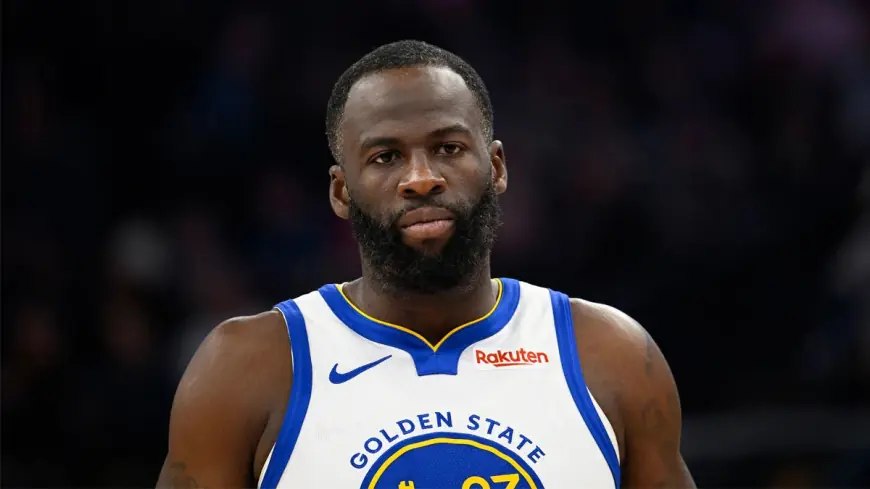
Draymond Green is at the center of the most emotionally charged trade rumor of this deadline cycle, not because he asked out, but because the Golden State Warriors appear to be weighing whether their longest-running core can survive one more reset. As of Thursday, February 5, 2026, Green has not been officially traded, but his name has been actively circulated in discussions as the league approaches the 3:00 p.m. ET trade cutoff.
The urgency is amplified by a major roster move already completed this week, signaling that Golden State is not standing pat.
What happened and why Draymond Green is suddenly in play
Over the last few days, Golden State made a notable frontcourt pivot by bringing in a stretch big to address size and interior scoring, while shipping out rotation pieces. That kind of transaction tends to do one of two things: stabilize a team for a playoff push, or set up a larger follow-up move by reshaping salary and roster slots.
Green’s name has been connected to those “bigger swing” conversations, including hypothetical packages built around chasing a star-level upgrade. Even if the end goal is not to move Green, floating him changes the leverage landscape. Once a team signals it is willing to discuss a franchise icon, every call gets returned faster, and every counteroffer gets bolder.
Is Draymond Green getting traded?
Right now, the cleanest answer is not yet.
There is a difference between being discussed and being dealt. In the final 24 hours before the deadline, teams routinely explore multiple pathways at once, and most never reach the finish line. Green’s situation has the added wrinkle of legacy: trading him is not just a basketball decision, it is a cultural decision for the franchise.
The contract reality behind the rumors
Green’s contract structure makes him both valuable and complicated in trade math.
-
He is on a high veteran salary for the 2025–26 season.
-
He has a player option for 2026–27, which creates uncertainty for any acquiring team.
-
His deal includes trade mechanics that can affect how cleanly money moves.
That package can work as either an anchor piece in a blockbuster or as a difficult-to-price asset that scares off teams unwilling to gamble on one more year of elite defense and leadership.
What’s behind the headline: incentives, stakeholders, and the real tension
This story is fundamentally about timelines.
Golden State’s incentive is to maximize the remaining prime value of its core while staying competitive enough to justify keeping the group together. Green remains a defensive organizer and an emotional engine, but the team has to ask whether his on-court impact and availability can keep pace with the league’s faster, bigger, more spacing-heavy ecosystem.
For rival teams, the incentive is opportunistic: a championship-tested defender and communicator can tilt a playoff series, especially for a contender that already has scoring but lacks playoff-grade toughness and scheme discipline.
Key stakeholders include:
-
Stephen Curry, because any Green decision is also a statement about the franchise’s commitment to the current era.
-
The Warriors’ front office, which will be judged on whether it preserved dignity while also being ruthless enough to contend.
-
Potential buyers, who must decide if Green is the missing piece or an expensive risk.
-
The locker room, because trading a voice like Green reshapes identity overnight.
Second-order effects most fans miss
If Green is moved, the ripple is not just “one player in, one player out.”
-
Defensive language changes: Green is effectively an on-court coach. New lineups often take months to replicate that kind of coordination.
-
Offensive spacing and decision-making shift: the Warriors’ ecosystem relies on quick reads and handoffs where Green has been a hub. Removing him changes the team’s offensive geometry.
-
Culture and accountability: some teams get an immediate edge from his intensity, while others can fracture if they are not prepared for his volume and standards.
If he is not moved, that also has consequences: it signals either that the market price was too steep or that Golden State believes the current reshaped roster is enough to make noise.
What we still don’t know
Several missing pieces will decide how this ends by the 3:00 p.m. ET buzzer:
-
Whether Golden State’s “big swing” target is truly attainable or just exploratory
-
How Green’s option year affects teams’ willingness to include premium picks or young players
-
Whether a multi-team structure is necessary to make salaries and roster limits work
-
How much the Warriors value keeping continuity versus cashing in on an aging, expensive core
What happens next: realistic scenarios with triggers
-
No trade, but the rumors were leverage
Trigger: offers do not meet Golden State’s threshold, and the team chooses stability. -
Green is included in a blockbuster
Trigger: a true star becomes available and the Warriors decide the only way to get there is to sacrifice a core piece. -
Green stays, but the team makes a smaller follow-up move
Trigger: Golden State uses remaining flexibility to add a role player and preserves the core. -
Green stays through the deadline, then the conversation shifts to the offseason
Trigger: teams want more clarity on his option year and the league’s summer market before making a major commitment.
Why it matters
This is not just another rumor cycle. Draymond Green is one of the defining players of Golden State’s era, and his potential availability forces a binary question the franchise has tried to avoid: protect legacy, or prioritize the next realistic title path. By Thursday afternoon, the league will have its answer, and either outcome will shape how contenders and rebuilding teams recalibrate for the rest of the season.