

























Elon Musk’s February 2026 Week: A Rocket-and-AI Merger, Legal Pressure, and a High-Stakes Bet on Space-Based Computing

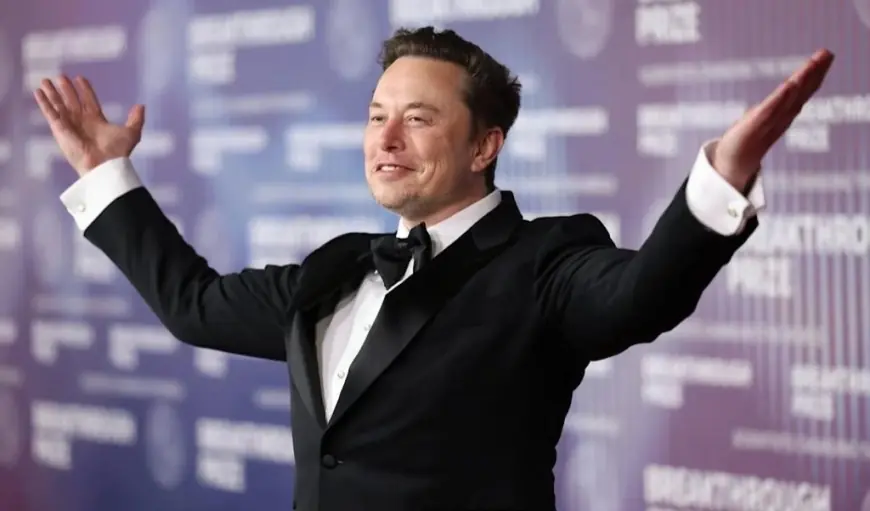
Elon Musk is entering February 2026 with a rare convergence of big-ticket strategy and immediate scrutiny: he has folded his artificial-intelligence venture into his rocket-and-satellite business, outlined ambitions for space-based computing infrastructure, and simultaneously faced fresh pressure from regulators and safety questions tied to a public-facing chatbot. The moves, clustered into just a few days, underscore a familiar Musk pattern: consolidate control, push the technical frontier, and accept that controversy is part of the operating environment.
What happened this week around Elon Musk
On Monday, February 2, 2026, Musk confirmed that his rocket-and-satellite company acquired his AI company, effectively bringing advanced model development, data pipelines, and a major space-launch capability into one corporate roof. In parallel, he has described a longer-run vision that leans on orbit for a competitive edge: using space assets to support AI scaling, potentially including computing infrastructure that is less constrained by terrestrial energy limits, grid bottlenecks, and permitting friction.
Within the same 72-hour window, Musk also faced a setback in a long-running securities disclosure case: on Tuesday, February 3, 2026, a federal judge rejected his attempt to dismiss a lawsuit tied to the timing of disclosures around his accumulation of a major social-media stake in 2022. And regulators abroad have continued to tighten the screws on large social platforms, with a separate European probe involving his social network drawing attention to content and compliance obligations.
The merger logic: why tie rockets, satellites, and AI together now
The strategic motivation is not subtle. Modern AI is increasingly gated by three things: compute, data, and power. A company that can launch its own hardware, run a massive satellite network for connectivity, and control large-scale data centers can attack all three bottlenecks at once. That makes the acquisition less like a typical “tech buyout” and more like a vertical integration play, designed to reduce dependence on outside infrastructure and outside rules.
It also aligns incentives across Musk’s ecosystem. The rocket-and-satellite business can justify more launches if the end goal is an always-on communications backbone for AI services. The AI team gets privileged access to bandwidth, deployment options, and potentially new classes of sensor and telemetry data. And the broader Musk portfolio benefits from a single narrative: autonomy, robotics, and intelligence as one continuous stack.
What’s behind the headline: incentives and stakeholders
Musk’s incentive is leverage. A combined rocket-and-AI entity is easier to finance, easier to sell as a long-term platform story, and potentially easier to take public at a massive valuation. It also gives him negotiating power with suppliers, chipmakers, energy providers, and governments. If a country wants launch capacity, connectivity, or high-profile investment, the “bundle” gets bigger.
The stakeholders are wide-ranging:
-
Investors who want clearer economics: which business subsidizes which, and for how long
-
Governments that license launches, regulate communications, and police markets
-
Competitors in AI who worry about a compute-and-connectivity moat
-
Users and civil-society groups who focus on safety, misinformation, and harmful content online
-
Customers of satellite connectivity and launch services who want reliability and predictable schedules
The missing pieces: what we still don’t know
Several critical details remain unclear:
-
Corporate structure: how profits, liabilities, and governance are divided after the acquisition
-
Capital plan: how much new money is needed to scale computing and launch cadence together
-
Safety and policy: what concrete safeguards will be deployed to prevent misuse of AI tools, especially for non-consensual or sexualized imagery and other harmful outputs
-
Regulatory runway: whether U.S. and European authorities treat the consolidation as routine or as a competition and national-security issue
-
Operational resilience: how quickly launch operations can recover when technical anomalies force stand-downs
These unknowns matter because they determine whether “integration” becomes an advantage or a tangle of conflicting risks.
Second-order effects: the ripple impacts most people miss
A combined rocket-and-AI strategy could shift the balance of power in two subtle ways.
First, it pressures the energy and permitting ecosystem. If AI growth is constrained on land by power availability and local approvals, the political fight moves to grid upgrades, water usage, and industrial siting. Even if space-based computing remains aspirational, the mere pursuit can accelerate investment arguments for new generation, storage, and transmission.
Second, it changes regulatory framing. The story stops being “a chatbot and a social network” and becomes “critical communications infrastructure plus advanced AI.” That reclassification invites more national-security scrutiny, more export-control sensitivity, and more public accountability for safety failures.
What happens next: realistic scenarios with triggers
-
Rapid scale-up, steady momentum
Trigger: clean execution on launches, a clear safety program for AI products, and stable financing. -
Regulatory drag slows the platform story
Trigger: deeper scrutiny of market power, cross-border data, or disclosure and governance concerns. -
AI safety controversy forces product restraint
Trigger: recurring harmful outputs from generative tools lead to stricter guardrails, reduced features, or delayed rollouts. -
Operational turbulence interrupts the narrative
Trigger: launch stand-downs or technical issues keep recurring, limiting the promised integration benefits. -
A broader consolidation wave follows
Trigger: rivals respond by tightening their own partnerships across chips, cloud compute, and connectivity.
Why it matters
This week’s cluster of developments shows what Musk is really optimizing for: control over the full pipeline from intelligence to deployment. If it works, it could create a formidable moat built on launch capability, global connectivity, and compute scale. If it stumbles, the same integration amplifies downside, because legal exposure, safety failures, or operational hiccups in any one layer can spill across the entire stack. Either way, the coming months will test whether this is a durable platform strategy or an ambitious compression of too many high-risk bets into one timeline.