























Sun Unleashes Powerful Flare

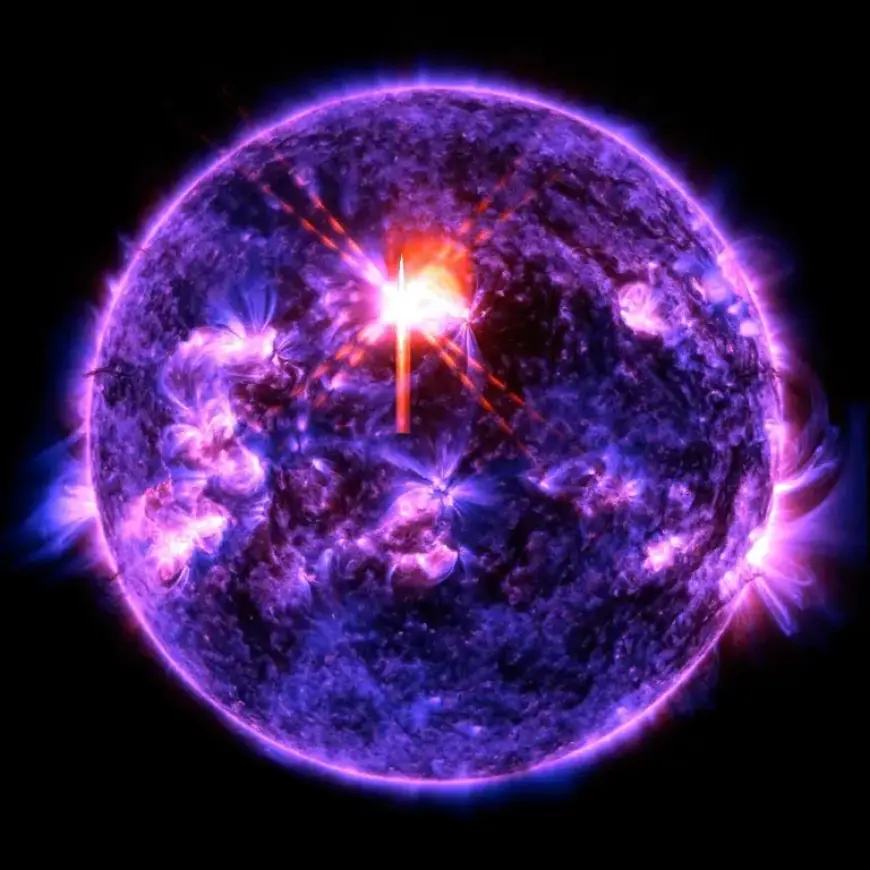
The Sun unleashed a powerful solar flare on February 4, 2026, peaking at 7:13 a.m. ET. This impressive event was documented by NASA’s Solar Dynamics Observatory, which continuously monitors solar activities.
Understanding Solar Flares
Solar flares are intense bursts of energy that can have significant effects on Earth. The flare detected on February 4 is classified as an X4.2, indicating it ranks among the strongest types of flares. The “X” signifies the most severe category, while the number offers additional context regarding its intensity.
Impact of Solar Flares
These massive bursts can disrupt various technologies and systems, including:
- Radio communications
- Electric power grids
- Navigation signals
- Spacecraft and astronaut safety
The ramifications of such solar activities underline the importance of monitoring space weather.
The Role of NASA and NOAA
NASA plays a critical role in researching and predicting space weather events. The agency operates a fleet of spacecraft dedicated to studying the Sun’s activity, its atmosphere, and the surrounding particles and magnetic fields impacting Earth.
For accurate forecasts and alerts regarding space weather, the National Oceanic and Atmospheric Administration (NOAA) provides reliable information through its Space Weather Prediction Center. This site is the official U.S. government resource for tracking solar events and their potential impacts.
Continued observation and research are essential as solar activity continually evolves. The recent X4.2 flare serves as a reminder of the powerful forces at work within our solar system.