























How Rosa Parks’ Full Story Is Being Rewound on a Bus: Local Commemoration, Civic Memory and the Work Behind the Moment

Why this matters now: community organizers are using public displays to reframe how people remember rosa parks — not as a lone exhausted seamstress, but as a trained activist whose refusal was rooted in long-term organizing. The tactic shifts schoolroom folklore into a civic lesson about preparation, risk and intergenerational memory.
Rosa Parks legacy visible in site-specific education and public memory
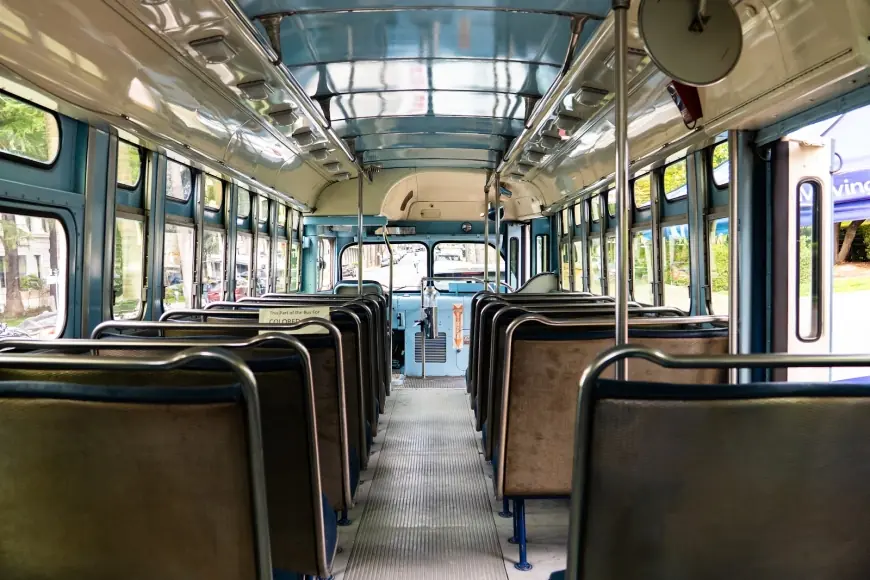
Here’s the part that matters: a retired transit bus placed under a winter canopy at a state park became a teaching prop for a large local commemoration. The display and program were organized by local historian Michael Harris with Sacramento Regional Transit, part of an annual observance that emphasizes the preparation and political work behind Parks’ refusal to give up her seat.
Harris stresses that Parks was 42 at the time of the bus incident, a trained participant in civil rights work rather than a spontaneous, apolitical actor. The event’s framing confronts decades of simplified narratives and aims to give young attendees a deeper sense of the risks activists accepted. Harris’ personal connection — several generations of his family lived in the South, and he has visited the Montgomery sites where the boycott was organized — shapes the event’s educational focus and its outreach to children.
What’s easy to miss is how organizers are deliberately pairing artifact (the bus) with storytelling to challenge the tired-seamstress shorthand and place the refusal in a longer political arc.
Event details and the longer story behind the refusal
The commemoration used a decommissioned transit bus as a visual anchor and marked the event as the community’s 26th annual observance tied to Rosa Parks. The program highlighted several biographical and organizing facts: Parks’ work as secretary of a local NAACP branch for more than a decade; her role investigating violent attacks such as the case of Recy Taylor and forming a committee to press for equal justice; and her attendance at a training workshop at a southern folk school where nonviolent protest and labor strategies were taught.
- Arrest and boycott: Parks’ refusal to give up her seat led to her arrest and catalyzed a prolonged bus boycott that lasted 381 days.
- Movement leadership context: The boycott was led by a then-young organizer who took a public leadership role during that campaign.
- Aftermath and later life: After the boycott’s immediate consequences, Parks and her husband lost their jobs and ultimately relocated north for safety and work; she later worked in a congressional office for more than two decades assisting constituents.
A brief timeline embedded in the program reminded attendees that the refusal did not stand alone but followed years of organizing and earlier activism, and that the boycott that followed was sustained and consequential.
The program’s tone treated Parks’ decisions as educated and courageous rather than accidental, a framing reinforced by the presence of a functioning transit vehicle at the site and by organizers’ emphasis on passing these lessons to younger generations.
Q: Who arranged the bus display?
A: The local commemoration was organized by historian Michael Harris in partnership with the regional transit agency.
Q: Why challenge the tired-seamstress story?
A: Organizers want attendees—especially kids—to understand Parks’ long-term activism, training at a folk school, and investigative work on racial violence.
Q: What happened after the boycott?
A: Parks and her husband faced job loss and harassment; they moved north and she later worked for a member of Congress for over twenty years helping constituents.
The real question now is how local commemorations that foreground preparation and risk will change classroom presentations and public perception over time. If the narrative shift sticks, younger audiences may come away with a clearer sense that social change depends on sustained organizing, training and collective courage.
Small editorial note: the bigger signal here is the intentional pedagogy—using material culture and localized storytelling to correct a national shorthand. That method could influence how future generations understand civic resistance.