























Catherine O’Hara Cause of Death Questions Surge After Actress Dies at 71, Fueling Confusion Across “Home Alone” and “Schitt’s Creek” Searches

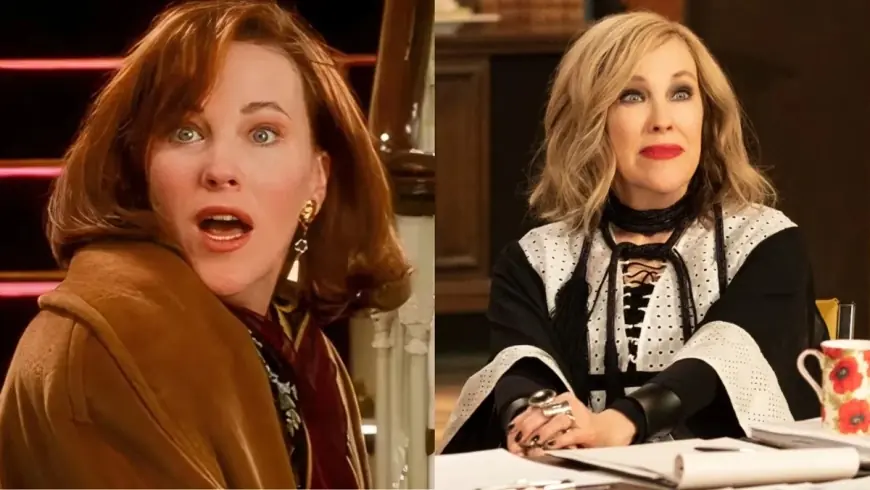
Catherine O’Hara, the Emmy-winning actor and comedian celebrated for roles spanning “Home Alone,” “Schitt’s Creek,” and “Beetlejuice,” has died at 71. The news has triggered a sharp spike in online searches asking whether she died, how she died, and what her cause of death was—alongside a parallel wave of misinformation that has mixed real reporting with rumor, medical speculation, and unrelated celebrity name-drops.
As of Wednesday, February 4, 2026, ET, the central confirmed facts are straightforward: O’Hara died on Friday, January 30, 2026, and tributes from collaborators and fans have followed. What remains unclear is the precise medical cause of death, which has not been formally detailed in a comprehensive public statement.
What happened: Catherine O’Hara death confirmed, cause of death still not fully detailed
In the hours after the announcement, many posts and search results began recycling the phrase “cause of death” as if it were settled. It is not. While some accounts describe a medical emergency and hospitalization on the day of her death, the full clinical cause has not been publicly documented in a way that can be independently verified by the general public.
That gap—real event, incomplete specifics—is a common trigger for viral confusion. It also explains why so many queries now pair her name with unrelated medical terms and why false “she died from” claims are spreading faster than confirmed information.
Why “situs inversus” and “dextrocardia” keep appearing in Catherine O’Hara cause of death searches
A major driver of the current confusion is that O’Hara previously spoke publicly about having a rare anatomical condition: dextrocardia with situs inversus, meaning her heart and some internal organs were positioned in a mirror-image arrangement.
Two things can be true at once:
-
The condition is real and was something she discussed during her lifetime.
-
The condition is not, by itself, proof of what she died from.
This is the exact kind of detail that the internet tends to weaponize: it sounds technical, it’s unusual, and it offers a ready-made “explanation” in the absence of an official one. In reality, many people with situs inversus live without major symptoms, though complications can arise depending on the specific anatomy and any associated conditions.
The responsible framing right now is simple: the condition may be relevant history, but it is not a confirmed cause of death.
Behind the headline: incentives, stakeholders, and why the story is getting distorted
The scramble for certainty is creating predictable incentives:
-
Fans want closure and reassurance, which makes “cause of death” headlines travel.
-
Content farms benefit from high-volume search terms like “how did Catherine O’Hara die” and “did Catherine O’Hara die today,” even when details are thin.
-
Social media accounts gain engagement by attaching her name to trending conspiracy words or unrelated celebrities, exploiting the moment rather than informing it.
-
Publicists and colleagues may choose restraint early on, prioritizing family wishes and privacy—creating a vacuum that low-quality speculation rushes to fill.
The stakeholders who matter most are also the ones with the least incentive to overexplain: O’Hara’s family, her longtime collaborators, and the survivors of online harassment who tend to get pulled into doxxing-style rumor cycles whenever a famous death becomes a search frenzy.
What we still don’t know
Several pieces are still missing, and they’re the ones people keep guessing about online:
-
The formal medical cause of death, if the family decides to share it
-
Whether any underlying condition contributed, or whether the event was sudden and unrelated to prior disclosures
-
The scope and timing of planned memorial arrangements, if any are made public
-
How ongoing and upcoming projects will handle credits, final appearances, and promotion
What happens next: realistic scenarios and triggers to watch
-
A brief family statement clarifies cause of death
Trigger: the family chooses to quiet speculation by releasing a succinct medical description. -
No further details, and the public narrative slowly stabilizes
Trigger: major platforms and aggregators stop boosting low-signal posts as attention shifts. -
A renewed focus on her final performances
Trigger: cast and crew highlight her last roles and public appearances, reframing the conversation toward legacy. -
Persistent misinformation cycles tied to conspiracy keywords
Trigger: accounts continue pairing her name with unrelated political or celebrity topics to drive clicks. -
Increased scrutiny of “celebrity death” search results
Trigger: pressure mounts on search and social platforms to reduce hoaxes and auto-suggest bait.
Why it matters: legacy, privacy, and the cost of turning grief into a traffic race
O’Hara’s body of work is unusually intergenerational: audiences know her as Kevin McCallister’s mother, as Moira Rose, and as a scene-stealing presence across decades of comedy and film. That reach is also why her death becomes a magnet for rumor—millions of people are searching at once, and the fastest answers often aren’t the most accurate.
The real story now is not just that Catherine O’Hara died. It’s how quickly modern attention systems can convert a genuine public loss into a churn of half-answers, medical guesswork, and opportunistic noise—and how difficult it becomes to protect dignity when a name turns into a keyword.