
























xAI, Tesla, and SpaceX tighten ties as deal-making meets fresh regulatory scrutiny

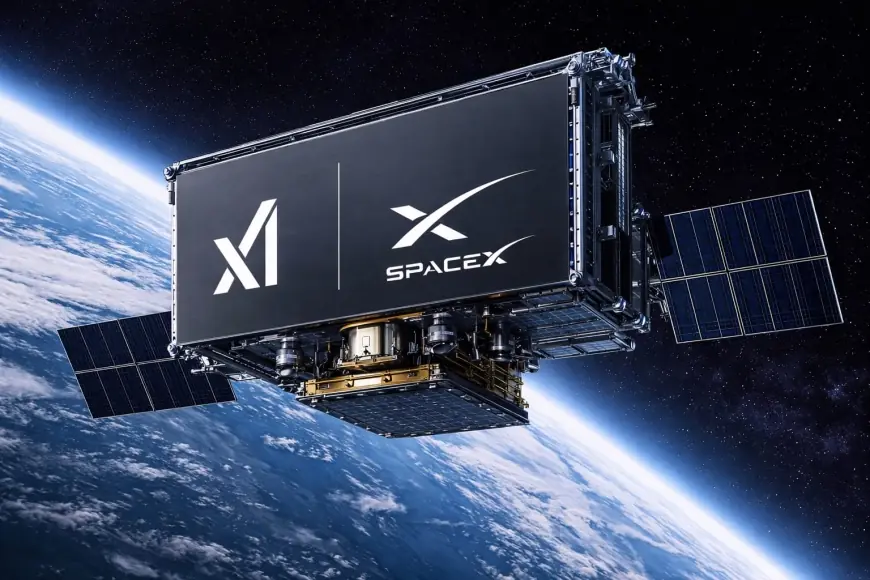
A major realignment across Elon Musk’s companies is reshaping the narrative around private-market AI, the public-market Tesla story, and longer-running questions about whether SpaceX will ever go public. The headline move: SpaceX has acquired xAI, folding the AI startup behind the Grok chatbot into the space company’s orbit. The deal lands as European authorities step up scrutiny of AI-generated sexual deepfakes and other illegal content tied to Grok, adding a regulatory overhang to the newly combined structure.
SpaceX absorbs xAI, creating a bigger “stack”
SpaceX’s acquisition of xAI is being framed as a consolidation that brings launch services, satellite connectivity, and an AI model under a single roof. The strategic logic is straightforward: space-based communications networks can move data; AI systems consume data and computing; and a vertically aligned group can decide how to prioritize both.
The combined structure also intensifies speculation about future capital-raising. SpaceX is private, xAI is private, and neither has a public ticker. But the transaction’s sheer size and its timing have renewed talk that a future SpaceX IPO could be paired with a clearer AI story than “just” rocket and satellite revenue.
What it means for “xAI stock” and TSLA
There is no such thing as “xAI stock” in the usual sense, because xAI is not publicly listed. Any trading activity is confined to private markets, employee tender offers, and institutional transactions that aren’t broadly accessible.
For everyday investors, the more practical question is exposure:
-
TSLA: Tesla is publicly traded, and its valuation is increasingly debated through an AI-and-robotics lens rather than as a pure automaker.
-
SpaceX: Still private; access is typically limited to institutions and certain private vehicles.
-
Indirect linkage: Tesla previously disclosed a multi-billion-dollar investment into xAI, and that capital relationship now sits inside the SpaceX-xAI combination.
Markets have treated these cross-company connections as both an opportunity (shared talent, shared compute, shared ambitions) and a complication (governance questions, related-party optics, and unclear returns timelines).
AI news flashpoint: deepfakes, privacy, and Europe’s tougher stance
The merger arrives amid a wave of official actions and inquiries in Europe centered on AI-generated sexual deepfakes and broader platform safety compliance. Authorities have focused on whether sufficient safeguards were in place to prevent the creation and spread of non-consensual explicit images, including scenarios involving minors.
This matters for the combined SpaceX-xAI structure for two reasons:
-
Compliance costs and restrictions: Model and product constraints can reduce misuse, but they can also limit feature velocity and increase moderation overhead.
-
Reputational risk: Even when abuse is driven by bad actors, the public narrative tends to emphasize the tool, not the user.
xAI has introduced tighter controls around image generation, but the regulatory trajectory suggests the bar for “reasonable safeguards” is rising quickly, especially for widely accessible generative tools.
SpaceX IPO talk: louder, still not confirmed
Search interest in “SpaceX IPO” tends to spike whenever the company does something capital-intensive or headline-grabbing. The xAI acquisition checks both boxes. Still, there is no officially confirmed IPO date, and the company has historically relied on private fundraising rather than public markets.
What’s changed is the storyline investors want answered: how a combined space-and-AI entity would present its growth profile, risk profile, and governance to public shareholders. If SpaceX ever files, the xAI integration would likely be one of the defining sections in the prospectus: how compute is financed, how data is handled, and how AI product risk is managed across jurisdictions.
Key numbers and dates to know
| Item | Latest detail (ET) | Why it matters |
|---|---|---|
| xAI joins SpaceX | Announced Feb. 2, 2026 | Consolidates AI into SpaceX ecosystem |
| Partial European enforcement actions/inquiries tied to Grok | Feb. 3–4, 2026 | Raises compliance and product-safety stakes |
| Tesla’s disclosed investment into xAI | Late Jan. 2026 | Links TSLA’s AI narrative to xAI outcomes |
| SpaceX IPO status | Not publicly confirmed | Speculation rises; no filing announced |
What to watch next
The next phase will be defined less by deal headlines and more by execution details that can be measured:
-
Product constraints vs. product growth: whether safety controls reduce abuse without materially slowing adoption.
-
Compute strategy: whether the combined group signals a clearer plan for scaling compute and energy needs, including where data centers sit and how they’re funded.
-
TSLA narrative clarity: whether Tesla’s AI spending and timelines (autonomy, robotics, and related services) become more specific in public disclosures.
-
IPO signals: any concrete steps such as hiring patterns for public-company readiness, governance changes, or formal regulatory filings.
For now, the takeaway is that Musk’s “AI + real-world infrastructure” thesis is being assembled more tightly than before—while regulators, especially in Europe, are moving to define what “safe enough” must mean for consumer-facing generative AI.
Sources consulted: Reuters, Associated Press, Bloomberg, The Verge