























Pistons Trade Jaden Ivey in Three-Team Deal as Timberwolves Move Mike Conley and Detroit Adds Kevin Huerter and Dario Šarić

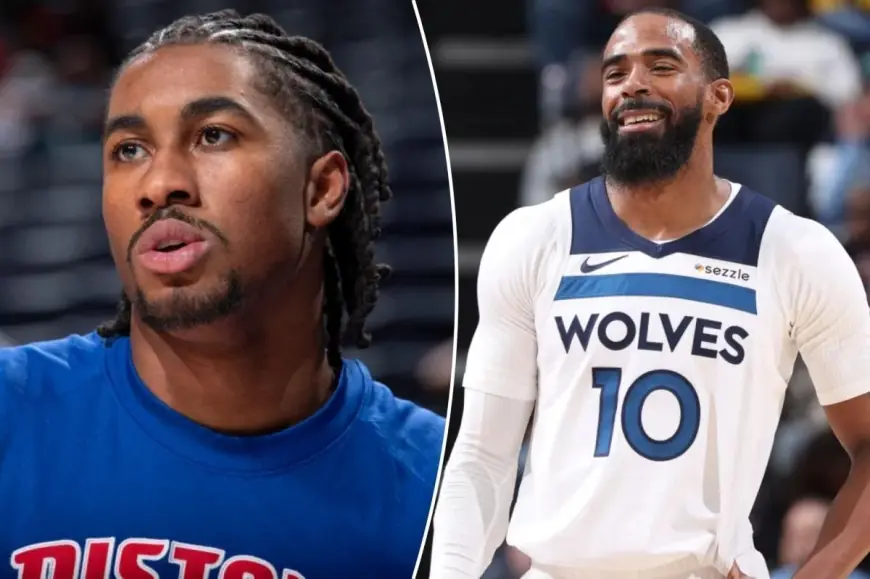
A major three-team NBA trade reshaped the Detroit Pistons and Minnesota Timberwolves ahead of the trade deadline, with Jaden Ivey and Mike Conley Jr. heading to the Chicago Bulls and Kevin Huerter plus Dario Šarić landing in Detroit. The deal, agreed to on Tuesday, February 3, 2026 (ET), also includes a 2026 first-round protected pick swap moving from Minnesota to Detroit, a small but potentially meaningful sweetener in a deadline week where front offices count every marginal edge.
For Detroit, the move reads like a win-now tweak built around spacing and lineup versatility rather than star-chasing. For Minnesota, it looks like a financial and roster-flexibility maneuver. For Chicago, it’s a bet that combining a young guard’s upside with a steady veteran organizer can stabilize a backcourt and reshape the team’s timeline.
Pistons trade: what Detroit gave up and what it got back
Detroit sent out Jaden Ivey and received:
-
Kevin Huerter
-
Dario Šarić
-
A 2026 first-round protected pick swap from Minnesota
On the court, the cleanest “why” for Detroit is shooting and fit. Huerter’s value proposition is simple: quick-trigger perimeter gravity and connective decision-making that can keep an offense from bogging down when primary creators draw extra attention. If Detroit’s core is built around a lead initiator and downhill pressure, adding a wing who can punish help defense is the kind of move that shows up in playoff margins, not February box scores.
Šarić is the more fluid piece. Depending on health, rotation needs, and roster spots, he can function as frontcourt depth, a small-ball option, or a contract tool that keeps Detroit flexible for follow-up trades.
Timberwolves trade: why Minnesota moved Mike Conley
Minnesota’s headline is Mike Conley Jr. going out, and the subtext is the space it creates. Conley’s salary slot and roster spot can be used as a lever in the final hours before the trade deadline at 3:00 p.m. ET on Thursday, February 5, 2026.
In a vacuum, moving a veteran point guard midseason can look like giving up stability. In context, it signals that Minnesota is prioritizing flexibility: avoiding hard constraints, opening pathways to additional deals, and positioning for an immediate upgrade or a broader reshuffle. This is the type of move teams make when they believe the next transaction is the real one.
Bulls’ side: what Chicago is betting on with Ivey and Conley
Chicago received both a long-term swing and a short-term stabilizer.
Ivey’s value depends on role clarity and development runway. If Chicago sees a path to consistent minutes, consistent responsibilities, and a system that amplifies his strengths, the upside is meaningful: pressure at the rim, transition speed, and the potential to grow into a high-impact guard if the shot and decision-making tighten.
Conley, meanwhile, is a known quantity: leadership, pace control, and low-drama competence. Pairing Conley with Ivey can function like a bridge strategy, using a veteran to steady the offense while a younger guard grows into larger usage.
Behind the headline: why this trade happened now
This deal is less about “talent in, talent out” and more about incentive alignment:
-
Detroit’s incentive is playoff readiness. The Pistons are acting like a team that expects its season to extend deep enough that spacing, matchup flexibility, and bench reliability matter more than internal experimentation.
-
Minnesota’s incentive is optionality. Clearing room near the deadline is often a precursor to something larger, whether that’s chasing a specific archetype, consolidating contracts, or preparing for a bigger swing.
-
Chicago’s incentive is rebalancing timeline. Adding Conley helps now; adding Ivey is a bet on later. Doing both in one move is a way to avoid choosing just one direction.
Stakeholders extend beyond the three teams. Agents, future free-agent decisions, and league-wide buyers and sellers will treat this trade as a signal: Detroit is leaning into contention, Minnesota is keeping doors open, and Chicago is trying to thread the needle.
What we still don’t know
Several pieces remain important and unresolved as the deal settles:
-
How Detroit’s rotation changes immediately and who loses minutes when Huerter is integrated.
-
Whether Šarić becomes real frontcourt depth or is viewed primarily as a flexible roster piece.
-
How Chicago staggers Conley and Ivey, and whether Ivey gets the on-ball runway needed to justify the acquisition.
-
What Minnesota’s next move is, if any, and whether moving Conley was step one of a larger plan.
What happens next: realistic scenarios with clear triggers
-
Detroit makes a follow-up move if shooting alone doesn’t address late-game creation needs, especially if the market loosens near the deadline.
-
Minnesota pivots quickly into another deal if the cleared flexibility matches a target’s contract and position.
-
Chicago experiments early with Conley-led units to stabilize turnovers and shot quality, then gradually increases Ivey’s responsibilities if results hold.
-
League reaction accelerates: contenders respond by adding shooting, and fringe teams respond by selling veterans, creating a chain effect before Thursday afternoon.
Why it matters
Deadline trades aren’t always about the biggest name; they’re often about the cleanest fit. Detroit turning Ivey into Huerter plus a pick swap is a bet that spacing and decision speed are the currency of winning basketball in April and May. Minnesota moving Conley is a bet that flexibility is worth more than continuity in the final days before the deadline. Chicago’s two-guard haul is a bet that it can compete now without giving up on later.
The next 48 hours will reveal whether this trade is the main event or the opening act.