























James Harden Trade Rumors Heat Up as Clippers and Cavaliers Discuss a Darius Garland Swap Ahead of the NBA Deadline

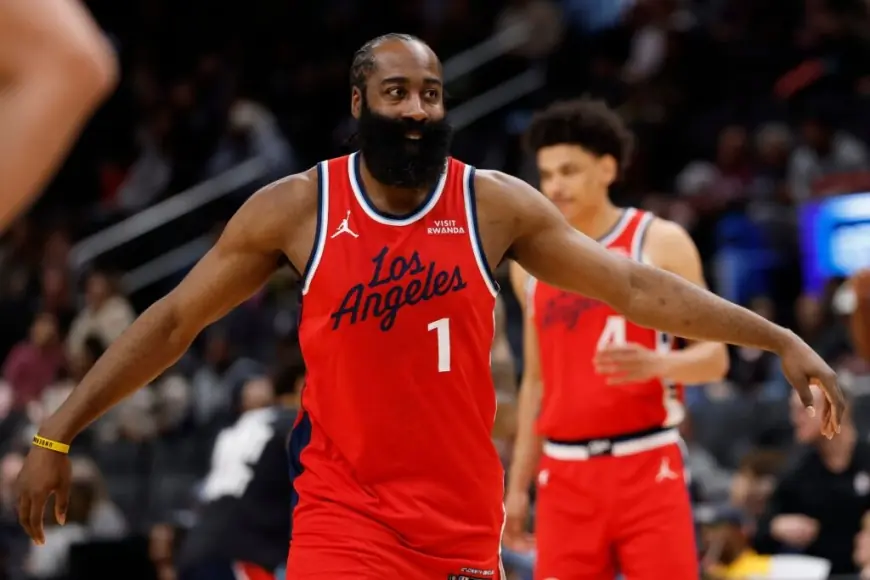
The NBA trade deadline is suddenly orbiting one high-voltage question: will the Los Angeles Clippers move James Harden to the Cleveland Cavaliers in a deal centered on Darius Garland? With the deadline set for Thursday, February 5, 2026 at 3:00 PM ET, the talks have accelerated in recent days, and Harden’s recent absence from the lineup for personal reasons has only intensified the spotlight.
Even in a league that runs on speculation, this pairing stands out because it’s not just a talent swap. It’s a philosophical pivot for two teams trying to reconcile timeline, salary structure, and playoff urgency in the same week.
What’s on the table in the Harden trade talks
The broad framework being discussed is simple on paper: Cleveland targets Harden as an immediate offensive engine, while the Clippers consider a younger guard in Garland as a way to reshape their backcourt for the next phase.
But the real complexity sits in the details:
-
Harden is 36 and playing under a two-year deal that includes a player option for the second season. That option matters because it gives him leverage over his future and can complicate trade mechanics.
-
Garland is 26 and on a long-term contract that reflects a franchise-level commitment. Moving him is not just a basketball decision; it’s an identity decision.
A swap like this is rarely only about the players involved. It’s about what each front office believes its window truly is, not what it hopes it is.
Why the Clippers would entertain moving Harden now
On the court, Harden has been producing at a star level and has helped stabilize stretches of the season. So why even consider a deal days before the deadline?
Context and incentives are doing the pushing:
-
The Clippers have a roster built to compete immediately, but that urgency can collide with long-term cap planning and the risk of an aging core.
-
Harden’s contract leverage changes the negotiation dynamic. When a player can influence where he lands and how his next deal might look, teams have to decide whether to lock in certainty now or risk losing control later.
-
Recent missed games, whatever the underlying reason, tend to trigger front-office contingency planning at the deadline. Teams rarely wait for perfect clarity when the calendar is this unforgiving.
Stakeholders here include the Clippers’ ownership and basketball operations group trying to balance competitiveness with flexibility, plus a locker room that has to function through nonstop rumors.
Why the Cavaliers would bet on Harden over Garland
For Cleveland, the case for Harden is straightforward: he can organize an offense, create shots in late-clock situations, and raise a team’s floor in playoff-style games where possessions tighten.
The deeper “why” is about timing:
-
Cleveland’s roster is built to contend, but postseason success often hinges on having a high-level creator who can solve defensive schemes when Plan A breaks.
-
Garland is a talented lead guard, but pairing and role allocation questions can persist on teams with multiple ball-handlers. A Harden move would be a decisive statement: this is the identity, this is the hierarchy, and this is the push.
The risk, of course, is that Harden’s age and contract leverage compress the runway. Cleveland would be trading long-term stability for a more immediate, higher-variance shot at a deep run.
What we still don’t know
Several missing pieces will determine whether these talks become a deal or fizzle into deadline noise:
-
Harden’s willingness to commit long-term to Cleveland if a trade happens
-
The exact player and pick sweeteners required to balance value, fit, and salary rules
-
Garland’s health timeline and how it influences Cleveland’s urgency
-
Whether another team jumps in late with a competing offer that changes the leverage
Until those points firm up, any “done deal” talk should be treated as still developing.
Second-order effects: what a Harden-for-Garland swap would change league-wide
If this trade happens, it won’t exist in isolation.
For the Clippers, acquiring Garland would represent a pivot toward a younger timeline without fully abandoning the present. It would also reshape how opponents guard them: Garland changes pace and spacing in different ways than Harden, and that affects everything from transition frequency to how teams defend pick-and-roll.
For Cleveland, bringing in Harden would signal an all-in posture that could influence the rest of the deadline market. Teams on the fence might be forced to act if they believe the East just added another playoff-caliber shot-creator to a contender.
And reputationally, both front offices would be making a loud statement: one prioritizing future-proofing, the other prioritizing immediate ceiling.
What happens next: realistic scenarios before Thursday’s 3:00 PM ET deadline
-
Deal closes quickly if Harden signals strong buy-in and both sides settle the final add-ons (bench pieces, picks, protections).
-
Talks stall if Cleveland resists attaching premium extras to Garland, or if the Clippers insist on more insulation against Harden’s contract leverage.
-
A third team enters as a facilitator, helping route contracts and players in a multi-team structure.
-
Clippers keep Harden through the deadline but revisit everything in the offseason if contract expectations diverge.
-
Cleveland stands pat, deciding that continuity beats volatility, and uses the deadline to address smaller needs instead.
The headline is the rumor. The real story is the clock. With only days left, every hour pushes these teams closer to a decision that will define not just this season’s playoff ceiling, but the shape of their next two years.