Full Moon February 2026: The Snow Moon Has Passed, and Tonight’s Moon Isn’t Full

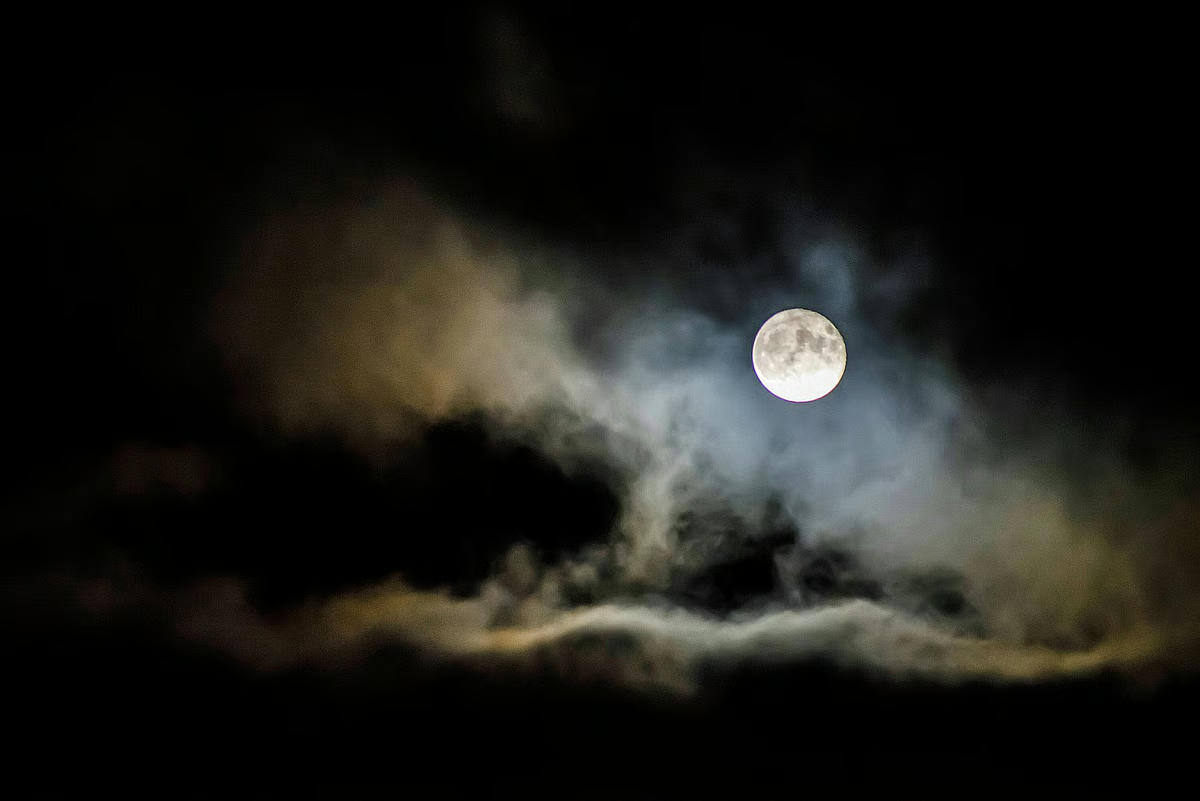
If you’re searching “full moon tonight” or “is tonight a full moon” in early February 2026, the key update is simple: the February full moon, commonly called the Snow Moon, has already happened. The Snow Moon reached full phase on Sunday, February 1, 2026 at 5:09 p.m. ET. As of Wednesday, February 4, 2026 (ET), the Moon is no longer full; it’s in the waning gibbous phase, meaning it still looks very bright but is gradually shrinking night by night.
That timing matters because “full moon” is an exact moment astronomically, even though the Moon can appear full-ish to the eye for roughly a day on either side.
When was the full moon in February 2026, and why is it called the Snow Moon?
The February 2026 full moon happened on February 1 at 5:09 p.m. ET.
“Snow Moon” is a traditional nickname for February’s full moon, tied to the month’s historical association with heavy snowfall in parts of North America. The name doesn’t change the Moon itself; it’s a cultural label layered on top of a predictable lunar cycle.
In other words: Snow Moon is the February full moon, every year. The date and time shift because the lunar cycle isn’t aligned to the calendar month.
Is tonight a full moon? What moon is tonight?
No. Tonight, February 4, 2026 (ET), is not a full moon.
Tonight’s Moon is a waning gibbous: still large and bright, but past peak illumination. That’s why many people feel like it “looks full” even when it technically isn’t. In practical skywatching terms, you’ll notice:
-
The Moon rises in the early evening and stays up much of the night.
-
The brightest glare starts easing slightly each night after the full moon.
-
More subtle lunar surface shading becomes easier to see compared with the exact full phase, when shadows are minimized.
When is the next full moon after February 2026?
The next full moon after the February 1 Snow Moon is on Tuesday, March 3, 2026 at 6:37 a.m. ET.
That’s the next “true full” moment on the calendar. If you’re planning photos, events, or nighttime viewing, the evenings around March 2 and March 3 (ET) will look the most fully illuminated to casual observers, even though the peak occurs in the morning.
Moon tonight: why the “full moon tonight” question spikes even after the peak
Behind the headline, this is less about confusion and more about how people experience the sky:
-
The Moon’s visual “fullness” is a gradient, but the term “full moon” is treated like a switch.
-
Social feeds amplify dramatic moon photos taken on different nights and label them the same way.
-
Weather and haze can make a slightly-less-than-full Moon look softer and larger, which tricks perception.
The incentive structure is straightforward: creators want a simple label, audiences want a simple answer, and the Moon refuses to be simple.
What planet is next to the moon tonight?
This depends heavily on your location, the time you’re looking, and what “next to” means in sky terms. On February 4, 2026 (ET), there isn’t a single, universally “right” bright planet parked right beside the Moon for everyone the way there is during a close conjunction.
Two practical points help you avoid misidentification:
-
If the bright “planet” seems to twinkle noticeably, it’s likely a star, not a planet.
-
If it’s extremely bright and steady, it could be a planet, but distance and direction matter.
In early February 2026 evenings, Jupiter is one of the brightest objects in the sky and can be prominent after sunset, but it won’t necessarily be right next to the Moon tonight from every vantage point. If you want certainty, the most reliable method is to use a sky map app and hold your phone up to the sky at the moment you’re observing.
What happens next: the next two weeks of lunar “headline moments”
If you’re tracking February skywatching in 2026, here are realistic, low-drama next steps:
-
The Moon will continue waning through the first half of February, with darker evening skies improving stargazing conditions.
-
New moon arrives mid-month, which is the best window for faint objects because moonlight is minimal.
-
After new moon, the crescent returns in the evening sky and grows toward the March full moon.
Why the February 2026 Snow Moon matters
The Snow Moon itself isn’t rare; the recurring attention is the story. A bright full moon acts like a monthly reset button for casual astronomy, pulling people outdoors and prompting the same questions in waves: “is it full,” “what is it called,” and “what’s that bright thing near it.”
For February 2026, the definitive answers are: the Snow Moon peaked February 1 at 5:09 p.m. ET, tonight is not a full moon, and the next full moon arrives March 3 at 6:37 a.m. ET.