

























Justin Bieber at the Grammys 2026: “Yukon” performance, “SWAG” nominations, and what it means for his next era

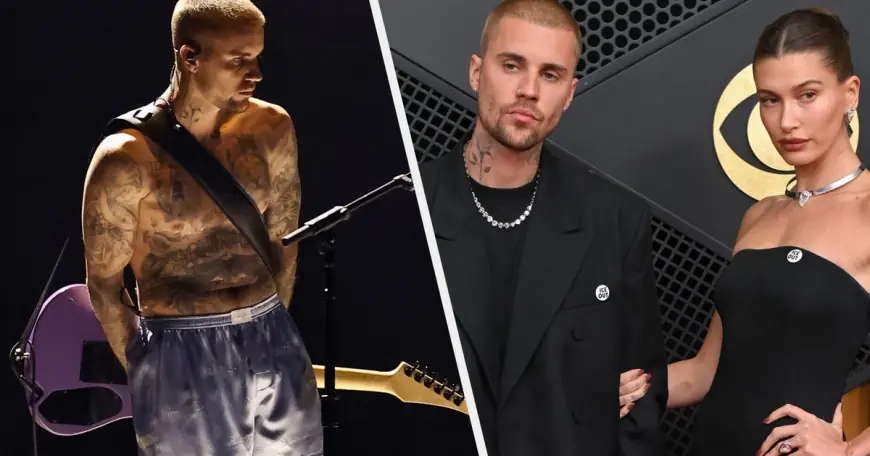
Justin Bieber returned to the Grammys stage in 2026 with a stripped-back performance of “Yukon” that quickly became one of the night’s defining talking points. The set leaned into minimalism and vulnerability: Bieber onstage with a looped, guitar-led arrangement and a deliberately provocative wardrobe choice that read as part stunt, part statement about shedding the polished pop template that first made him famous.
The moment landed because it hit several pressures at once: a high-profile comeback narrative, a song that signals a new sonic direction, and an awards-season audience primed to treat “performance choices” as brand strategy.
Justin Bieber Grammys 2026 performance: what happened and when it aired in ET
Bieber performed “Yukon,” a track tied to his current “SWAG” era, during the main telecast on Sunday, February 1, 2026. The show began at 8:00 PM ET. The exact minute his segment aired can vary by local broadcast timing, ad breaks, and pacing; if you’re trying to pinpoint the moment, it was positioned as a major in-show performance rather than a pre-telecast clip.
What stood out was the contrast: the arrangement and staging emphasized intimacy, while the styling choice pushed the performance into “water-cooler” territory. That tension is often the point at the Grammys, where an artist’s job isn’t only to sound good, but to be remembered the next morning.
Has Justin Bieber won a Grammy, and how many does he have?
Yes. Justin Bieber has won two Grammy Awards over his career, alongside numerous nominations across pop, dance, and collaboration-heavy categories. That track record matters in 2026 because it frames him as something more than a nostalgia act: he’s an artist the voting body has rewarded before, and that history can shape how voters interpret a “return” performance.
Justin Bieber Grammy nominations 2026: where “SWAG” and “Yukon” fit in
Going into the 2026 ceremony, Bieber’s “SWAG” project and its surrounding singles were positioned as awards contenders, with nominations that placed him in both mainstream pop lanes and more genre-adjacent spaces. “Yukon” in particular functions like a thesis statement: less about maximal hooks, more about mood, texture, and emotional tone.
Even if an artist doesn’t win on the night, nominations can be a commercial and narrative catalyst. They create permission for a new chapter and make industry partners more comfortable investing in the next release cycle.
Who is Justin Bieber married to, and why it became part of the Grammys conversation
Bieber is married to Hailey Bieber. At big award shows, spouses often become part of the story not because they’re “supporting characters,” but because they help humanize the public narrative. A spouse’s visible reaction in the room can reframe a headline-making performance as either playful, intimate, risky, or awkward, depending on what viewers project onto it.
That’s one reason red-carpet and audience shots matter: they act like real-time editorial commentary, shaping how casual viewers interpret what they’re seeing.
Behind the headline: why “Yukon” and the underwear staging were a calculated bet
This wasn’t random. The Grammys are one of the few mass-stage moments left where a single performance can reset an artist’s positioning overnight. Bieber’s incentives were clear:
Context: He’s navigating a post-teen-idol career where reinvention is necessary, not optional. The “SWAG” framing and the more restrained musical approach suggest an attempt to be judged as an adult album artist, not just a singles machine.
Incentives: Going minimal musically can signal authenticity, but minimal staging risks fading into the background. A provocative styling decision solves that visibility problem instantly. It guarantees conversation, clips, and search volume.
Stakeholders: Bieber and his team want momentum without looking desperate; the awards show benefits from headline moments; brand partners and promoters watch for “cultural heat”; fans want a version of Bieber that feels honest, while critics scrutinize whether the shock factor is doing the heavy lifting.
Missing pieces: What viewers still don’t fully know is how permanent this aesthetic shift is. Is “Yukon” the direction of the next full project, or a one-off angle for awards season? Also unclear is whether he’s building toward a larger rollout in the coming months or simply marking a return to public performance.
Second-order effects: A daring performance can expand his creative credibility, but it can also narrow certain opportunities that prefer safer, family-forward branding. It may push the conversation toward spectacle rather than songwriting, which can be a double-edged sword if the goal is artistic re-centering.
What happens next: 5 realistic scenarios to watch
-
A tighter “SWAG” era rollout if streaming interest spikes after the performance, with more live sessions and stripped arrangements.
-
A course correction toward cleaner visuals if backlash grows louder than praise, especially from more traditional audiences.
-
A deliberate doubling down on experimental staging if the goal is to separate “new Bieber” from legacy hits.
-
More high-visibility collaborations if he’s aiming to compete across multiple categories next year.
-
A live-performance run beyond awards season if this was a test balloon for a bigger touring chapter.
Bieber’s Grammys 2026 appearance wasn’t just a performance. It was a positioning statement: a bid to be seen as unpredictable, artistically serious, and culturally central again, all at once.