
























Full Moon February 2026: The Snow Moon Peaks, “Moon Tonight” Questions Surge, and What’s Really Next to the Moon

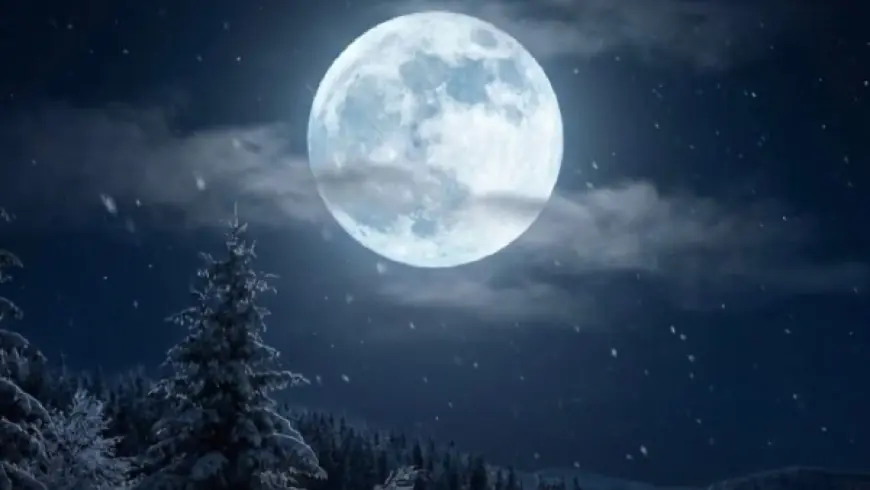
If your searches look like “full moon tonight,” “moon today,” or “is tonight a full moon,” you’re not alone. Early February 2026 has triggered a fresh wave of skywatching as the February full moon, commonly called the Snow Moon, reaches its peak and then lingers in a near-full look for another night or two.
In USA Eastern Time, the February 2026 full moon moment occurs on Sunday, February 1, 2026 at 5:09 PM ET. That timing matters because it means the moon can look completely full across both Sunday night and Monday night, even though the exact “full” instant is a specific moment on the clock.
Snow Moon 2026: When the Full Moon Happened and Why It Still Looks Full Tonight
What happened is straightforward: the full moon peaked late Sunday afternoon ET, then rose that evening looking essentially full. On Monday, February 2, 2026 ET, the moon is technically just past full, moving into a waning gibbous phase. But to the human eye, it can still pass as “full moon tonight,” especially when it’s bright, low on the horizon, and lighting up winter haze.
This is the key reason so many people feel confused by “when is the full moon” versus “is it a full moon.” The calendar answer is a single moment. The visual experience stretches across multiple nights.
Practical rule of thumb for “moon tonight” in early February:
-
If the moon rises around sunset and stays bright most of the night, you are in the full-moon window.
-
If it rises after sunset and looks slightly less round on the right side, you are likely one to two nights past peak.
When Is the Next Full Moon After the Snow Moon?
The next full moon after the February full moon is on Tuesday, March 3, 2026 at about 6:38 AM ET. Many calendars label it the Worm Moon.
Because that full moon moment is in the morning, the moon will look full on the night of Monday, March 2, 2026 ET and still very full before dawn on Tuesday.
A major “why it matters” note for March: a total lunar eclipse is expected around that early March full moon period, with visibility depending on where you are and whether skies cooperate. That combination tends to amplify public interest, photo attempts, and the spread of half-true posts.
What Moon Is Tonight, Exactly?
Tonight’s moon, February 2, 2026 ET:
-
Name people are using: Snow Moon, February full moon, full moon snow moon
-
Technical phase: just past full, waning gibbous
-
What you’ll see: a moon that still looks full unless you’re looking closely, especially with binoculars or a zoom lens
This is why “full moon february 2026 snow moon” and “is it a full moon” can both feel true depending on what you mean by full: exact timing versus appearance.
What Planet Is Next to the Moon Tonight?
This is the trickiest question because it changes by location, time of night, and what you consider “next to.” Two important realities drive confusion:
First, many “planet next to the moon” sightings are not planets. Bright stars can look planet-like, and the Snow Moon sits in a part of the sky where a bright star can appear very close to it on some nights.
Second, even when it is a planet, the “which planet” answer can flip within a few hours depending on whether you’re looking at dusk, late evening, or pre-dawn.
If you see a bright point very close to the moon on February 2, 2026 ET, it is more likely to be a bright star than a planet. If you see a bright object farther away, steady and prominent after sunset, Jupiter is the most common “looks-like-a-planet” candidate in the evening sky this month, even if it is not right up against the moon.
Quick reality check you can do without any equipment:
-
If the object twinkles noticeably, it is probably a star.
-
If it shines steadily and is very bright, it could be a planet, but haze can make planets shimmer too.
Behind the Headline: Why Snow Moon Searches Spike and What Comes Next
Context matters here: the Snow Moon is less about a rare astronomical event and more about timing, weather, and attention. Winter skies can be clearer, the moon rises at convenient evening hours near the peak, and people notice brighter nights immediately.
Incentives are obvious:
-
Photographers want the big, low moon near landmarks.
-
Social platforms reward dramatic claims like “rare” or “once-in-a-lifetime,” even when it’s simply the monthly full moon.
-
Stargazing apps and local events benefit from predictable surges in interest.
Stakeholders include local astronomy groups, parks, educators, and anyone planning public skywatch nights. They gain turnout, but they also inherit cleanup duty when misinformation spreads.
Missing pieces to watch:
-
Exact “planet next to the moon tonight” depends on your city and the hour. A correct answer for 8 PM ET can be wrong by 5 AM ET.
-
Weather drives what people think they saw. Thin clouds can create halos and fake “extra bright” effects.
Next steps, realistically:
-
Clear skies tonight: more “full moon tonight” posts, even though peak was Sunday.
-
Mid-February: increased confusion as planets cluster lower near the horizon around twilight, raising more “what planet is that” questions.
-
Late February: another spike as the moon passes nearer to bright planets on specific evenings.
-
Early March: attention jumps again with the next full moon and the possibility of an eclipse depending on location.
For now, the simple answer is: the Snow Moon peak is already in the books, but the moon can still look full tonight in ET, and the next full moon arrives on March 3, 2026 in the morning ET.