























Bulls vs Heat ends with a Miami blowout after a rare three-game set

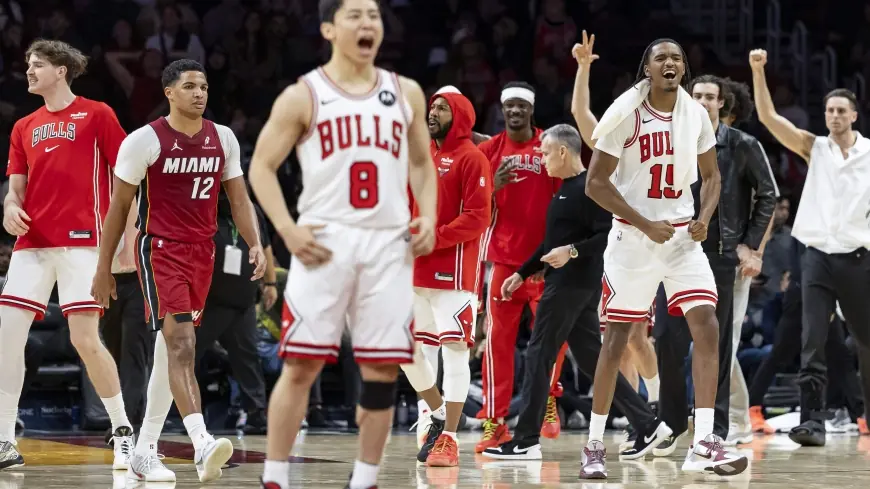
The latest Bulls vs Heat chapter swung hard on Sunday night in Miami, where the Heat rolled to a 134-91 win at 6:00 p.m. ET to close an unusual three-game stretch between the same two teams. The result mattered beyond the score: it created a fast, mini-series feel in the middle of the regular season, gave both sides a quick scouting loop, and left the Eastern Conference play-in race with one team riding momentum and the other searching for answers.
A day earlier, the Heat vs Bulls script looked very different. Chicago stole a 125-118 win Saturday night behind a near triple-double from Ayo Dosunmu and late buckets from rookie forward Matas Buzelis. Twenty-four hours later, Miami flipped the matchup with its most complete performance of the set.
Key takeaways
-
Miami set the tone early, then kept attacking the paint and running in transition.
-
Chicago’s short-handed rotation showed on the glass and at the three-point line.
-
Dosunmu and Buzelis were still bright spots, even as the finale got away.
How Sunday turned into a rout
Miami never trailed and broke the game open immediately with a 34-13 first quarter. The lead ballooned throughout the night, touching the mid-50s at its peak as the Heat’s pace and physicality overwhelmed a Bulls group that looked heavy-legged on the back end of the quick turnaround.
Bam Adebayo and Pelle Larsson scored 20 points apiece, and Miami’s ball pressure helped force Chicago into rushed looks and empty possessions. The Heat also dominated inside, piling up a huge edge in paint scoring and turning stops into quick strikes the other way.
Chicago’s offense collapsed into low-percentage shots: 32.2% from the field and 14.6% from three. Coby White led the Bulls with 16 points, and Nikola Vucevic added 12, but neither could stabilize the offense once Miami’s early wave hit.
Bulls vs Heat: what the starting lineups said
The NBA starting lineups told the story before tip: both sides leaned into available bodies and role clarity, not ideal symmetry.
Chicago’s group featured Coby White, Ayo Dosunmu, Isaac Okoro, Matas Buzelis, and Nikola Vucevic. Miami opened with Davion Mitchell, Kasparas Jakučionis, Pelle Larsson, Andrew Wiggins, and Bam Adebayo. The names weren’t just a lineup card detail; they signaled how each team planned to survive the stretch.
For the Bulls, the setup pushed creation responsibility toward White and Dosunmu, with Buzelis asked to do a little of everything—rebound, run the floor, and punish mismatches. For Miami basketball, the emphasis was on defense-first guards and wings around Adebayo, with multiple players tasked to pressure the ball and keep the paint crowded on drives.
Ayo Dosunmu and Matas Buzelis flashed upside
Even with Sunday’s lopsided finish, Dosunmu was the defining Bulls player of the mini-series because of what he did Saturday. He posted a season-high 29 points with nine assists and eight rebounds in the 125-118 win, consistently beating the first line of defense and creating clean looks for teammates.
Buzelis’ 21 points Saturday were just as important, not only for the total but for the timing: he delivered key scores in the final minute to swing the game back to Chicago after a late Miami push. His confidence has become central to the Bulls’ offense when the rotation is thin—spacing to the corner, cutting behind ball-watching defenders, and making the simple play when the defense collapses.
On Sunday, those same strengths were harder to access once Miami’s lead grew and the Bulls were forced into a more desperate shot diet. Still, the weekend showed why Chicago is leaning on Dosunmu’s two-way engine and Buzelis’ versatility as the season tightens.
Injuries and availability shaped the set
This Bulls–Heat run was as much about who wasn’t available as who was. Chicago entered the finale without several rotation pieces, and the cumulative effect showed up in shooting legs, defensive rebounding, and the ability to match Miami’s physical bursts.
Miami also navigated key absences. Tyler Herro remained out, and Norman Powell did not play in the finale. Davion Mitchell’s return helped stabilize the Heat’s guard rotation and added another on-ball defender for a matchup that often came down to pressure at the point of attack.
When teams see each other repeatedly in a short window, missing bodies get magnified: there’s less time to reset, fewer practice opportunities to install counters, and far more minutes for players asked to stretch beyond their comfort roles.
What the result means next
The Heat’s Sunday win capped a rare regular-season three-game set and pushed Miami’s record above .500 while leaving Chicago looking for a bounce-back. Just as important, it offered a clear blueprint: Miami’s best path is pace, paint pressure, and layered perimeter defense; Chicago’s is high-volume threes generated from drive-and-kick creation, with Dosunmu and White forced to carry heavy decision-making.
For the Bulls, the immediate task is restoring offensive efficiency—getting back to a respectable three-point rate, finding earlier offense before defenses get set, and controlling the glass well enough to keep transition chances from snowballing. For the Heat, the next step is sustaining the defensive edge while reintegrating key pieces as they return.
Sources consulted: NBA, Reuters, ESPN, Associated Press