























Mike LaFleur hired as Arizona Cardinals head coach after late-season collapse

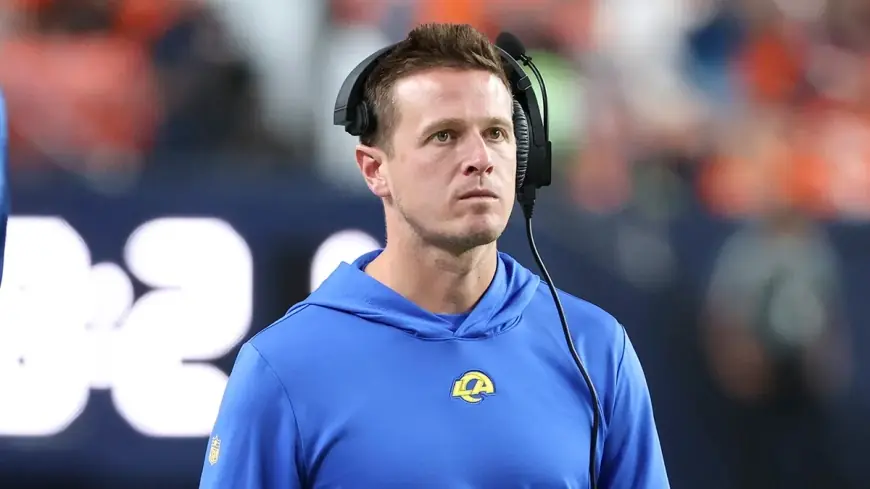
The Arizona Cardinals have a new leader on the sideline, hiring Mike LaFleur as head coach on a five-year deal in a move that ends the team’s search and resets the direction of a franchise coming off a 3–14 season. The decision also answers a question that surged alongside the news—is Mike LaFleur related to Matt LaFleur—and pushes Arizona further toward an offense-first identity in a division packed with proven contenders.
Mike LaFleur becomes Cardinals head coach
The Cardinals announced the hire on Sunday, February 1, 2026 (ET), turning to LaFleur after his recent run coordinating one of the league’s most productive offenses with the Los Angeles Rams. At 38, he arrives with more than a decade of NFL coaching experience across multiple staffs, including prior stints with offenses in Cleveland, Atlanta, San Francisco, and New York.
The timing is notable: Arizona moved quickly to secure its next head coach as the league’s offseason calendar accelerates toward scouting events, free-agency planning, and staff hiring. For the Cardinals, the priority now is building an organization-wide system—scheme, terminology, roster philosophy—that can endure beyond yearly coordinator churn.
Matt LaFleur and Mike LaFleur: the family link
Yes—Mike LaFleur and Matt LaFleur are brothers. Matt LaFleur is the head coach of the Green Bay Packers, while Mike has built his résumé largely on the offensive side, including coordinating roles that elevated him into the head-coaching conversation.
Their shared coaching DNA is often described in terms of modern, motion-heavy, play-action-driven offense, but their paths have diverged through different staffs and responsibilities. The practical impact of the relationship is less about playbook copying and more about a built-in network: shared experience, shared vocabulary, and a steady sounding board as each navigates the pressures that come with being an NFL head coach.
Why Arizona moved on from Jonathan Gannon
The Cardinals fired Jonathan Gannon after three seasons, closing his tenure with a 15–36 record. The decision came after a 3–14 finish in 2025 that left the franchise searching for a new identity and a new way to win in the NFC West.
Arizona’s ownership and front office have signaled that the goal is not a slow rebuild that accepts multi-year losing, but a faster climb powered by a clearer style of play and stronger week-to-week consistency. Hiring an offensive-minded coach is also a direct response to where the league has tilted: teams increasingly want a head coach who can stabilize the offensive system even if coordinators change.
What the hire signals for the offense
LaFleur’s reputation is tied to structure—formations that create matchup problems, early-down efficiency, and a rhythm that doesn’t rely solely on low-percentage hero plays. One key question is how much direct play-calling responsibility he will take in Arizona. He did not call plays in his most recent coordinating role, which means the Cardinals’ staff choices—offensive coordinator, quarterbacks coach, pass-game coordinator—will be the first major clues about how the new “cardinals head coach” intends to run game day.
A second question is how aggressively Arizona modernizes its approach. The NFC West has been a proving ground for creative offense, and the Cardinals will need answers for both elite pass rushes and diverse coverage looks that punish one-dimensional teams.
Quarterback and roster decisions that come next
The biggest immediate decision is the future of quarterback Kyler Murray. The team is expected to evaluate whether Murray is the long-term answer, and that evaluation now shifts into LaFleur’s hands. The roster also includes high-end young skill talent—most notably wide receiver Marvin Harrison Jr. and tight end Trey McBride—giving the next staff building blocks that many new head coaches don’t inherit.
Key early steps to watch:
-
Staff hires, especially who leads the quarterback room and who designs the weekly game plan
-
Whether the offense is built around tempo and movement or more traditional dropback structure
-
Personnel priorities in free agency and the draft, particularly on the offensive line and defense
What happens next around the league
Arizona’s move also forces ripple effects elsewhere, most immediately in Los Angeles, where the Rams will need to replace their offensive coordinator yet again. For the Cardinals, the next few weeks are about assembling a staff quickly, aligning scouting priorities with the new scheme, and setting a clear offseason development plan for key players.
The broader reality is that the NFC West offers little runway for patience. LaFleur’s success will be measured early not only by wins, but by whether the Cardinals look organized—fewer wasted plays, cleaner quarterback decisions, and a style that holds up against top-tier opponents.
Sources consulted: NFL.com, Arizona Cardinals official site, Associated Press, Reuters