























Highguard game launch: Highguard release date sparks huge debut, but Highguard player charts slide fast amid early backlash

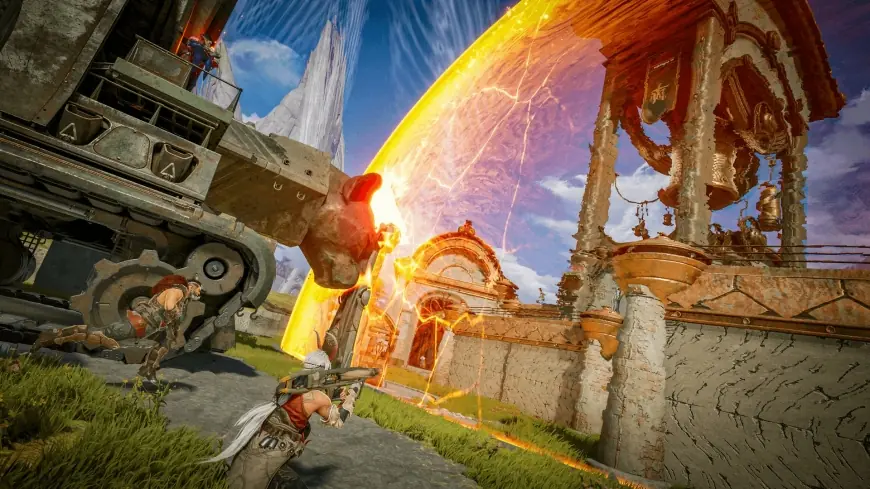
The Highguard game launched on Monday, January 26, 2026 ET, and instantly became a breakout—at least on day one. Within hours of release, Highguard player charts showed an enormous surge, with the title hitting an all-time concurrency peak of about 97,000 players before the conversation turned sharply toward performance problems, server instability, and polarizing design choices.
The whiplash has been stark: strong curiosity, fast adoption, then a steep drop-off as negative user sentiment spread. The result is a textbook modern live-service test—less about launch-day hype and more about whether the studio can convert attention into a durable core community.
Highguard release date and Highguard release: when it went live
The Highguard release date was January 26, 2026 ET, with the game unlocking at about 1:00 p.m. ET. The launch was positioned as a clean “jump in now” moment rather than a slow-build early access ramp, putting immediate pressure on infrastructure and first impressions.
That timing matters because free-to-play launches often succeed or fail in the first weekend. If the first experience is friction—queues, crashes, stutters—many players simply move on, even if the underlying game is promising.
Highguard Steam charts (and why the charts became the story without naming the trackers)
Search interest in highguard steam charts has surged because the easiest public signal of momentum is concurrency. The headline number—around 97,000 at peak—gave Highguard instant credibility as a “real” launch, not a quiet niche release.
But the second number is the one that worries publishers and developers: how quickly that peak fades. By the end of the week, live player counts visible on public trackers had fallen to the low five figures and below, suggesting a major retention challenge right out of the gate.
Behind the headline, there are two competing truths:
-
A giant peak proves the marketing worked and players were willing to try it.
-
A fast slide suggests the first session wasn’t strong enough to keep them.
High Guard vs Highguard: why people are searching both names
The “high guard” spelling is popping up for a simple reason: it reads like a fantasy faction title, not just a brand name. That makes it a natural typo and a natural alternate search phrase, especially as clips and memes circulate without consistent formatting.
It’s also a reminder of how a game’s identity spreads in fragments now—short clips, reaction posts, and one-line jokes—often before the wider audience even knows what genre it is.
What the Highguard game is and why the first impressions split so hard
Highguard is being pitched as a PvP raid shooter with hero-like roles, looting pressure, and extraction-style stakes. That hybrid pitch is attractive on paper—high tension, replayability, and social squad play—but it also raises expectations immediately. Players arrive ready to compare it to every shooter they already know, and that comparison is unforgiving.
Early criticism has clustered around a few themes:
-
Technical friction: reports of unstable matches, inconsistent performance, and launch-day server strain.
-
Anti-cheat controversy: complaints from some players about intrusive security tools and their impact on performance or privacy comfort.
-
Core feel disputes: debates over gunplay responsiveness, time-to-kill tuning, and whether the map scale fits the small-team format.
-
Meta volatility: early balance concerns are amplified because small-team games expose “best builds” quickly.
Not all negative reactions are gameplay-specific—some are driven by culture-war noise or meme brigading—but enough criticism has been consistent to shape the public perception.
Behind the headline: why Highguard launched big, then got punished fast
This is the familiar trap for new shooters in an overcrowded market.
Context: Players are overloaded with options and trained to churn. If a game doesn’t feel great in the first hour, they don’t “wait for patch notes”—they uninstall.
Incentives:
-
For the studio, a big launch validates years of development and helps attract long-term spenders.
-
For players, the incentive is entertainment now, not potential later.
-
For content creators, the incentive is to react quickly, which often means amplifying extremes—either “best new shooter” or “dead on arrival.”
Stakeholders: The studio needs a stable core audience; casual players need frictionless fun; competitive players need fairness and clarity; and platform holders need retention to justify promotion.
What we still don’t know about Highguard release plans
The key unknown isn’t whether Highguard can add content. It’s whether it can fix trust.
Questions that will decide the next month:
-
How quickly the studio stabilizes performance and matchmaking consistency
-
Whether anti-cheat concerns are addressed transparently (or quietly ignored)
-
What the first major balance pass looks like, and whether it reduces frustration
-
Whether the content cadence is fast enough to keep the remaining community engaged
-
Whether user reviews rebound once the loudest first-wave anger subsides
What happens next: realistic scenarios and triggers
-
A “saved by updates” rebound
Trigger: rapid stability fixes plus a strong first content drop that clearly improves the loop. -
A smaller, loyal core emerges
Trigger: the studio focuses on quality-of-life and competitive integrity rather than chasing a massive audience. -
A slow bleed continues
Trigger: fixes land too late, and negative perception hardens into a permanent label. -
A relaunch-style reset
Trigger: a major overhaul patch paired with a marketing re-introduction and clearer messaging of what the game actually is.
Highguard’s opening week delivered the hardest part—attention. Now comes the harder part: earning repeat sessions. The charts have already shown the peak. The next story is whether the game can build a floor.