Paul Dano Breaks Silence After Quentin Tarantino’s “Weak Link” Critique Sparks Industry Backlash

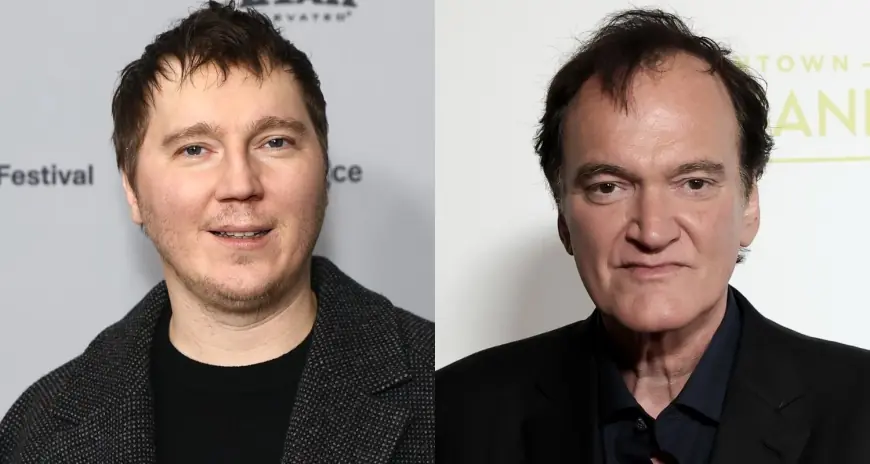
Paul Dano has publicly addressed Quentin Tarantino’s harsh assessment of his acting, a dispute that has quickly morphed from a niche cinephile argument into a wider fight about cruelty, status, and how the film industry rewards the loudest opinions.
The flare-up traces back to comments Tarantino made in December 2025 about Dano’s performance in the 2007 drama There Will Be Blood. Tarantino argued that Dano was the film’s weakest element and suggested a different actor would have strengthened it. The remarks went viral over the past several weeks, and Dano responded in late January 2026 while appearing at the Sundance Film Festival around an event marking the twentieth anniversary of Little Miss Sunshine, one of his most beloved early roles.
Dano’s approach was notably restrained: he didn’t mount a point-by-point defense of his work. Instead, he emphasized gratitude for the wave of public support that arrived on his behalf, saying it was meaningful that others spoke up so he didn’t have to.
Paul Dano and Quentin Tarantino: How a 2007 Performance Became a 2026 Flashpoint
On paper, the disagreement is a simple one: a director with a famously blunt style took aim at another artist’s performance in a celebrated film. In practice, the moment hit a nerve because it was framed as more than taste. Tarantino’s critique wasn’t a mild “not for me.” It was personal, sweeping, and delivered with a kind of rhetorical force that invites a pile-on.
That’s why Dano’s response landed as a counter-programming. Rather than turn the story into a duel, he positioned it as a reminder that reputations are held up by communities, not just by the loudest voice in the room. He also avoided escalating the situation at a moment when social media incentives often push people to clap back for applause.
Why the Backlash Spread So Fast
Three forces made this blow up beyond the usual film-world discourse.
First, There Will Be Blood isn’t just a well-liked movie. It’s a canonized one, and Dano’s role sits at the heart of its tension. When someone attacks a foundational performance in a foundational film, it reads like an attack on a shared cultural touchstone.
Second, the critique landed in a moment when many artists are openly exhausted by public shaming dynamics. Plenty of actors can handle criticism; fewer accept what feels like public humiliation as entertainment.
Third, the conversation widened because Tarantino’s comments didn’t stop with Dano. In the same stretch of commentary, other actors were also criticized. That turned a single dispute into a broader question: is this just one person’s taste, or a pattern of using celebrity commentary as sport?
The Support Wave, and Why Dano Didn’t “Fight Back”
Several prominent figures publicly defended Dano, with particular attention on fellow Little Miss Sunshine collaborators who pushed back on the tone and intent of the critique. That support changed the power balance. When a controversy becomes less about the target and more about the attacker’s approach, the target has less incentive to engage directly.
Dano’s strategy also reflects a professional reality: arguing with a legendary director rarely produces a clean win. If you fight back, you’re “thin-skinned.” If you ignore it, you’re “defeated.” Letting others speak reframes the story as community standards rather than personal grievance.
Behind the Headline: Incentives, Stakeholders, and What This Fight Is Really About
Context matters. Tarantino has cultivated a persona where maximal opinions are part of the brand. That brand travels especially well in interview formats that reward shock value and quotable lines. Dano, by contrast, has built a career on specificity and craft, often in roles that are intentionally uncomfortable or difficult to categorize.
The incentives are mismatched. Tarantino’s incentive is to be definitive and provocative. Dano’s incentive is to stay focused on work, not discourse, and to avoid turning one director’s opinion into a referendum on his career.
The stakeholders go far beyond two names. Working actors are stakeholders because normalizing public humiliation changes what risks feel worth taking. Studios and producers are stakeholders because discourse can affect casting narratives and the perceived safety of a project. Audiences are stakeholders because the debate influences what kinds of performances get valued: bold, strange, divisive work, or safer choices that minimize backlash.
What We Still Don’t Know
A few missing pieces will shape whether this fades quickly or lingers.
Will Tarantino double down, soften, or stay silent as the criticism of his criticism grows? Will the conversation shift into a more constructive debate about performance and interpretation, or remain stuck in the morality play of “mean vs. classy”? And will this episode change anything about how high-profile creators use their platforms when talking about peers?
What Happens Next: Realistic Scenarios to Watch
-
The story cools if Tarantino moves on and Dano keeps declining to litigate the critique publicly.
-
The story escalates if Tarantino revisits the topic and reframes it as an attack on free speech or honest criticism.
-
The industry conversation broadens if more actors speak about the difference between critique and cruelty.
-
The moment becomes a footnote if Dano’s next project hits big and the news cycle latches onto his work instead of the dispute.
-
The episode becomes precedent if public takedowns start carrying reputational costs for the people delivering them, not just the people receiving them.
For now, the headline isn’t simply “Tarantino dislikes a performance.” It’s that Paul Dano chose composure over combat, and a large chunk of the industry treated that choice as the point: criticism can be sharp without being vicious, and the line between the two is where this story is really being argued.