The Pitt: Why the Medical Drama’s Second Season Is Surging Again Ahead of Tonight’s Episode

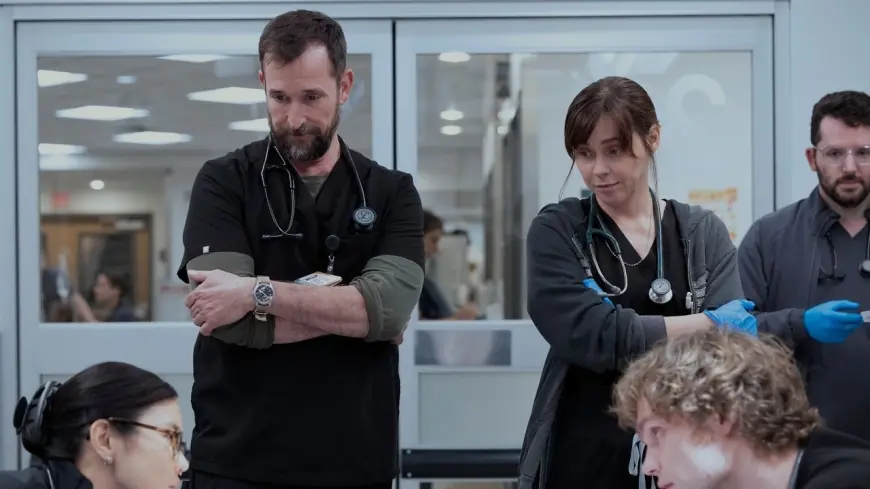
The Pitt has turned its second season into appointment television, and the show’s momentum is building fast as Episode 4 arrives tonight, Thursday, January 29, 2026, at 9:00 p.m. ET. The series, built around a single, relentless emergency-department shift, is leaning even harder into what made Season 1 stand out: hour-by-hour storytelling, pressure-cooker medicine, and the uncomfortable truth that hospitals do not get to choose when the day goes sideways.
Tonight’s episode carries extra weight because it is the first real stress test of the season’s central shake-up: a looming leadership handoff inside the ER and the return of a key doctor whose presence reopens old wounds in the team’s hierarchy.
What’s happening in Season 2 right now
Season 2 is structured as a real-time sprint. Each episode is labeled by the hour and plays like a chapter in one continuous shift. This season’s shift is set on July 4, a date that reliably pushes emergency departments into overload with accidents, heat stress, alcohol-fueled injuries, and the kind of chaos that arrives in clusters rather than lines.
Episode 4, titled 10:00 A.M., picks up with the ER bracing for spillover after a crisis elsewhere in the city. That creates the show’s favorite kind of dilemma: the staff are already at capacity, the waiting room is already restless, and then a new wave arrives that forces triage decisions that feel morally impossible even when they are clinically correct.
At the same time, internal friction is rising. The interim leadership plan is no longer theoretical, and the staff are testing what changes when the person calling the shots has a different philosophy about speed, technology, and risk.
Why audiences are suddenly obsessed with The Pitt again
The show’s spike is not just about plot. It is about format.
The Pitt is being consumed like a live event because it drops weekly at a predictable prime-time hour rather than arriving all at once. That release strategy creates shared timing: people watch, react, argue, and theorize together. In an era when many series disappear into weekend binges and vanish, The Pitt is staying in the conversation for months because it forces the audience to sit with each hour of the shift before the next one arrives.
It also helps that the show’s storytelling rewards post-episode discussion. Each installment closes with a choice that can be defended two ways: what medicine demands versus what empathy wants. The comments and debates are not a side effect. They are part of the product.
The cast dynamic powering the season
Noah Wyle’s senior attending, known to colleagues as Robby, remains the show’s emotional anchor: capable, exhausted, and quietly haunted by what the job requires him to normalize. Around him, the ensemble is designed like a real ER: residents with different risk tolerances, nurses who keep the place functioning, and administrators whose language of metrics collides with the reality of trauma.
A major driver of the current wave of interest is Katherine LaNasa’s charge nurse Dana Evans, a character who reads as leadership without speeches. Dana is the person who sees the whole room at once, calls out nonsense fast, and absorbs pain without turning it into spectacle. In a genre that often romanticizes doctors, The Pitt earns credibility by making the nursing spine impossible to ignore.
Behind the headline: what the show is really selling
Context: The Pitt is arriving in a moment when the public is more aware of healthcare strain than at any point in recent memory. That awareness is not abstract. People have lived crowded waiting rooms, delayed care, and burnt-out staff. A medical drama that treats the system as the villain, not a backdrop, fits the mood.
Incentives: The series has a clear incentive to be seen as authentic. Authenticity is the differentiator in an overstuffed market of high-gloss dramas. The release strategy also serves an incentive: sustained attention. Weekly drops keep the show searchable, discussable, and culturally present.
Stakeholders: Viewers want emotional truth and credible stakes. Healthcare workers want representation that does not turn them into superheroes or punchlines. The streamer wants retention and week-to-week conversation. The cast wants the show to be taken seriously as prestige drama, not comfort TV.
Missing pieces: The biggest unknown is how the season resolves the leadership transition without betraying what made the series feel grounded. Will the show treat the handoff as a clean changeover, or as a messy reordering of power where competence is not enough and trust has to be rebuilt. Another missing piece is whether the season can keep escalating emergencies without tipping into disaster-of-the-week fatigue.
Second-order effects: When a show becomes the realism benchmark, it changes audience expectations for the entire genre. It also invites backlash if any storyline feels like it uses suffering as entertainment rather than illumination. The more The Pitt is praised for authenticity, the less room it has to take shortcuts.
What happens next: realistic scenarios to watch
One, the season deepens the internal conflict between old-school triage instincts and newer, tech-forward decision-making. Trigger: a case where speed and data point in opposite directions.
Two, the returning doctor storyline becomes a wedge that tests forgiveness versus safety. Trigger: a mistake, a relapse rumor, or a moment where the team must decide whether trust can be earned under fire.
Three, the show pivots from external crises to institutional ones: legal exposure, administrative pressure, and staffing limits that make good care mathematically harder. Trigger: a sentinel event that forces documentation, review, and consequences.
Four, the season builds toward the inevitable: the end of the shift and the cost it leaves behind. Trigger: a late-day surge that breaks the illusion that the ER ever truly stabilizes.
The Pitt is winning right now because it refuses to treat medicine as a backdrop for romance or hero speeches. It treats the emergency room as a machine that never stops moving, powered by people who are constantly asked to do more with less. Tonight at 9:00 p.m. ET, the show is betting again that the most gripping drama is not a twist, but the next patient through the doors.